
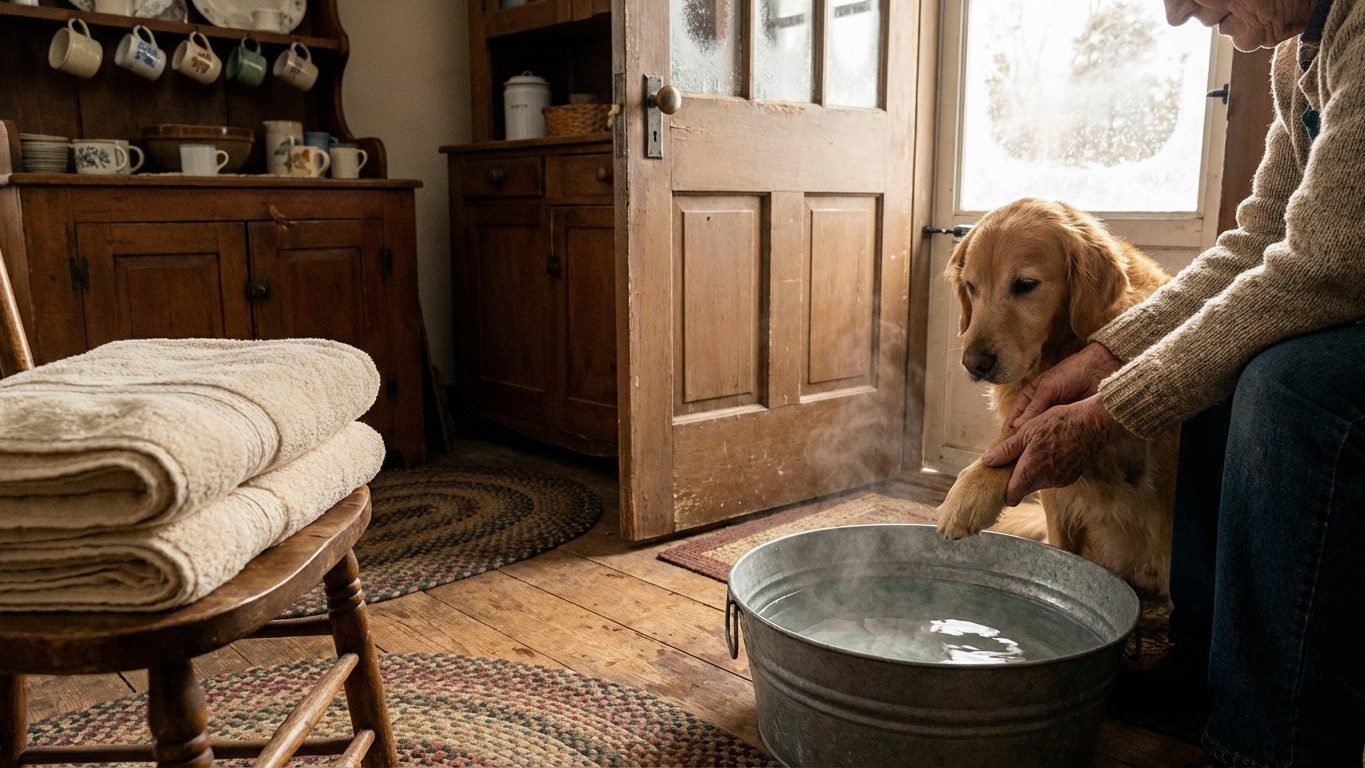
While modern pet stores overflow with specialized winter gear and expensive paw protection products, our grandparents knew something we’ve almost Forgotten—a Simple yet profoundly effective ritual that protected their dogs’ paws through the harshest winters. This time-honored practice, passed down through generations of dog owners and refined by sled dog mushers across Alaska, required nothing more than warm water, a towel, and a few Minutes of dedicated care.
The ritual was deceptively simple: after every Winter walk, they would prepare a bowl of warm water and thoroughly wipe their dog’s paws, removing ice balls that formed between the toes and washing away harmful salt residue. Yet this straightforward practice addressed multiple winter threats that modern pet owners still struggle with today—from chemical burns caused by road salt to painful ice formations that can cut delicate paw pads.
Why Winter Walks Became Battlegrounds for Dog Paws
Our ancestors understood what veterinarians now confirm: winter weather poses serious risks to canine paw health, as snow and ice can dry out paw pads and increase the risk of frostbite, while built-up snow and ice can irritate the sensitive skin between toes. Ice-melting chemicals present an even greater danger, as they can irritate skin or lead to digestive upset if dogs lick them from their fur, with large ingestions potentially causing muscle tremors and seizures.
The challenge intensifies when we consider how dogs naturally respond to discomfort. When dogs experience irritation from salt or chemicals, they instinctively lick their paws, which can lead to sores, infections, or serious poisoning if they consume toxic substances like antifreeze or de-icing agents.
Traditional mushers developed this understanding through necessity. Professional sled dog handlers check every paw for abrasions after runs and Always prioritize their dogs’ needs, often getting only 2-4 hours of sleep themselves while ensuring their teams receive proper care. Their survival—and their dogs’ performance—depended on preventing rather than treating paw problems.
The Ritual: Warm Water and Unwavering Attention
The Forgotten ritual centered on immediate post-walk care, transforming what could have been casual neglect into a moment of protective attention. Before heading out, Experienced dog owners would place a small basin filled with sudsy water outside their door alongside a clean towel, then upon returning from walks, dip each paw into the basin and clean and dry between the toes—preparing this setup before leaving ensured They could address potential contamination Without tracking germs or chemicals throughout their homes.
The process addressed multiple concerns simultaneously. After returning home, owners would wipe down their pets’ paws with a damp towel to remove any remaining ice balls, and for dogs that had walked on salt-covered surfaces, they would even dip paws in lukewarm water to rinse away salt residue before towel drying. This methodical approach prevented the accumulation of harmful substances while also providing an opportunity to inspect for injuries.
Modern sled dog mushers have preserved these techniques with remarkable consistency. At every break during training or racing, mushers immediately remove protective booties and conduct close inspections of their dogs’ feet for soreness, cuts, or lacerations, followed by thorough moisturizing treatments—a routine performed twice daily or more frequently as needed.
Why Modern Conveniences Can’t Replace Ancient Wisdom
While today’s pet industry offers an array of protective booties and specialized balms, these products often miss the fundamental insight our grandparents possessed: prevention through consistent care creates stronger, more resilient paws than protection through barriers alone. Modern paw balms like specialized waxes form protective barriers against dampness and chemicals while preventing snow from clumping between paw pads, but they require proper application and regular maintenance.
The traditional approach recognized that prevention is far superior to treatment when it comes to winter paw care, requiring just a little proactive effort to prevent serious damage from occurring. Rather than relying solely on physical barriers, our ancestors built resilience through conditioning and immediate response to environmental challenges.
Professional mushers continue to validate this philosophy. Many experienced handlers start training their dogs in autumn without boots, using relatively sandy trails to naturally condition paw pads before winter conditions arrive. This approach builds natural toughness while maintaining sensitivity to potential problems.
The forgotten ritual of our grandparents—that simple practice of warm water, careful inspection, and immediate cleaning after every winter walk—represents more than mere maintenance. It embodies a philosophy of proactive care that modern pet ownership, with its emphasis on products over practices, has largely abandoned. The key principle remains unchanged: keeping paws clean and removing ice, salt, chemicals, and debris as soon as possible after exposure.
As winter approaches and we prepare our homes for the coming cold, perhaps it’s time to reclaim this lost wisdom. The next time you return from a winter walk with your dog, take a moment to honor this ancestral practice. Fill that bowl with warm water, examine those precious paws, and reconnect with a tradition that understood something profound: the best technology for protecting our beloved companions has always been time, attention, and The Simple act of caring.