
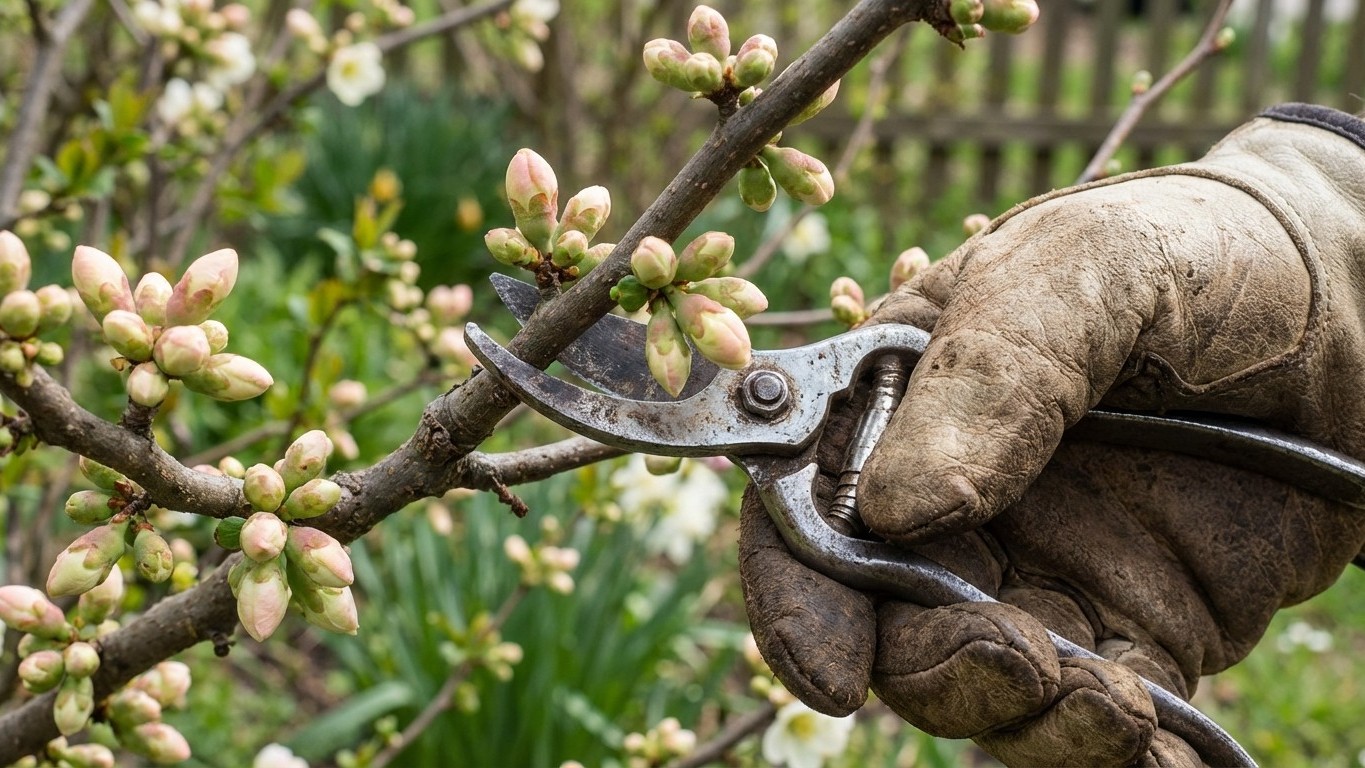
Spring shrubs are forgiving, until they’re not. For years, I grabbed my pruning shears the moment the temperatures nudged above freezing, convinced I was being a responsible gardener. The results were consistently underwhelming: fewer blooms, scraggly growth, and in one particularly painful season, a once-gorgeous forsythia that produced exactly zero flowers. Turns out, I had been cutting at precisely the wrong moment, and a single conversation with an experienced gardener completely rewired how I think about timing.
Key takeaways
- Spring-blooming shrubs hide next year’s flowers on old wood—but there’s a narrow window when cutting is actually safe
- The same calendar date that destroys your lilac’s blooms is perfect for your butterfly bush—the difference matters more than you think
- A 30-second visual check of your shrub’s buds reveals everything you need to know before touching your pruning shears
The One Rule That Changes Everything
The rule sounds almost too simple. A gardener I met at a local nursery put it this way: “Before you cut anything, ask yourself where this shrub carries its flower buds.” That question is the whole game. Shrubs that bloom in spring, think forsythia, lilac, azalea, rhododendron, and flowering quince — set their buds on old wood, meaning growth from the previous year. When you prune them in early spring before they bloom, you’re literally snipping off this year’s show. You’ve spent the whole winter protecting those buds without realizing it, then removed them yourself in a five-minute cleanup session.
The correct window for these spring bloomers is tight but clear: prune them within two to three weeks after the flowers fade. That’s it. The shrub has had its moment, the spent blooms are dropping, and the plant is about to push new growth that will carry next year’s buds. Cut then, and you’re working with the plant’s biology rather than against it. Miss that window by too long, and you risk cutting into bud-set territory again.
Why “Spring Cleaning” Instincts Backfire
The urge to prune in early March or April makes complete psychological sense. The yard looks ragged after winter, motivation is high, and the shrubs appear dormant and patient. Every gardening instinct says: now is the time to tidy up. The problem is that “dormant” and “ready to be cut” are not synonyms. A lilac in late February is dormant the way a loaded spring is at rest, all the energy is there, coiled and waiting. Cut it back hard, and you redirect that stored energy away from flowering and into vegetative recovery.
There’s also a second category of shrubs worth keeping separate in your mind. Shrubs that bloom in summer and fall, like butterfly bush, panicle hydrangea, and most spireas, bloom on new wood grown in the current season. These actually benefit from a hard pruning in late winter or early spring. So the same calendar date that wrecks your lilac is exactly right for your butterfly bush. Same yard, same week, opposite strategies. That’s where the confusion compounds for most home gardeners.
Reading Your Shrubs Before You Touch Them
A quick visual check takes about thirty seconds and saves months of regret. Look for swollen buds along the stems. On forsythia or lilac, you’ll often see plump, tightly-packed buds running along older wood before any leaves appear. Those are the flowers in waiting. On a summer-Blooming spirea, the stems in late winter look comparatively bare and thin because the flowers haven’t been built yet. The stem itself tells you whether cutting now costs you something.
If you’re unsure about a particular shrub, a good reference point is what it’s doing right now (mid-season) versus what it does first in spring. Forsythia blooms before it leafs out, working off stored reserves. That’s a giveaway it’s an old-wood bloomer. By contrast, a rose of Sharon (hibiscus syriacus) waits until the tree is fully leafed and summer is underway, producing flowers on new stems. Different biology, different calendar.
One surprisingly useful trick: scratch a small section of bark on a stem with your thumbnail. If it’s green underneath, the wood is alive and carrying energy. If it’s brown and dry all the way through, you’re looking at dead wood that should come out regardless of timing. Dead wood can go anytime without any of the bloom-timing calculus.
Practical Timing, Shrub by Shrub
Rather than trying to memorize botanical categories, anchor the timing to what you see happening in the garden. Forsythia blooms early and fast, so its pruning window opens and closes quickly, often within a few weeks in April. Lilacs bloom a little later and have a slightly longer post-bloom window, but still, waiting until June is pushing it. Azaleas and rhododendrons are particularly unforgiving, they set next year’s buds almost immediately after flowering, sometimes within weeks. Prune an azalea in July and you’re already gambling.
The summer-bloomers, by contrast, reward early action. Panicle hydrangeas (the ones with the cone-shaped flower heads) can take a hard cut in late February or early March, and they’ll respond with vigorous new growth that carries enormous blooms by July. Butterfly bush benefits from being cut down to about 12 inches from the ground in late winter. It looks brutal. It works every time.
Bigleaf hydrangeas (the classic mophead and lacecap varieties) are their own complicated chapter. Most bloom on old wood, like spring shrubs, and should be pruned lightly right after flowering if at all. Some newer cultivars bloom on both old and new wood, giving them more flexibility. When in doubt with a bigleaf hydrangea, the safest move is minimal intervention, deadhead the spent flowers and leave the rest alone.
What this gardener handed me, really, was a shift from calendar-based pruning to observation-based pruning. The date on your phone is irrelevant. What your shrub is doing right now, and what it did three weeks ago, is the actual information. Once that clicks, the yard stops being a source of annual guessing and starts feeling like a conversation you Actually understand how to have. The question is just whether you’re willing to slow down long enough to listen before you cut.