
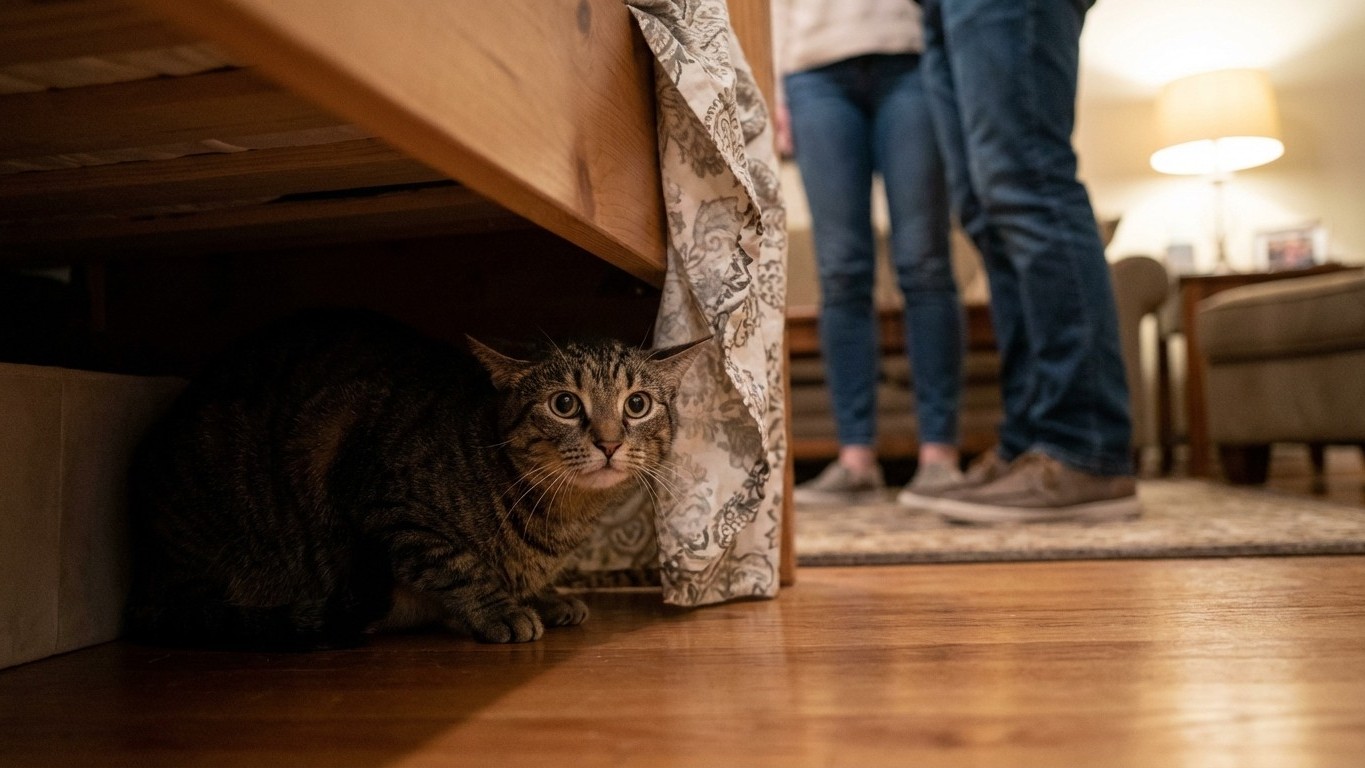
When guests arrive at your home, does your usually social cat suddenly disappear under the bed or retreat to the highest shelf in the closet? Many cat owners dismiss this behavior as Simple-rule-changes-everything-when-hanging-a-pendant-light-above-your-dining-table”>simple-tray-sits-on-your-coffee-table-in-january”>simple shyness, assuming their feline friend will eventually warm up to visitors. However, what appears to be timid behavior often masks a deeper issue: genuine stress and discomfort that can significantly impact Your Cat‘s wellbeing.
Understanding the difference between a naturally reserved personality and stress-induced withdrawal is crucial for maintaining your cat’s mental health. While some cats are indeed more introverted by nature, the sudden change in behavior when strangers enter their territory tells a different story entirely. This behavioral shift represents your cat’s way of communicating that their safe space feels compromised, triggering a cascade of stress responses that go far beyond mere social awkwardness.
Decoding the Real Signs of Feline Stress
The most telling indicator isn’t just the retreat itself, but the accompanying physical and behavioral changes that many owners overlook. A stressed cat exhibits rigid body language, with ears flattened against their head and pupils dilated even in well-lit rooms. Their breathing becomes shallow and rapid, and they may pant slightly – a behavior rarely seen in relaxed cats. Unlike a naturally shy cat who might peek around corners with curiosity, a stressed cat remains completely hidden, often in cramped, enclosed spaces where they feel most secure.
The duration of this withdrawal behavior provides another crucial clue. A reserved but comfortable cat might hide initially but gradually venture out to observe from a safe distance, perhaps even approaching for treats or gentle interaction. In contrast, a genuinely distressed cat remains hidden for the entire duration of the visit and sometimes well beyond, emerging only hours after guests have departed. This extended recovery period indicates that their nervous system has been genuinely overwhelmed, requiring significant time to return to baseline calm.
Physical symptoms often accompany this emotional distress, manifesting as changes in appetite, litterbox habits, or grooming patterns. Some cats may refuse to eat while guests are present, while others might overeat once alone as a coping mechanism. Excessive grooming or complete cessation of grooming both signal that your cat’s normal routines have been disrupted by stress. These Behaviors extend far beyond simple personality quirks and demand serious attention from conscientious pet owners.
The Environmental Impact on Feline Comfort
Cats are creatures of routine and territory, finding security in familiar scents, sounds, and spatial arrangements. When strangers enter their domain, they bring unfamiliar odors, voices, and energy that can feel overwhelming to sensitive felines. The stress response intensifies when guests move through spaces your cat considers private sanctuaries, such as near their feeding area, favorite sleeping spots, or litterbox location.
The number and behavior of visitors significantly influence your cat’s stress levels. A single quiet guest who respects boundaries creates far less disruption than a group of animated visitors who speak loudly, gesture expansively, or attempt to coax the cat from hiding. Children, while well-meaning, often move unpredictably and emit high-pitched sounds that can trigger heightened alertness in already anxious cats. Understanding these environmental factors helps explain why some social gatherings cause more distress than others.
Interestingly, cats often react more strongly to infrequent visitors than to people who visit regularly. Familiar guests become part of the accepted household dynamic, while strangers represent unknown variables that could potentially threaten the cat’s security. This explains Why Your Cat might accept your Without-any-maintenance”>Weekly book club but panic when distant relatives visit for holidays.
Creating a Stress-Free Environment for everyone-forgets-after-installing-laminate-flooring”>Everyone
Recognizing genuine stress signals empowers you to make meaningful changes that benefit both Your Cat and your social life. The goal isn’t to eliminate all visits or keep your cat in permanent isolation, but rather to create conditions where they can feel secure even when guests are present. This often begins with establishing a designated safe room where your cat can retreat without fear of intrusion, complete with all their essential resources: food, water, litterbox, and comfortable resting areas.
Preparation becomes crucial for reducing stress levels. Introducing your cat to guest-related changes gradually – perhaps by playing recordings of unfamiliar voices at low volumes or temporarily rearranging furniture – helps desensitize them to disruptions. Some cats benefit from calming pheromone diffusers activated hours before guests arrive, creating an atmosphere of chemical reassurance that supplements their natural coping mechanisms.
The most important intervention involves setting clear boundaries with visitors. Educate guests about respecting your cat’s need for space, discouraging attempts to lure them out or force interactions. Well-meaning visitors often feel rejected when cats hide, interpreting this behavior as personal dislike rather than natural stress response. Explaining that hiding represents healthy self-advocacy – not rudeness – helps guests understand and respect your cat’s emotional needs.
Building Long-term Confidence
While immediate stress management addresses current situations, building your cat’s overall confidence creates lasting resilience against future disruptions. This process involves gradually expanding their comfort zone through positive associations with new experiences. Short, pleasant interactions with calm visitors can slowly build tolerance, especially when followed immediately by favorite treats or play sessions.
Consistency in your response matters tremendously. Never force interactions or punish hiding behavior, as this compounds stress and erodes trust in your judgment. Instead, remain calm and supportive, allowing your cat to dictate the pace of any social engagement. Some cats never become party hosts, and that’s perfectly acceptable – the goal is managing stress, not changing personality.
Understanding your cat’s stress signals transforms you from a puzzled observer into an effective advocate for their emotional wellbeing. That “shy” behavior often represents a sophisticated communication system designed to preserve their mental health in challenging situations. By recognizing and responding appropriately to these signals, you create a household where both human and feline family members can thrive, regardless of who comes to visit.