
Mid-October to early November is the sweet spot for sowing sweet peas in most of the UK. Sow earlier and the seedlings get leggy before winter; sow later and they struggle to build the root system that makes autumn sowing worthwhile.
The payoff is real. Autumn-sown plants flower two to four weeks ahead of spring sowings, produce longer stems, and tend to be sturdier, because they spend winter pushing roots down while the tops barely move.
- Mid-October to early November is the sweet spot for most of the UK.
- Autumn-sown plants flower two to four weeks ahead of spring sowings.
- Pinching out the growing tip produces two or three strong side shoots.
Choosing your dates by region
Geography matters more than the calendar. In mild southern and western areas, including Cornwall, Devon and much of the south coast, sowing from early to mid-October works well. Further north, or in cold inland pockets, late September to early October gives seedlings time to establish before hard frosts.
Aim for seedlings that have two or three pairs of true leaves going into the cold. Too small and they are vulnerable. Too tall and they turn spindly.
Temperature is a better guide than the date on the wall. Sweet pea seed germinates best in cool conditions, around 10 to 15°C, and in a warm spell it can rot or produce weak, stretched growth.
Late sowings are not a lost cause.
If you miss the autumn window, sowing in January or February under cover still gives good results, and plenty of experienced growers sow both times to stretch the season from late May into September.
Pots, compost and the seed itself
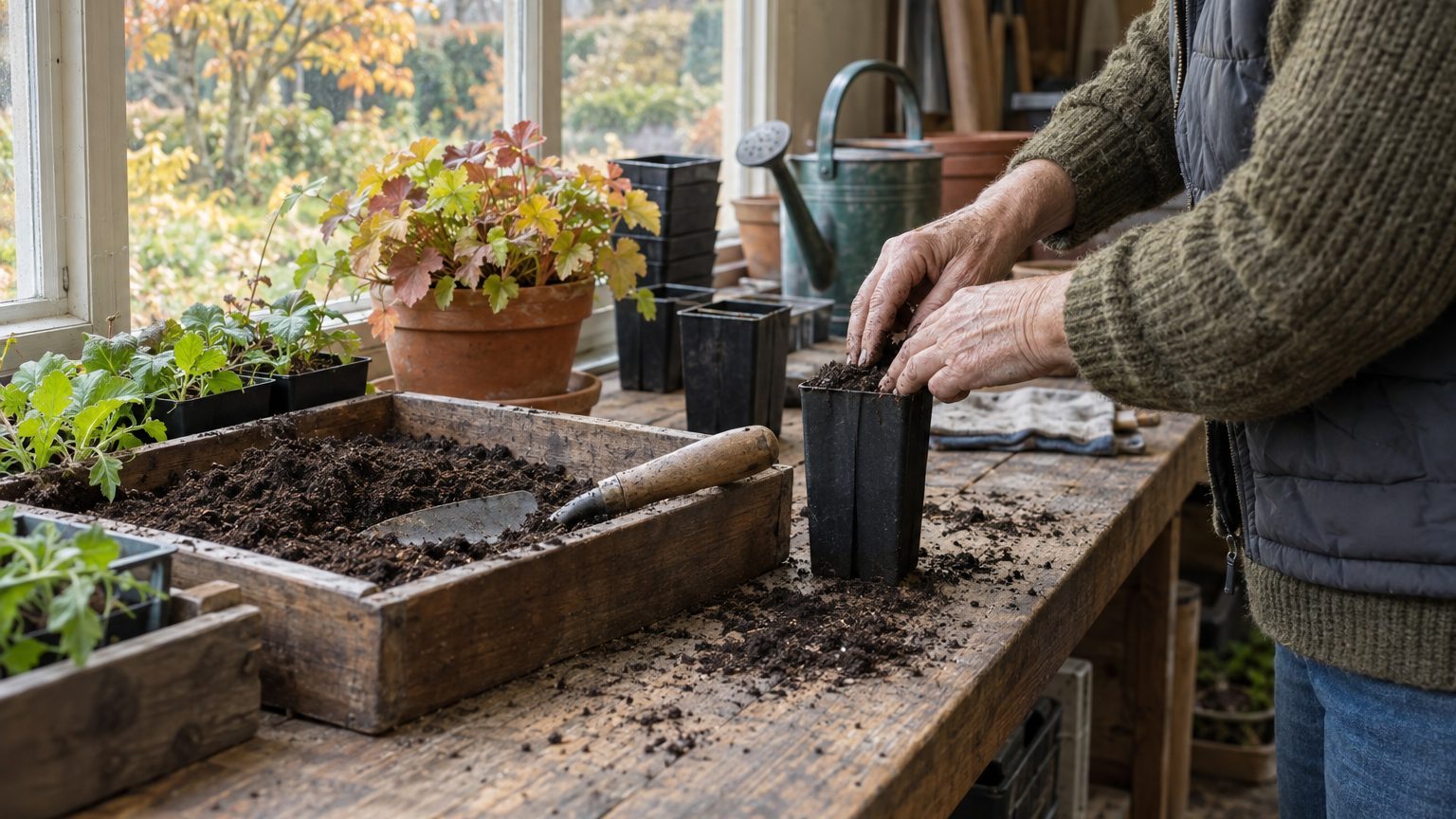
Sweet peas hate root disturbance and want depth. That is why tall, narrow containers beat shallow seed trays. Root trainers, which are tall plastic cells that open like a book, are the favorite of many exhibitors, while deep 9cm pots or even cardboard loo roll tubes do a decent job on a budget.
Use a peat-free multipurpose compost, ideally mixed with about a quarter part grit or sharp sand to improve drainage. Winter damp is a bigger enemy than winter cold, and soggy compost is how most autumn batches are lost.
Sow one seed per cell, or two or three to a 9cm pot, about 1.5cm deep. Many seed packets suggest nicking the hard seed coat or soaking overnight, and it can speed things up for stubborn varieties, though modern seed often germinates well without it. If you do soak, discard any seeds that have not swollen after 24 hours, or nick those only.
Mice love sweet pea seed. A pot left uncovered in a shed or cold frame can be emptied overnight, so keep trays raised, lidded or covered with mesh.
Where you keep them is the next decision. Seeds can germinate on a cool windowsill, in an unheated greenhouse or in a cold frame, but they should come out of any warm spot as soon as shoots appear.
Pinching out for bushier plants
Pinching out sounds brutal, but it is the single most useful thing you can do for an autumn-sown sweet pea. Once seedlings have three or four pairs of leaves, snip or nip off the growing tip just above the second or third pair.
The plant responds by sending up side shoots from lower down. Without pinching, you tend to get one long, thin stem and a plant that flowers on a single leader. With it, you get two or three strong shoots and a far better crop. Some growers go further and pinch again once the side shoots reach a similar size, but one pinch is enough for most gardens.
Do it in autumn if growth is racing ahead, or in late winter if the seedlings stayed small. Plants sown in spring also benefit, though the effect is less dramatic.
Cut stems often, too.
Regular picking once flowering begins is what keeps sweet peas producing, because letting pods form signals the plant to stop. A vase on the kitchen table every few days is the best maintenance you can give.
Overwintering seedlings without losing them
Sweet peas are tougher than they look. Established seedlings handle frost down to around -5°C or lower, as long as they are hardened off and kept on the dry side. A cold frame or unheated greenhouse is ideal, and an unheated porch or sheltered spot against a house wall can work in milder areas.
Ventilation counts as much as protection. On mild days, open the cold frame lid or greenhouse door so air circulates, since stagnant, humid conditions invite grey mould (botrytis) and damping off. Remove any yellowing leaves promptly.
Water sparingly. Check pots by touch and only give a drink when the compost feels dry a finger-joint down, ideally in the morning so foliage dries before night. In deep winter that might mean once every two or three weeks.
Wrap pots in fleece or bubble wrap during a severe cold snap, particularly if they are on bare ground or a concrete floor. Cover the frame with old carpet or a blanket overnight when forecasts dip well below freezing, and take it off in the morning.
Slugs and snails remain active in mild winters and will happily strip tender shoots, so check pots regularly and keep the area tidy. Mice again deserve a mention, since they will dig up young plants as well as seed.
Planting out in spring
From mid-March to April, once the soil is workable and the worst frosts have passed, harden plants off over a week or two and plant them out. Dig in plenty of well-rotted manure or compost beforehand, because sweet peas are hungry feeders with deep roots.
Space them about 15 to 20cm apart at the base of a wigwam, netting or a row of hazel supports, and tie in the first shoots to get them climbing. Within weeks they take off.
Sweet peas are an old garden favorite, grown in Britain since the late 17th century after the original wild plant was sent from Sicily. Some of the most fragrant varieties are still the older, smaller-flowered types, and if scent matters more to you than stem length, they are well worth seeking out for next autumn’s sowing.