
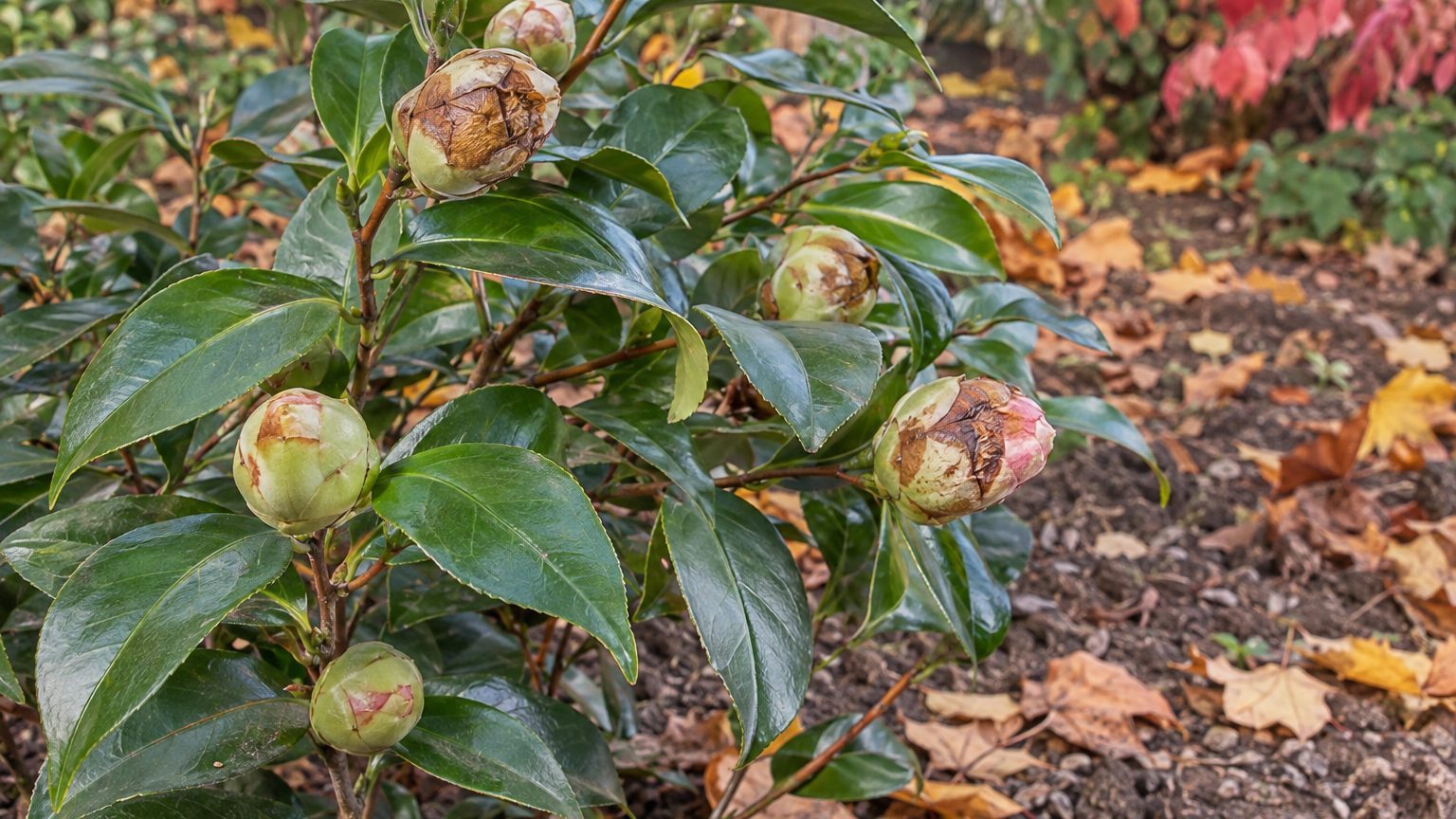
Camellia buds that brown, loosen, and drop in early fall usually point to a watering problem, not a disease. The timing is the clue. Those buds formed back in early summer, and if the soil swung between bone dry and soaked while they were swelling, the shrub gets rid of them.
Bud drop is the plant’s emergency brake.
When a camellia can’t support its flower load, it aborts buds to protect its leaves and roots. Gardeners call it bud blast or bud drop, and it can strip a shrub of most of its flowers before October ends. The buds often look healthy at first, plump and tightly scaled. Slice one open and the inside may be brown and papery, or soft and mushy, depending on whether drought or excess water got there first.
- Camellias form buds in early summer and need consistent moisture while they swell, or they’ll abort them as an emergency response.
- Shallow roots concentrated in the top foot of soil mean camellias dry out faster than other shrubs and can’t survive wild swings between drought and soaking.
- Deep, slow watering at the base once a week, mulch, and well-draining soil prevent the stress that triggers bud drop.
Why late summer is the danger zone
Camellias set their flower buds in early to midsummer, then carry them for months before they open. Sasanquas bloom in fall, while japonicas hold their buds into winter or early spring.
Late summer is when heat peaks and, in much of the country, rainfall thins out. Many gardeners ease off the hose around then, assuming an established shrub can fend for itself. Camellias have shallow, fibrous roots concentrated in the top foot of soil, so they feel a dry spell much sooner than a mature oak does.
Shallow roots mean a short memory for rain.
Then the weather turns. A tropical storm or a week of steady autumn rain drenches ground that was parched, and stressed roots suddenly sit in saturated soil. Camellias dislike wet feet, and poorly drained soil invites root rot from Phytophthora, a water mold that destroys fine feeder roots. With the roots damaged, the plant can’t feed its buds, and down they go.
The watering mistake, in two versions
The first version is the light daily sprinkle. Ten minutes with a sprinkler wets the top inch of soil and leaves the root zone underneath dry, so the shrub looks cared for while quietly running short. Push a finger three inches into the soil near the drip line and you’ll know which story is true.
The second version is feast or famine. A camellia left dry for two weeks and then flooded takes two hits, drought stress first and oxygen-starved roots second.
Potted camellias are the most exposed. A container in full afternoon sun can dry out in a day or two during a late-summer heat wave, while the same pot with a clogged drainage hole can hold water for a week. A saucer left full after every watering is a frequent culprit on patios and balconies. Lift the pot to judge it: a feather-light one needs a drink, and a heavy one with drooping leaves probably has too much already.
Check the pot’s weight before reaching for the hose.
A routine that keeps buds on the branch
Aim for deep, steady moisture, roughly an inch of water a week from rain and irrigation combined, and more during extreme heat or in sandy soil. Water slowly at the base, with a soaker hose or a hose set to a trickle for 20 to 30 minutes. Morning is best, since foliage dries before evening.
Mulch does half the work. Two to three inches of pine bark or pine straw cools the root zone and flattens out the swings between wet and dry, as long as it stays a few inches back from the trunk.
Drainage deserves a hard look too. If water pools around the shrub after rain, no schedule will fix it, because the problem is structural. Camellias prefer acidic, well-drained soil rich in organic matter, and they do best when the top of the root ball sits slightly above the surrounding grade. In heavy clay, a mound or raised bed solves what careful watering can’t, and a shrub planted too deep may drop buds year after year regardless of how attentive you are.
When water isn’t the whole story
Water is the most common cause, though not the only one. A hard early freeze after a mild stretch can blast buds that are nearly open, and those show up as brown, water-soaked petals rather than shriveled scales. Heavy shade reduces bud set, and so does a crowded, unpruned interior with little light.
Fertilize after bloom, not in September.
Late-season nitrogen pushes leafy growth at the expense of flowers, which is one more way to lose buds you worked all summer to protect. Right now, in early October, the best move is mostly restraint. Hold off on pruning and feeding, keep the soil evenly moist, and let the remaining buds finish. If some are still plump and firm, they have a good chance of opening on schedule.
A few lost buds are normal. Japonicas often set more than they can carry, and competition growers pinch off extras on purpose, leaving one bud per cluster to get larger blooms. A shrub that sheds a handful on its own is doing the same job; losing most of them is the signal to look at the roots.