
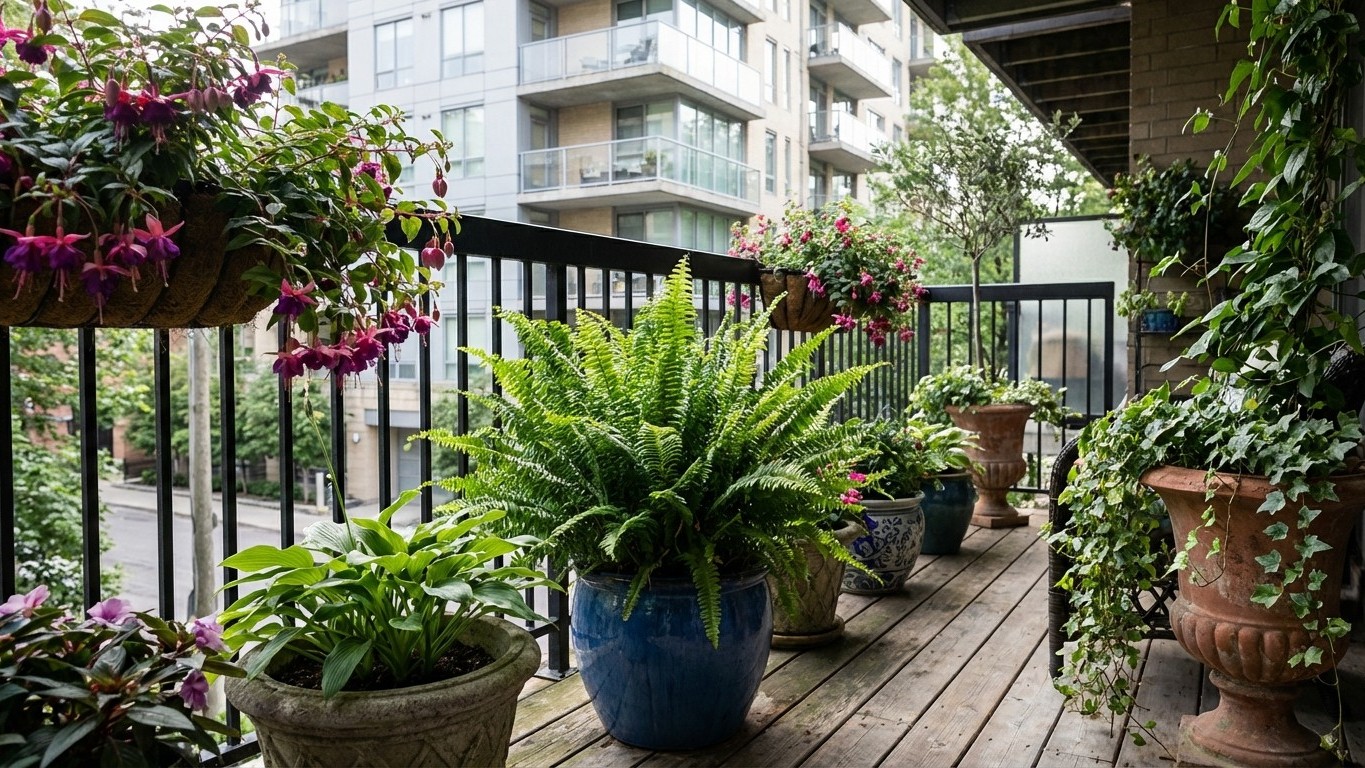
A north-facing balcony. A covered terrace blocked by the building across the street. The narrow strip of outdoor space that sees the sun for maybe an hour each morning before a wall swallows it up. If this sounds familiar, you’ve probably stood there wondering whether anything can actually thrive in conditions like these. The answer is yes, but only if you stop trying to grow the wrong plants, and start understanding what your shady balcony genuinely offers.
Nearly every gardener has experienced the problem of too much shade, which can cause plants to become leggy or fail to thrive, whether it’s a wooded suburban lot or a north-facing apartment balcony.
But the real problem isn’t the shade itself. It’s the mismatch between expectation and reality. Swap your mental model from “sun garden with a light deficit” to “woodland-edge ecosystem in a pot,” and suddenly the whole thing makes sense. Shade tolerant plants for balcony pots form a genuinely rich category, from cascading fuchsias to structural ferns to salad greens that actively prefer lower light. This guide cuts through the noise and tells you exactly what to grow, how to set up your containers, and how to avoid the one mistake that kills most shade-container gardens: waterlogged soil.
Understanding Shade on Your Balcony: Not All Darkness Is Equal
Light Shade, Partial Shade, and Full Shade: The Real Differences
All shade is not created equal. Many variables, including season, time of day, and canopy composition, affect how plants are shaded.
Getting this right is the single most important diagnostic step before you buy a single plant.
Plant labels identify the amount of sun a plant requires as follows: full sun means at least 6 hours of direct sun daily; part sun means 3 to 6 hours; part shade means 3 to 6 hours but with protection from intense mid-day sun; and full shade means less than 3 hours of direct sun per day.
Light shade sites receive partially filtered sun, such as that found under open canopied trees, where there is an ever-moving pattern of sun and shade — sometimes called dappled or intermittent shade. Moderate shade occurs with mostly reflected light, such as at the floor of a hardwood forest. Heavy or dense shade is a site with no direct sunlight, such as at the base of a north-facing wall.
Most urban balconies sit somewhere between partial shade and full shade, and the specific category you’re in determines your entire plant palette.
How to Measure Your Balcony’s Actual Exposure
Don’t guess.
One reliable way to determine shade levels is to set an hourly alarm and observe how much direct sunlight your garden receives every hour of the day. You can also purchase a garden light meter. Select a few sunny days, find the spot where you’d like to plant, keep track on a sheet of paper whether or not that spot is receiving direct sunlight each hour, and do this for a few days to find an average.
A quick smartphone note with hourly observations over two or three days will tell you far more than any general rule about “north-facing” spaces. Keep in mind that
trees and buildings cast shadows that move throughout the day, making it difficult to determine the actual number of hours of sunlight, and the amount and intensity of light a given area receives also changes throughout the seasons.
Your balcony in June may be brighter than you think by mid-morning, that matters.
Also worth noting: reflected light counts. A white exterior wall or pale-colored floor bounces ambient brightness onto your plants even without direct sun.
A lightly shaded garden receives an hour or two of sun each day, or is light, airy, and well-illuminated by reflected or indirect light for a good portion of the day. Reflected light might bounce into the garden from a white fence or building, or a garden might sit in the shade of a high-canopy tree or distant building.
Setting Up Containers for Success in Low Light
Choosing the Right Pot and Soil Mix
Here’s where most balcony shade gardens fail — not in plant selection, but in the pot.
Drainage is non-negotiable: every container absolutely must have drainage holes at the bottom. Without them, water collects, leading to soggy soil and root rot, a death sentence for most plants. If your chosen pot lacks holes, drill them yourself or use it as a cachepot, placing a plant in a smaller, drained nursery pot inside it, this allows you to remove the inner pot for watering and ensures water does not accumulate.
Material matters too.
Terracotta and unglazed ceramic containers provide ideal moisture regulation for shade conditions, allowing soil to breathe while preventing waterlogging. Avoid dark-colored plastic containers that retain too much moisture.
As for soil,
garden soil is too dense for containers; it compacts easily and suffocates roots. You need a high-quality potting mix specifically designed for containers — a specialized blend that provides the right balance of aeration, moisture retention, and drainage. Look for mixes that contain perlite or vermiculite for drainage, peat moss or coir for moisture retention, and some compost for nutrients.
For extra insurance in shade conditions,
some gardeners add an extra handful of perlite or horticultural grit to their potting mix for shade containers to further enhance drainage and aeration, especially if they tend to overwater or if their climate is particularly damp.
Watering and Fertilizing in Shade Conditions
Container gardening in shade requires different care approaches than sun-loving varieties due to reduced evaporation and slower growth rates. Contrary to popular belief, shade containers often need less frequent watering than sunny ones because soil moisture evaporates more slowly. However, the risk of root rot increases significantly without proper management.
The golden rule: stick your finger two inches into the soil. Water only when the top inch feels dry, and always water in the morning, not the evening.
On fertilizing:
plants growing in shade typically need 30–50% less fertilizer than sun-loving varieties due to slower growth rates. Over-fertilizing causes weak, leggy growth more susceptible to pests and disease.
A diluted, balanced liquid feed every three to four weeks during the growing season is usually more than enough.
Mixing compost into your potting soil provides slow-release nutrition
without pushing the plant to grow faster than the available light can support.
For those interested in diving deeper into the mechanics of successful urban container growing, this guide on container gardening small space balcony urban covers the full picture of small-space setup from the ground up.
The Best Shade Tolerant Plants for Balcony Pots
Flowers That Bloom Without Full Sun
Begonias are the champions of container shade gardening. Though they’re usually grown as annuals outdoors, these are actually perennials when protected from frost and freezes.
They come in tuberous forms for large containers and trailing forms for hanging baskets, with color ranging from white through coral to deep scarlet.
Trailing begonias like ‘Hanging Basket’ cultivars will create a cascade of vibrant flowers that lasts for months. Most begonias like partial shade but will do well in full shade, maybe with slightly reduced blooms.
Fuchsias are another standout.
A hanging basket of fuchsia belongs on any shady front porch. The blooms are like works of art all on their own, with the added benefit of drawing hummingbirds. Water them well, but make sure the pot has good drainage to avoid root rot.
For a more unusual option,
torenia (often called wishbone flower) has been becoming more popular in recent years as gardeners realize its value for shade gardening. Once found mainly in blue and pink, torenia is now available in yellow, orange, and multi-colored blooms.
Astilbe deserves a special mention for its theatrical quality in a shaded planter.
Available in all shades from white to dark crimson and purple via pink, astilbe is a perfect choice for a hassle-free but vibrant container. It is cold hardy to USDA zones 4 to 8 and will even tolerate heavy shade.
Astilbes have feathery, plume-like blooms that will stand above ferny foliage, making them the perfect thriller in a mixed container garden. They can range in size from 6″ to 24″, so be sure to get a variety that will fit your containers.
To explore the full range of options for balcony pots, the guide to best plants for balcony container garden offers a detailed selection by exposure level and growing conditions.
Decorative Foliage That Thrives Without Sun
When flowers are scarce, foliage carries the composition.
Plants with attractive foliage, like coleus, offer reliable season-long color with a nearly endless array of colors. Other reliable foliage standbys include Japanese painted fern, sweet potato vine, and Rex begonias.
Hostas are the backbone of any serious shade container garden.
One botany expert hails hostas as “the true queen of shady gardens” as they enjoy both partial and dappled shade. Hostas are known for their long-lasting beauty, featuring striking foliage throughout the growing season, complemented by charming flowers in summer. They require minimum upkeep, propagate well by division, and do exceptionally well when grown in containers. They’re also cold-hardy and thrive in USDA zones 3 through 9.
Heuchera (coral bells) is an equally strong choice.
Heuchera varieties come in shades of bronze, purple, green, and more. As well as being adored for their unique foliage, coral bells produce slender stems covered in bell-shaped flowers. They are low-maintenance and can tolerate many different conditions.
For care in pots,
give them a rich potting mix that drains well and be careful with watering, they don’t like sitting in soggy soil and risk root rot from too much moisture.
Ferns round out the foliage palette.
Garden designer Laura Janney claims that ferns should be “a staple of any shade container,” adding that big, showy ferns add texture with their delicate fronds and require zero maintenance beyond watering. Hardy ferns, in particular, can tolerate lots of shade and be left to their own devices for most of the year.
Mixing ferns like Dryopteris affinis with other perennials and summer bedding plants creates a container that can be given a different look year-on-year by simply swapping the bedding.
Vegetables and Herbs That Tolerate Partial Shade
Yes, you can eat from a shaded balcony. The key distinction:
vegetables grown for their leaves and roots are the best choices for shady gardens.
Fruiting vegetables like tomatoes, peppers, and eggplants need 8 or more hours of direct sun, those stay off the list entirely for a truly shaded space.
Vegetable crops that will grow in light to partial shade include arugula, beets, broccoli, Brussels sprouts, cabbage, carrots, cauliflower, celery, chard, Chinese cabbage, endive, kale, leaf lettuce, leeks, mustard, peas, radishes, spinach, and watercress.
In a balcony pot, the most practical picks are loose-leaf lettuce, spinach, chard, and arugula — all compact, quick to harvest, and genuinely happy with filtered light.
Spinach grows well in 6–8 inch containers, tolerates partial shade, and provides a continuous supply of tender leaves.
For herbs, the picture is clearer than most people expect.
Many herbs grown for their leaves, like cilantro, parsley, mint, chives, thyme, and dill, actually prefer part shade or indirect sunlight. They’re ideal for patios, balconies, or backyards with just 3–4 hours of sun.
Mint in particular is a natural shade performer,
growing enthusiastically even when neglected, so plant it by itself or in a dedicated container.
Chamomile and calendula both do great in the shade, even though they’re flowering herbs — they’ll just grow slower than they would with more sunshine.
Herbs to avoid in low-light conditions:
basil, rosemary, oregano, and bay laurel need full sun to thrive and should not be planted in low-light areas.
For a comprehensive list of edible options suited to container culture, the article on easy vegetables to grow in pots on a balcony is essential reading, covering 12 solid choices that succeed even for beginners.
A Quick Reference: Plants by Shade Level
- Light/Partial Shade (2–4 hrs sun): Begonias, fuchsias, astilbe, coral bells, impatiens, coleus, spinach, lettuce, parsley, chives, mint
- Full Shade (<2 hrs sun): Hostas, hardy ferns, torenia, sweet potato vine, Japanese painted fern, chard, arugula
- Avoid in shade: Tomatoes, peppers, basil, rosemary, lavender, most succulents
Designing and Maintaining Your Shaded Balcony Garden
Creating Harmonious Plantings and Using Vertical Space
When combining multiple plants in one large container for shade, select your “thriller” plant first, tall enough to be the center of attention. Next choose your “filler,” a medium-height plant to fill in the arrangement. And lastly, choose your “spiller” — plants that cascade over the sides of the container, such as creeping jenny, sweet potato vine, or trailing begonia.
This three-layer formula works equally well in a 12-inch pot or a full-length balcony trough.
Vertical space is your secret weapon in a shaded urban setting. Wall-mounted planters, rail boxes, and hanging baskets stacked at different heights multiply your growing surface without adding floor weight.
Use vertical gardening, rail planters, and hanging pots to make the most of available area.
Fuchsia and trailing begonias were practically invented for hanging baskets, their downward drape is an aesthetic bonus that also keeps the pot from sitting in pooled water.
Color strategy matters more in shade than sun, where you don’t have flower abundance to fall back on.
Adding brightly colored or shiny metal pots combined with lighter or contrasting hues of foliage and flowers
amplifies the sense of brightness. Pair dark-leaved heuchera with the silver-splashed leaves of brunnera, and the contrast does the work that sunlight usually handles.
For a broader view of what’s possible with container combinations on a compact balcony, the guide to best plants for balcony container garden covers a wide range of plant types across different balcony conditions.
Preventing Disease and Protecting Plants Through Winter
The specific risk of shade container gardening is moisture accumulation — not drought.
Signs of mold indicate excess moisture and poor air circulation. Gently scrape off visible mold, improve ventilation around containers, reduce watering frequency, and add a thin layer of decorative gravel on the soil surface to reduce moisture retention.
Watering in the morning (not the evening) is non-negotiable, since
always watering plants in the morning to allow moisture to evaporate quickly from the foliage prevents the development of fungus.
For overwintering, pots in partial shade often fare better than you’d expect because extreme temperature swings are buffered by the surrounding building mass. The practical rule:
if you have a container plant that might be killed during the first frost, move it inside a garage or indoors, if need be.
Each spring, remove the top 2–3 inches of old soil and replace with fresh potting mix amended with compost. Divide overcrowded plants like hostas and ferns, discarding any dead or diseased material. Apply slow-release organic fertilizer and water thoroughly to help plants establish before summer heat arrives.
One often-overlooked maintenance habit:
rotate containers occasionally to balance light exposure and keep growth even, and clean up fallen leaves to prevent mold or pests from hiding in damp corners.
On a shaded balcony where moisture lingers, this small habit makes a noticeable difference to long-term plant health.
Sample Planting Plans for Your Shaded Balcony
Small Balcony (Under 40 Square Feet)
Three containers do the work here. A large 16-inch terracotta pot becomes the anchor: a compact hosta as the thriller, one coral bells heuchera as the filler, and trailing sweet potato vine spilling over the sides. A rail planter holds a mix of loose-leaf lettuce and parsley, practical and attractive. A hanging basket near the door gets fuchsia, which blooms from spring until the first frost and needs only regular watering and deadheading. Total coverage: lush, layered, and genuinely low-maintenance.
Larger Balcony or Covered Terrace
With more floor space, you can create something closer to a woodland-edge scene.
A bold display combining shade-loving perennials like astilbe, hosta, and golden wood millet in a galvanized container creates a stylish, contemporary look — while the foliage performs all year, the flowers appear in mid-summer and come back the following year.
Add a dedicated edibles trough with spinach, chives, and mint. Use a tall Solomon’s seal in a narrow pot as a vertical element near the wall:
it features hanging clusters of bell-shaped white flowers and bright green foliage, grows 1 to 6 feet high, and loves partial to full shade with dappled morning sunlight while being highly adaptable to a variety of climates.
Frequently Asked Questions
What plants grow on a shaded balcony? Hostas, heuchera, ferns, begonias, fuchsias, astilbe, impatiens, coleus, and torenia all perform reliably. Foliage plants generally do better than flowering ones in deep shade.
Can you grow vegetables in the shade on a balcony? Yes — with the right choices.
A garden site that receives as few as two hours of direct sunlight a day can grow vegetables, and a garden that gets only dappled sunlight during the day can also grow vegetables.
Stick to leafy greens and root vegetables; avoid fruiting crops.
How do you prevent shade plants from rotting in their pots?
Prevent root rot by ensuring proper drainage, use containers with multiple drainage holes and amend the potting mix with 25–30% perlite. Water only when the top inch of soil feels dry, and avoid watering in the evening.
Which flowers tolerate a lack of sun in pots? Begonias, fuchsias, impatiens, astilbe, torenia, and bleeding heart are the most reliable.
New Guinea impatiens and certain begonias produce the most reliable blooms in partial shade conditions.
Which herbs resist partial shade?
Most herbs do fine in shady conditions, at least through summer, including parsley, coriander, and sage.
Mint, chives, and dill are equally solid. Avoid basil and rosemary in low-light spots.
Going Further with Your Shaded Container Garden
A shaded balcony isn’t a gardening consolation prize. Think of it differently: you’re freed from the relentless watering demands of sun-baked planters, your plants run a lower risk of scorching in summer heat, and you have access to a plant palette, ferns, hostas, woodland perennials, that full-sun gardeners genuinely envy. The only real constraint is moisture management, and once you’ve solved for drainage, everything else opens up.
Start with one strong combination, a hosta, a fern, and a trailing begonia, say, and let it teach you how your particular corner behaves through the seasons. What you discover will almost certainly surprise you. The most interesting container gardens tend to grow in the most unlikely light.