
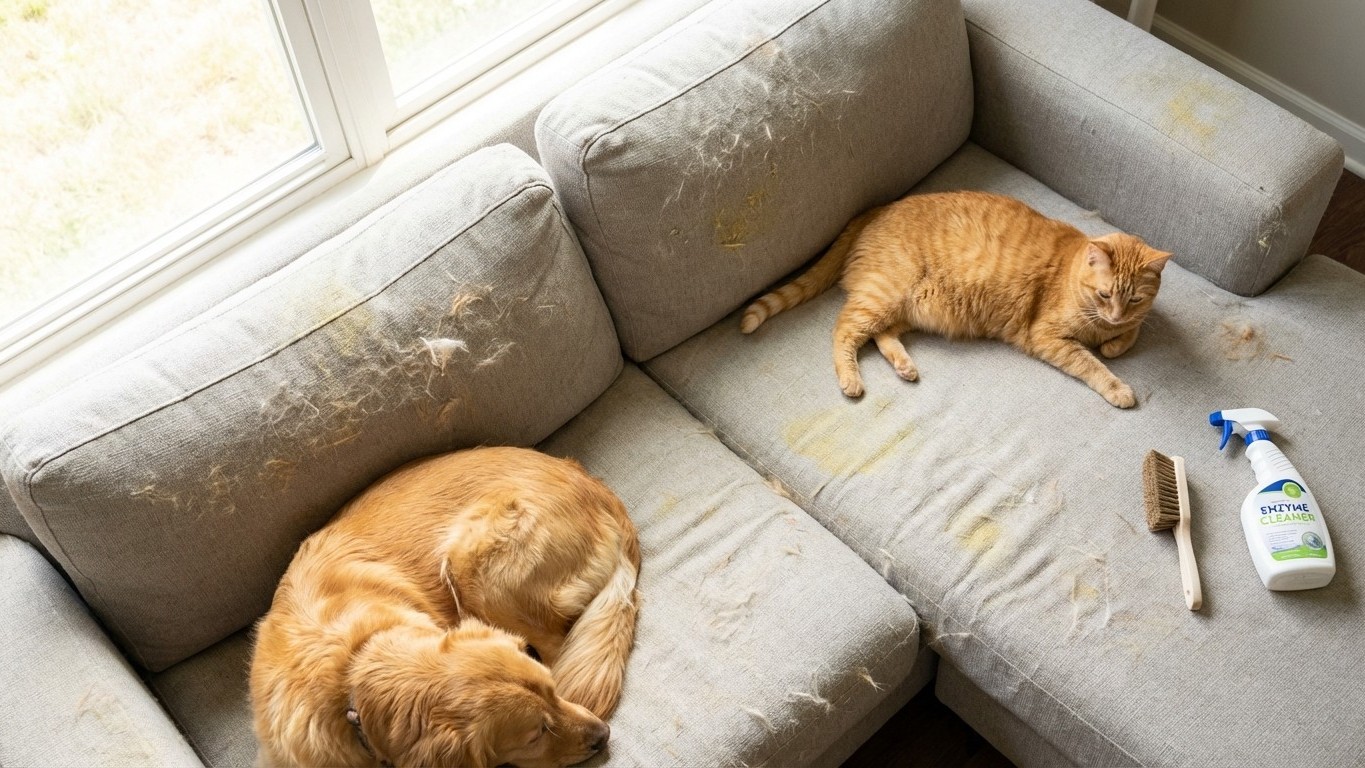
Sixty-seven million U.S. households own at least one dog or cat. Most of them share the same silent dilemma: a couch that started life as a design statement and slowly transformed into a fur-covered, slightly suspicious-smelling lounge chair for four-legged tenants. Protecting and cleaning furniture when you share your home with pets isn’t about waging war against your animals. It’s about building smarter systems, choosing the right materials, and understanding what Actually works when accidents happen, so you spend less time scrubbing and more time, well, cuddling on the couch.
This guide is your central hub: part damage assessment, part prevention playbook, part field manual for the moments things go sideways. Whether you’re dealing with embedded fur on velvet, a fresh urine stain on your linen sofa, or a cat who treats your armchair as a personal scratching post, you’ll find clear answers here. For specific strategies on how to stop cats scratching the couch without declawing, we’ll cover protective solutions with the context to understand why one solution works and another doesn’t.
The Risks for Furniture with Cats and Dogs: What’s Really Happening
Pet Hair: Why It’s Not Just a Visual Problem
Built-up fur traps allergens, creates unpleasant odors, and can even damage your fabric over time.
That last point surprises most people. It’s not just about aesthetics — dense accumulations of pet hair work their way into weave structures, weakening fibers and creating permanent matting over time.
In high-traffic areas, pet hair can become ground into upholstery, especially if your pet enjoys jumping on and off furniture. Over time, repeated pressure forces the hair deeper into the fibers, making it even harder to remove. Understanding how to get pet hair off couch fabric properly is essential to prevent this damage.
Pets naturally shed year-round, but many experience heavier shedding during seasonal changes, particularly in spring and fall. If your pet has a double coat, like many dog breeds such as Huskies or German Shepherds, this problem can be significantly worse because the undercoat tends to shed in large quantities.
Knowing your animal’s shedding pattern lets you plan cleaning cycles intelligently rather than reactively.
Odors: Where They Come From (and Why They Come Back)
Without regular cleaning and fabric protection, stains and odors can become deeply embedded into upholstery, even after visible stains are removed.
Pet odor is a chemistry problem, not a cleanliness problem.
Urine contains uric acid, which is not water-soluble, meaning it quickly bonds to fabric fibers. For comprehensive strategies on how to remove dog smell from sofa effectively, understanding this chemical process is crucial because itonds to any surface it touches. The odor stays in the fibers. This is why investing in best couch covers for pets waterproof can be a game-changer for prevention.
Spray something scented over it and you’ve masked the problem temporarily, but your cat can still smell the spot and may return to re-mark it. This is why using the best enzyme cleaner for pet stains on furniture is crucial for breaking down these stubborn compounds at the molecular level.
Licking furniture is another odor contributor: while natural for both dogs and cats, they leave bacteria on surfaces, which can cause stains and odors. Excessive licking can often signal anxiety or boredom in pets.
That’s worth knowing if you’re dealing with a mysterious recurring smell and can’t identify a clear accident site.
Scratches, Accidents, and the Full Spectrum of Damage
Scratching is an instinctive cat behavior used for marking territory, self-soothing, and nail maintenance.
You cannot train a cat to stop scratching entirely — only redirect where it scratches.
Puppies and kittens go through a teething phase where they need to gnaw on objects to soothe sore gums, which can lead to furniture becoming the target, especially chair legs and coffee table corners.
And then there are the larger accidents: urine, vomit, mud tracked in after rain.
Even the most well-trained pets can have accidents, leading to unpleasant stains and odors on upholstery. This is particularly challenging with senior animals or those experiencing medical conditions.
Preventing Damage Before It Happens: Practical Strategies
Covers, Protectors, and Waterproof Solutions
The simplest and most effective line of defense is also the most overlooked: a good cover.
Pet owners need a fabric care plan that includes both regular cleaning and fabric protection. Using a fabric protector helps prevent liquids from penetrating into the fibers and makes spot cleaning easier in the event of an accident.
For sofas specifically, best couch covers for pets waterproof options have evolved significantly, modern versions fit like a glove rather than bunching up awkwardly, come in designs that actually complement your decor, and can be pulled off and machine-washed in minutes.
Types of covers worth considering include throw blankets or quilts draped over chairs and sofas to catch loose hair, as well as pet-specific furniture protectors with anti-slip grip and water-resistant material that keep hair and accidents from reaching your furniture.
The key is choosing a cover that actually stays in place, otherwise it defeats the purpose entirely.
For scratch protection specifically,
one effective method to discourage cats from scratching furniture is double-sided tape. Apply strips designed for this purpose along areas your cat tends to scratch. Cats usually dislike the sticky sensation on their paws, discouraging them from scratching in those spots.
Transparent corner protectors serve a similar function and are virtually invisible once installed.
Organizing Space for Smarter Cohabitation
One effective way to protect your furniture from pets is to give them comfy pet beds. They provide a cozy spot for cats or dogs to relax while protecting your furniture from dirt, hair, and other messes. Giving your pets their designated spots also reinforces the boundary you’re setting.
This works better than most people expect, especially when the pet bed is positioned close to where you sit, since pets want proximity to their humans more than they want the sofa itself.
Cats may need more than pet beds to stay off furniture. A cat tower can help discourage them from Climbing on furniture and shelves, while scratching posts can distract them from going after the couch.
Placement matters here:
place the scratching post in a prominent location where your cat naturally seeks to scratch, redirecting their instincts away from your furniture.
Put it in a corner of the living room, not hidden away in the laundry room.
Natural Sprays and Deterrents That Actually Work
Another approach to stopping cat scratching is furniture spray repellent. Some cats dislike certain smells, like citrus or vinegar, and will steer clear of areas that have been sprayed.
An odor-neutralizing spray serves double duty:
it can also fight your cat’s marking instinct by eliminating the scent they left behind the last time they scratched, making them less likely to revisit the spot.
For dogs,
bitter apple spray applied to areas they’re prone to targeting can deter chewing on furniture legs. Make sure the spray is pet-safe and reapply as needed.
These deterrents work best as part of a consistent behavioral training approach, not as standalone solutions.
Cleaning Effectively: From Daily Habits to Emergency Response
The Daily Routine That Prevents Accumulation
Five minutes a day beats two hours every month. The logic is simple:
vacuum furniture once a week if your pet sheds moderately. For heavy shedders, two to three times a week keeps fur and allergens in check.
Between vacuum sessions,
fabric softener diluted with water in a spray bottle helps reduce static and release fur from upholstery. Follow with a lint roller or a dry-cleaning sponge for delicate materials.
Creating a daily grooming routine is just as important: while some breeds shed less than others, daily grooming prevents copious amounts of hair from sticking to furnishings. It also helps remove dead hair, promotes new hair growth, and leaves your pet’s coat looking healthier.
Think of brushing your pet as upstream cleaning, what comes off the dog in your backyard isn’t going on your sofa.
Removing Pet Hair: Matching Method to Surface
Not all hair removal tools work the same on all surfaces. On fabric upholstery,
rubber gloves work by creating static that pulls hair into clumps
, and it’s one of the most cost-effective tools in any pet owner’s cleaning kit.
Microfiber cloths and sponges are excellent for removing dog or cat hair from furniture and baseboards, lightly dampen them to increase their effectiveness in trapping hair so it clings rather than being pushed around.
Cat hair is lighter and tends to cling via static. It can float into tight corners or cover surfaces in a fine layer. To remove it, lightly mist the area with water or anti-static spray, then use a soft brush attachment to lift the fur without spreading it further.
For leather and smooth surfaces, the process is simpler:
cleaning up after your pet with leather furniture can be as easy as running a vacuum over the surface.
For a deeper dive into technique-by-fabric approaches, the guide on how to get pet hair off couch fabric covers each material with specific methods.
Treating Stains and Accidents: The Right Response at the Right Time
Speed is everything. The moment you spot a fresh stain, blot, never rub, with an absorbent cloth to remove as much liquid as possible before it penetrates the fibers. Then comes the chemistry.
Your everyday cleaners and soaps won’t quite cut it for urine stains. Nor will “natural” household items like baking soda, vinegar, or hydrogen peroxide alone. Uric acid isn’t water-soluble and clings to whatever surface it lands on, so stains and odors can remain locked in your fabric.
The answer is enzymatic cleaners.
Enzymatic pet cleaners are effective because they go beyond surface-level cleaning, they get at the source of the mess, breaking down organic molecules and eliminating them entirely from surfaces like furniture and clothes.
Enzyme cleaners are designed to destroy the chemical compounds in pet urine, breaking them down at the molecular level. This prevents recurring odors and discourages pets from re-soiling the same area.
That second point is just as valuable as the first. One critical Mistake:
never use a steam cleaner to clean dog urine, as the heat can set both the stain and the odor.
Pre-treat with enzyme cleaner first, let it work, then clean normally. For a full breakdown of the best products and how to use them safely, the guide on best enzyme cleaner for pet stains on furniture is the reference to bookmark.
Fighting Odors: What Works and What Doesn’t
Masking an odor with a scented spray might make your nose happy for twenty minutes. But your dog, whose sense of smell is estimated to be 10,000 to 100,000 times more acute than yours, will still know exactly where the spot is.
Natural enzymatic bacteria activated on contact with odors and stains feed on ammonia crystals and organic matter until they are completely eliminated.
That’s the only real solution for biological odors.
For ongoing freshness, baking soda applied dry to upholstery, left for 15-20 minutes, then vacuumed, can absorb mild surface odors between deep cleanings.
Pet hair and dander also float in the air, which can exacerbate allergies. An air purifier can help clean the air of pet hair and dander, which in turn means less of it settling on floors and furniture. Look for one that uses a filter specifically made for pet dander.
For persistent sofa-specific odor issues, especially with dogs, the dedicated resource on remove dog smell from sofa goes deep into causes, common errors, and lasting solutions.
Choosing Materials That Work With Your Lifestyle
What to Buy, and What to Avoid
The single most impactful decision you make for a pet-friendly home is the fabric on your furniture.
A good indicator of fabric durability is rub count, the higher the rub count, the more durable the fabric. Pet owners should aim for a minimum of 45,000 rubs so you can feel at peace with your animal spending time on the sofa.
Microfiber is a go-to for pet owners, and it’s hard to beat. This synthetic fabric is tightly woven, so claws don’t get much traction. It’s also easy to maintain — pet hair mostly sits on top, so a lint roller or quick vacuum does the trick.
Crypton fabrics are another excellent choice for pet homes, offering unmatched durability and protection. These high-performance textiles are resistant to stains, odors, and moisture, making them ideal for households with multiple pets or frequent messes.
Hospitals and pet shelters use it on high-traffic furniture, which tells you something about its durability.
Leather is more nuanced.
Without the fibers found in many other cloth coverings, leather is particularly resistant to pet hair. Because fur won’t hold onto the surface, leather is also a great hypoallergenic choice.
The trade-off:
leather is not scratch-resistant, although some argue that scratching on leather is actually a bonus because it enhances the overall aesthetic patina.
For those concerned about the scratch issue,
distressed or matte leather hides imperfections from pet scratches far better than polished finishes.
What to avoid is equally clear.
Linen, velvet, suede, silk, and tweed either catch a lot of hair or are too delicate for scratches.
Decorative details also matter: deep tufting, buttons, fringe, and heavy piping trap fur and crumbs, and are harder to clean around.
If you already own a textured piece you love,
consider pet-friendly sofa covers or slipcovers to create a smooth, washable layer.
Color and Pattern: The Underrated Strategy
One strategy for minimizing the appearance of pet hair on furniture is to choose fabrics that closely match your dog’s fur color. This simple trick can help keep your furniture looking cleaner between vacuuming sessions.
Patterned fabrics can also hide pet hair and small stains — their visual complexity makes it harder to notice fur and minor imperfections, keeping furniture looking newer for longer.
Mid-tone shades, warm gray, mushroom, caramel, or dusty blue, do a better job disguising both light and dark fur than very pale or very deep colors.
Building a Pet-Friendly Home That Works Holistically
Protection, Cleaning, and Design Working Together
The most effective approach isn’t any single product or trick — it’s a system.
Pet owners need a fabric care plan that includes both regular cleaning and fabric protection, along with the fabric knowledge to make educated choices about furnishings.
That means choosing the right sofa material, layering it with a removable washable cover on the most-used spots, and keeping enzymatic cleaner stocked in your cabinet like a household essential, because for pet owners, it is.
For a broader perspective on how to integrate all these decisions into a well-designed home, the hub resource on pet friendly home design cat dog furniture addresses the full picture, from room layouts to furniture choices to materials, across every space in the house.
Training as a Long-Term Investment
No material is fully pet-proof. The other side of the protection equation is behavioral.
Training your pets to stay off furniture requires some gentle discipline and consistent boundaries. With patience, pets will respect your space and happily lounge on their own areas. Consistency is the key ingredient, without it, training simply doesn’t stick.
When your pet uses their designated scratching post or chew toy, positive reinforcement with praise and treats works to reinforce that behavior. If you catch your pet scratching furniture, gently redirect them to their appropriate outlet using verbal cues or gentle handling.
The payoff compounds over time: a well-trained animal reduces your cleaning load, extends your furniture’s lifespan, and makes the whole living situation genuinely more comfortable for everyone, including the pet.
FAQ: Practical Answers to Real Situations
How do I protect my couch from cat scratching without covering it entirely?
Start with scratching alternatives:
invest in sturdy, stable scratching posts made of materials like sisal rope, cardboard, or rough fabric
, placed right next to the furniture they currently target. Add transparent corner protectors to the most vulnerable edges. Use a deterrent spray with citrus or vinegar on the fabric itself. And trim nails regularly:
keeping your cat’s claws trimmed is one of the most effective preventive measures against furniture damage.
If you want to leave the sofa uncovered, the combination of redirected scratching, trimmed claws, and deterrent spray is your best approach.
What should I do immediately after a major accident (urine, vomit)?
Blot first — absorb as much of the liquid as possible without rubbing, which spreads the stain. Then dilute with a small amount of cool water. Apply an enzymatic cleaner generously and let it sit:
for pet accidents, blot the area, apply the enzyme cleaner generously, and let it sit for 10 to 15 minutes — or longer per the product label.
Never use a steam cleaner on fresh urine. After the enzymatic cleaner has worked, blot again and allow to air dry. For older, set-in stains, you may need to repeat the process and allow longer contact time overnight. The full protocol, including surface-specific variations, is detailed in the guide on remove dog smell from sofa.
Which materials truly resist both scratches and stains?
Performance fabrics like Crypton or Revolution are built tough, with stain repellency baked in. Dense fibers mean these weaves resist both scratching and general wear.
For dog-friendly homes, faux leather, vinyl, and performance woven fabrics like Crypton, Outdura, and Sunbrella are top choices.
No fabric is completely impervious to a determined cat, but these options come closest to the ideal combination of scratch resistance, stain resistance, and ease of cleaning.
Microfiber and leather offer great everyday durability, Crypton and performance fabrics are ideal for heavy-duty protection, and canvas provides washable convenience with a relaxed aesthetic.
Resources: Going Deeper on Each Challenge
Each problem you face with pets and furniture has its own solution ecosystem. Use the resources below to go further on any specific issue:
- pet friendly home design cat dog furniture — the complete guide to designing every room with pets in mind, from materials to layout to furniture selection
- how to get pet hair off couch fabric — technique-by-technique, fabric-by-fabric breakdown of the most effective hair removal methods
- best couch covers for pets waterproof — how to choose a cover that actually fits, protects, and doesn’t look like a tarp on your living room sofa
- remove dog smell from sofa — root causes, product comparisons, and the most common mistakes pet owners make when trying to eliminate odors
- best enzyme cleaner for pet stains on furniture — how enzymatic cleaners work, which formulas perform best on upholstery, and how to use them safely around your pets
Living with cats and dogs and beautiful furniture is not a contradiction, it’s a design challenge with real, tested solutions. The question worth sitting with: which of these systems could you put in place this week that would make the biggest difference in your daily routine?