
Spring has a way of making gardeners overconfident. The soil warms up, the light stretches longer into the evening, and suddenly you’re out there hacking off branches and poking them into the ground, convinced you’re about to multiply your favorite shrubs for free. Most of the time? You’re just killing twigs. I spent years doing exactly that, convinced I was propagating, when I was really just composting in slow motion.
The method I was using, and the one most casual gardeners default to, involves taking a cutting, dipping it in rooting hormone powder, and sticking it in a pot of compost. It works occasionally. Maybe one in four cuttings takes. You celebrate that one survivor like it’s a personal victory. But there’s a better approach, and once you understand the biology behind it, the old way starts to feel almost absurd.
Key takeaways
- Why 75% of your spring cuttings are probably dying before they ever develop roots
- The cambium layer secret that nurseries have known for decades but rarely share
- How forsythia can produce a dozen mature, blooming-size plants from one parent in a single spring
What’s actually happening inside a stem
A cutting doesn’t grow roots because you want it to. It grows roots because the cambium layer, that thin green ring just beneath the bark, produces cells that, under the right conditions, differentiate into root tissue. The problem with most DIY propagation attempts is that we create the wrong conditions from the start. Too much moisture rots the base. Too little dries out the cutting before roots form. And the timing, in most home gardens, is completely off.
Spring softwood cuttings get all the attention, but they’re actually the trickiest. The new growth is lush, full of water, and lacks the structural resilience to survive the rooting process without collapsing. Experienced nursery growers often prefer semi-hardwood cuttings taken in late spring to early summer, or hardwood cuttings taken in late fall. But if you’re set on spring, and the energy of March and April makes that understandable, the key is working with stems that are just past the softest stage: firm enough to hold themselves upright, but still actively growing.
The layering technique that changes the math entirely
Here’s where most home gardeners leave years of free plants on the table: ground layering. The principle is almost offensively simple. Instead of cutting a stem off the parent plant and hoping it survives long enough to generate roots, you encourage the stem to grow roots while it’s still attached and being fed by the mother plant. Then you cut it free.
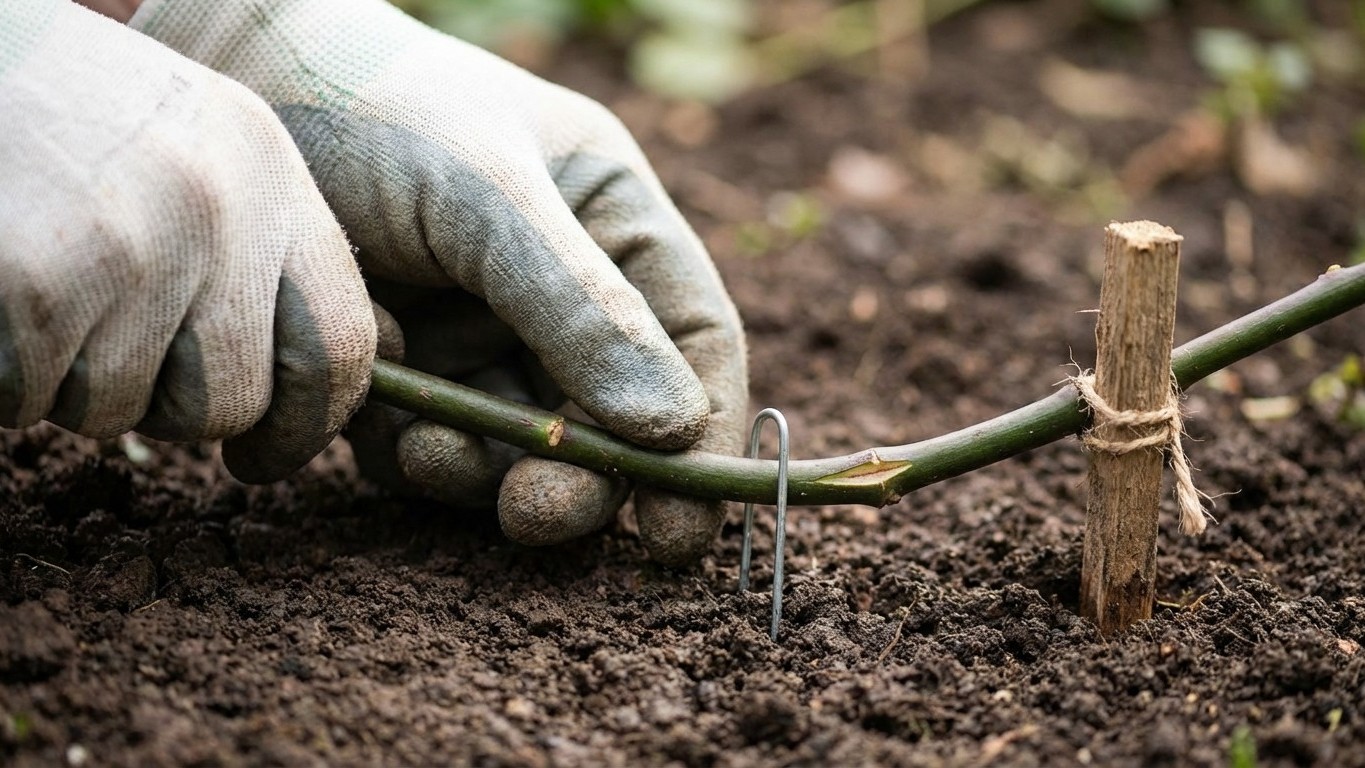
Choose a long, flexible stem, the kind that naturally arches toward the ground. Bend it down and identify a node (that slight bump where a leaf attaches) about 12 inches from the tip. At that node, make a shallow wound: a cut about one inch long, angled upward into the stem, removing a sliver of bark to expose the cambium. Some gardeners use a toothpick or small pebble to keep the wound open. Others apply a small amount of rooting hormone paste directly to the cut — this part is optional but does improve success rates on woody species like forsythia, lilac, or viburnum.
Bury that wounded section about two inches deep, anchor it with a U-shaped wire or a heavy stone, and water it in. The tip of the stem stays above ground, propped upright with a small stake if needed. Then you wait. Six to ten weeks later, gentle resistance when you tug tells you roots have formed. A few weeks after that, you sever the connection to the parent plant, wait another two weeks for the new plant to adjust, then dig it up and transplant it.
The success rate compared to traditional cuttings? Night and day. Because the stem never experiences the stress of separation, it isn’t racing to form roots before dying. The parent plant keeps it alive, hydrated, and fed the entire time. You’re essentially tricking the shrub into doing the hard work for you.
Which shrubs respond best (and which to avoid)
Ground layering works beautifully on a long list of common garden shrubs. Forsythia practically layers itself if you leave a branch on the ground long enough, no intervention required. Rhododendrons, azaleas, climbing roses, wisteria, and most deciduous hedging plants like privet and photinia respond well. Hydrangeas, particularly the mophead varieties that tend to sprawl anyway, are almost embarrassingly easy to layer in spring.
Shrubs with very stiff, upright growth habits are harder to work with simply because you can’t bend the stems down to soil level without snapping them. For those, think upright conifers or some columnar hollies, traditional cuttings remain the better route, but taken in late summer when semi-hardwood material is available.
One species worth special mention is the forsythia. A mature forsythia can produce a dozen new plants in a single spring through layering, all of them blooming-size within two seasons. Considering that a single nursery-grown forsythia runs anywhere from $25 to $50 depending on size, a little patience in April essentially prints money for your garden budget.
Making the most of the spring window
Timing matters more than most guides admit. The ideal window for ground layering most deciduous shrubs in the United States is roughly mid-March through early May, before the heat of summer slows root development and stresses both the parent plant and the layered stem. In colder zones (5 and below), wait until the soil is consistently above 50°F, roots form faster in warm soil, and a layer started in cold ground can simply sit dormant for weeks before anything happens.
One practical detail that’s easy to overlook: mark your layers. Seriously. By June, you will have completely forgotten which stems you wounded and anchored, and you’ll either dig them up too early or accidentally pull them out while weeding. A small flag or a wooden craft stick pushed into the soil next to each layer takes thirty seconds and saves a lot of frustration.
The deeper shift here isn’t just technical. It’s a change in relationship with your garden, from forcing plants to comply with what you want them to do, to working with what they already know how to do. Shrubs have been reproducing themselves for millions of years before we showed up with rooting powder. Maybe the best thing we can do is get out of the way and help a little.