
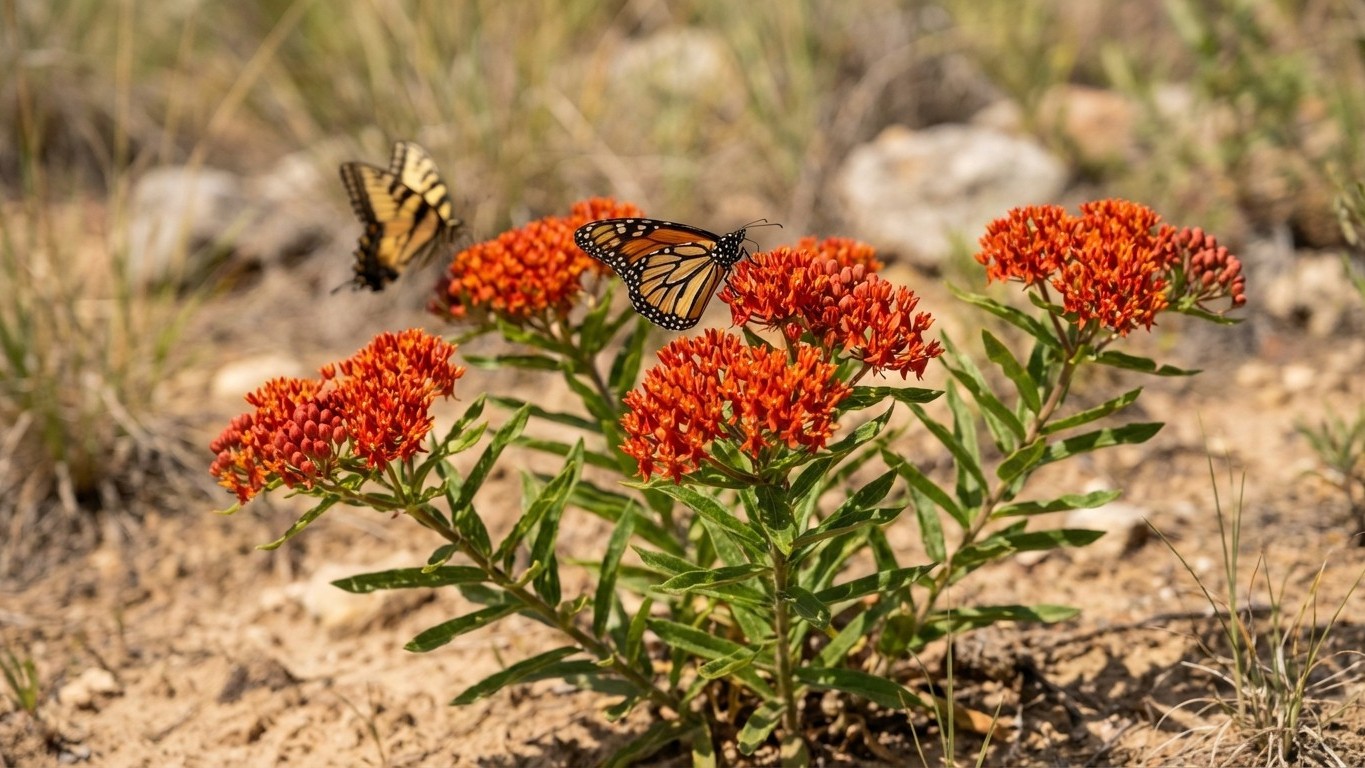
Six months of color. Zero watering. a Garden Buzzing with monarchs, swallowtails, and painted ladies. If that sounds too good to be true, you haven’t met Asclepias tuberosa — better known as butterfly weed. This native North American perennial has been quietly thriving in roadside ditches and prairie edges for centuries, and yet it rarely shows up in the average suburban garden. That’s a genuine shame, and frankly, a missed opportunity.
Key takeaways
- A perennial that blooms orange, yellow, or red from May through October with zero maintenance once established
- The only plant where monarch butterfly caterpillars can complete their life cycle—planting it is genuine conservation
- Has a two-foot taproot that makes it immune to drought, thriving in ‘poor’ soil that defeats other plants
Why Butterfly Weed Gets Overlooked (And Why That’s Changing)
The name doesn’t help. “Weed” carries obvious baggage, and most gardeners don’t exactly go hunting for it at their local nursery. It doesn’t have the romantic cachet of lavender or the social-media glow of ornamental grasses. But here’s what it does have: a deep taproot that reaches down two feet into the soil, making it essentially immune to drought once established. While your neighbors are dragging out the hose every other evening through July, butterfly weed is thriving on benign neglect.
The bloom window is the real story. Starting as early as late May in warmer zones and stretching well into October, Asclepias tuberosa produces clusters of vivid orange, yellow, or red florets, flat-topped structures called umbels, that act like landing pads for pollinators. This isn’t a plant that gives you one spectacular week and then sulks. It’s a slow burn across an entire growing season, consistently delivering color when many other perennials have already called it quits.
The Butterfly Connection Is Literal, Not Decorative
Butterfly weed belongs to the milkweed family, which makes it the only host plant for monarch butterfly larvae in North America. Female monarchs travel hundreds of miles specifically seeking out milkweed species to lay their eggs. Without it, their caterpillars simply cannot complete their life cycle. The monarch population has dropped by more than 80% over the past two decades, and habitat loss, including the casual removal of milkweed from gardens and roadsides — is a primary driver of that collapse.
Planting even a small cluster of butterfly weed isn’t just gardening. It’s participating in an actual conservation effort. Researchers at the Xerces Society have documented over 450 species of native bees and other pollinators that rely on milkweed as a nectar source. On a single warm afternoon in late summer, a mature clump of Asclepias tuberosa can draw in tiger swallowtails, fritillaries, skippers, and hummingbird moths simultaneously. It’s the kind of spectacle that makes you pull up a chair and just watch.
Getting It Established (The One Part That Requires Patience)
Here’s the honest part: butterfly weed is slow to get started. That deep taproot takes a full growing season to develop, which means the first year often produces modest growth and sometimes no blooms at all. New gardeners frequently rip it out in frustration, assuming it’s a failure. Give it one more season. The second year, it doubles down. By year three, you have a self-sustaining, drought-proof specimen that asks almost nothing from you.
Starting from seed is possible but requires cold stratification, a period of cold, moist conditions that mimics winter, usually achieved by wrapping damp seeds in a paper towel and refrigerating them for 30 days before planting. Most gardeners skip the hassle and buy nursery-grown plugs in spring, which cuts the waiting period considerably. One thing to avoid: transplanting mature plants. That taproot resents disturbance, and moved specimens rarely recover well. Pick your spot thoughtfully and let it be.
Soil preference leans toward sandy, well-drained ground, the kind of “poor” soil that frustrates roses and dahlias. Butterfly weed Actually performs worse in rich, amended beds, where it grows lush but tends to flop and produce fewer flowers. Think of the dry hillside you’ve been ignoring, the strip between sidewalk and street, the corner that dries out every August. Those are its preferred addresses.
Designing With Butterfly Weed Without It Looking Wild
The plant’s natural informality makes some gardeners nervous. Left alone, it grows in loose, branching clumps reaching about two feet tall, and the late-season seed pods, long, slender capsules that split open to release silky white floss — have a distinctly untamed quality. But that can work in your favor with the right companions.
Pair it with native ornamental grasses like little bluestem (Schizachyrium scoparium), which provides textural contrast and shares the same dry-soil preference. Blue wild indigo (Baptisia australis) makes an excellent neighbor, its purple spring blooms giving way to dark seed pods just as butterfly weed hits its orange peak. For a tighter, more curated look, white coneflower (Echinacea purpurea ‘White Swan’) creates a clean backdrop that lets the orange pop without the planting looking chaotic.
The seed pods deserve a design note of their own. Many gardeners cut them off reflexively, but leaving a few on the plant through autumn creates winter interest and allows monarchs to complete their seeding cycle. If you want to contain the spread, remove most pods and let just a handful mature. The seedlings that result can be potted up in spring and gifted, a not-insignificant perk.
There’s something quietly subversive about a plant that asks you to do less. In a gardening culture that often mistakes effort for virtue (the elaborate drip system, the weekly feeding schedule, the obsessive deadheading), butterfly weed suggests a different philosophy. Let the roots go deep. Trust the plant to know its business. Show up in August, pour yourself something cold, and watch the swallowtails do the work. Maybe that’s the real reason it keeps getting overlooked: we’re not sure we deserve something that gives so much in exchange for so little.