
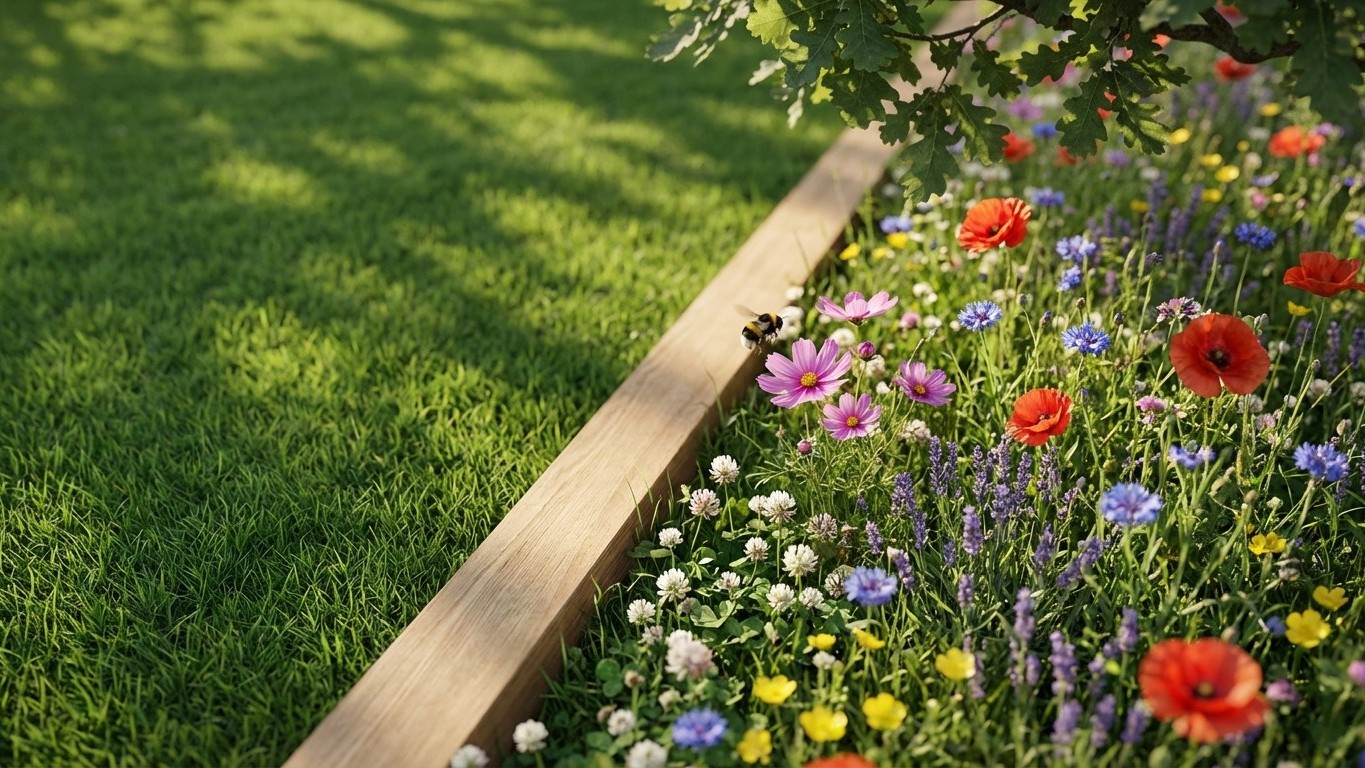
One spring morning two years ago, I put the mower away, walked past a small corner of my backyard, and just… left it alone. No trimming, no edging, no carefully manicured grass. What grew back over the following weeks changed how I think about lawns entirely, and apparently, it changed how my neighbors think about them too.
The patch in question was maybe 200 square feet, tucked between a fence and an old oak tree where the grass had always struggled anyway. Compacted soil, patchy coverage, a losing battle every single season. Stopping felt less like a gardening decision and more like an admission of defeat. But that defeat turned into something I couldn’t have planned if I tried.
Key takeaways
- A 200 square-foot unmowed patch attracted multiple bee species within weeks—and caught a local beekeeper’s attention
- Initial neighborhood skepticism turned into enthusiasm when neighbors realized the garden was intentional, not neglected
- Four households on the street converted their own lawn sections after witnessing the results firsthand
What actually happens when you stop mowing
The first two weeks looked rough. Scraggly grass stood at odd heights, a few dandelions pushed through, and honestly, it looked like neglect. That period tests your resolve. Your eye is trained to read unmowed grass as laziness, a social contract broken. But around week three, something shifted. Clover spread low and dense, a soft green carpet dotted with small white blooms. Then the pollinators found it.
Bumblebees showed up first. Then honeybees, then a variety of small native bees I couldn’t name but could photograph. A neighbor who keeps a hive two streets over stopped by one afternoon and told me she’d noticed her bees ranging farther from home this year. She walked over to look at my corner patch and went quiet for a moment. “That’s why,” she said.
The science backs this up in striking ways. A 2019 study published in the journal Biological Conservation found that households which mowed every two weeks instead of every week saw a 30 percent increase in bee abundance. Letting grass grow even taller, or abandoning small sections entirely, amplifies that effect considerably. Lawns cover roughly 40 million acres across the United States, an area larger than the entire state of Georgia. Even converting a fraction of that to low-maintenance habitat has measurable ecological weight.
The neighborhood reaction, honestly
Not everyone was charmed. One neighbor left a note in my mailbox asking whether everything was “okay at home.” Another mentioned HOA aesthetics during a block party in a tone that wasn’t quite a question. The social pressure around lawn appearance in American suburbs is real, documented, and frankly a little absurd when you examine it. The obsession with uniform turf grass dates back to post-WWII prosperity signaling, not to any inherent beauty standard.
But something unexpected happened alongside the skepticism. A couple walking their dog stopped one evening to watch a monarch butterfly work through the clover and a few self-seeded black-eyed Susans that had apparently been dormant in my soil for years. They asked what I had planted. When I said “nothing,” the husband laughed out loud. Three weeks later, his wife knocked on my door to ask which part of the yard I had stopped maintaining, because she wanted to try it too.
By the end of that first summer, four households on my street had unmowed corners or strips. One family went further, converting a full side yard into a prairie-style planting that became the most photographed garden on the block by autumn.
Making it work without making it look accidental
The single most effective thing I did to make the wild corner feel intentional rather than forgotten was to edge it cleanly. A sharp border between the manicured lawn and the wild patch signals design, not neglect. It reads as a choice, and people respond to that differently. Add a small wooden stake sign that says “pollinator habitat” and you’ve essentially reframed the entire conversation.
Choosing what grows matters too, though you have more control than you might expect. Letting native plants establish themselves naturally is slower but produces species already adapted to your specific soil and climate. If you want faster results, scatter a handful of regionally appropriate wildflower seeds in early fall. In most of the continental U.S., that means things like coneflowers, wild bergamot, lance-leaved coreopsis, or native grasses like little bluestem. These aren’t specialty items anymore; most independent garden centers stock them, and several seed companies now offer state-specific mixes.
Water requirements drop almost immediately. My “wild” corner needs zero supplemental irrigation in most years. That corner of compacted, struggling turf used to get watered weekly just to stay mediocre. The math on that, both in time and water bills, adds up fast.
What a lawn can become
There’s a broader shift happening in how Americans think about residential outdoor space, and the unmowed lawn is one small but visible piece of it. States like Maryland have passed “No Mow” legislation protecting residents who convert lawns to native plantings. Cities from Minneapolis to Tucson have introduced rebate programs for turf removal. The movement isn’t fringe anymore.
My small corner patch has hosted three species of butterflies I’ve now identified, at least six bee species, and last fall, a pair of goldfinches that picked apart the dried coneflower heads for twenty minutes while I watched from the kitchen window. The oak tree that used to preside over a patchy, struggling lawn now anchors something that actually functions as habitat.
The neighbor who left the concerned note eventually asked me to walk her through what I’d done. She converted a strip along her back fence last summer. Her kids named the patch. That, more than anything, is the part that stays with me: the moment a lawn stops being maintenance and starts being something you name.
How much of your outdoor space are you maintaining for yourself, and how much are you maintaining for an idea of what a yard is supposed to look like?