
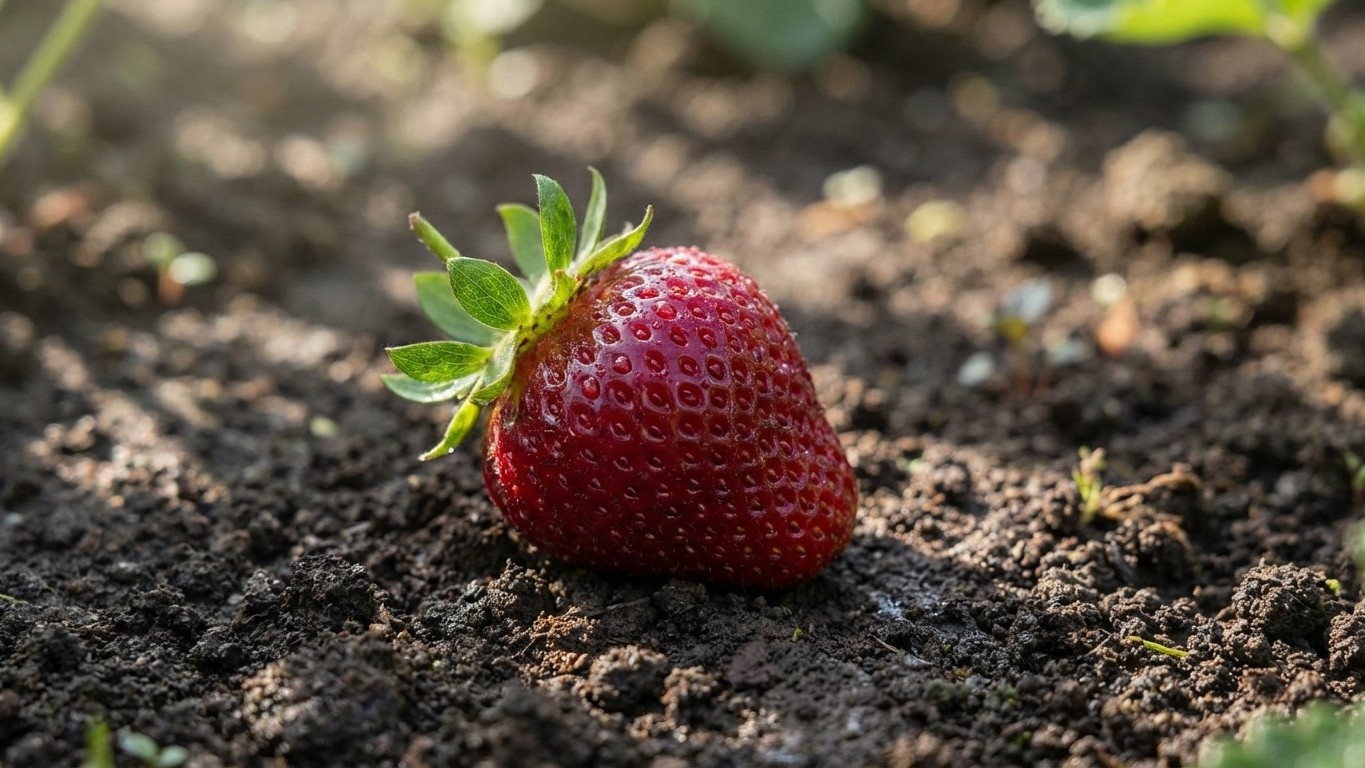
Straw around strawberries is one of those garden rituals that gets passed down like a family recipe, nobody questions it, everyone does it, and most people assume it’s the whole story. It isn’t. The straw mulch tradition, while genuinely useful for keeping fruit off wet soil, has almost nothing to do with sweetness. And yet that’s the part every home gardener wants to crack: why do some strawberries taste like candy and others like a disappointing red pebble?
Key takeaways
- The one nutrient nobody talks about that controls sugar transport in strawberries
- Why heavy rain right before harvest might be sabotaging your flavor without you realizing it
- The exact moment to pick strawberries when they stop ripening forever
What actually controls sugar development in strawberries
Sweetness in strawberries comes down to one thing more than any other: the ratio of sugars to acids inside the fruit, and that ratio is almost entirely governed by sunlight hours during the final ripening window. A strawberry that gets consistent, direct sun in its last five to seven days before harvest can dramatically concentrate its sugar content, we’re talking the difference between 6% and 10% total soluble solids, which is the measurement scientists use for sweetness. That doesn’t sound like much, but your tongue can taste it immediately.
The problem with most home garden setups is foliage. Strawberry plants are enthusiastic growers, and by late spring the leaves can easily form a canopy that shades the fruit. Gently redirecting leaves to expose berries to afternoon sun takes about three minutes per plant and costs nothing. Skipping it costs you flavor.
Temperature swings also matter, and here’s where most guides go quiet. Strawberries that experience cool nights (below 60°F) after warm days tend to convert starches to sugars more efficiently, it’s a stress response the plant uses to protect its tissue. This is exactly why strawberries grown at higher elevations, or in coastal climates with marine fog nights, often taste more complex than those grown in consistently warm conditions. You can’t manufacture cool nights, but you can choose varieties suited to your climate’s natural temperature patterns rather than fighting them.
The potassium connection nobody talks about
Here’s something that doesn’t make it into most gardening blogs: potassium is the single most influential nutrient for fruit sugar content. Research from agricultural extension programs consistently shows that potassium-deficient strawberry plants produce fruit with lower Brix scores (the measure of dissolved sugars) even when every other condition is perfect. The reason is that potassium drives the transport of sugars from leaves to fruit through the plant’s phloem system, without enough of it, the sugars produced by photosynthesis simply don’t move efficiently to where you want them.
The fix is straightforward but specific. A top dressing of wood ash (applied sparingly, as it also raises soil pH) or a side dressing of sulfate of potash worked into the soil about three weeks before your expected harvest window gives plants enough time to uptake what they need. This is different from the nitrogen-heavy fertilizers that push leaf growth, the last thing a fruiting strawberry needs is more leaves.
Soil pH sits underneath all of this. Strawberries want a pH between 5.5 and 6.5. Outside that range, the plant can’t access nutrients efficiently regardless of what you’ve added to the soil. A basic pH test (they’re inexpensive and available at most garden centers) takes five minutes and removes all the guesswork. Think of pH as the lock; every fertilizer you apply is a key that won’t work if the lock is wrong.
Watering rhythm is where most people quietly sabotage their harvest
Consistent moisture sounds like a simple goal, but the specific timing of that consistency changes the flavor of the fruit. Overwatering in the two weeks before harvest dilutes the sugars inside the berry, literally. The plant absorbs water faster than it can produce new sugars, and the result is a large, pale, watery strawberry that looks impressive and tastes like almost nothing. Many gardeners actually achieve their worst-tasting strawberries in years of heavy rain right before picking.
The approach that works is deliberately pulling back on irrigation about ten days before your anticipated harvest, reducing watering frequency (not eliminating it, stressed plants drop fruit), and letting the soil dry slightly between waterings. This mild stress signals the plant to concentrate sugars rather than expand fruit volume. Size suffers slightly. Flavor does not.
Drip irrigation at soil level, rather than overhead watering, also reduces foliar disease pressure, which means healthier leaves running photosynthesis longer, producing more sugars to send to fruit. Two birds, one adjustment.
The harvest moment is its own science
Picking a strawberry at the right moment is the final variable, and it’s one that most people get slightly wrong in the same direction, they pick too early. A strawberry doesn’t continue ripening meaningfully after harvest the way a banana or a peach does. The sugars you get at picking are roughly the sugars you eat. A berry that is 90% red at harvest will not become sweeter on your counter; it will just get softer.
Fully ripe strawberries are uniformly deep red, including around the calyx (the green leafy cap). The tip is often the last part to color, and it should be red, not white or pink. The berry should detach from the stem with almost no resistance when lifted gently. Harvest in the morning, after dew has dried but before afternoon heat, when the fruit’s own temperature is still cool and its cellular structure firmest.
The straw isn’t useless, it genuinely prevents soil splash on fruit and keeps moisture more even — but it earns its place as one modest tool in a more thoughtful system, not as the main event. The real levers for sweetness are sun exposure, potassium availability, pre-harvest water discipline, and timing the pick correctly. Get those four things right, and the variety almost doesn’t matter. Get them wrong, and no amount of straw in the world helps.
What’s worth sitting with, as you plan this season’s patch, is how many of these adjustments are about subtraction rather than addition. Less water. Less nitrogen. Less shade. Less time between field and mouth. Gardening advice almost always tells you to do more. Sweeter strawberries might be asking you to do less, just in the right places.