
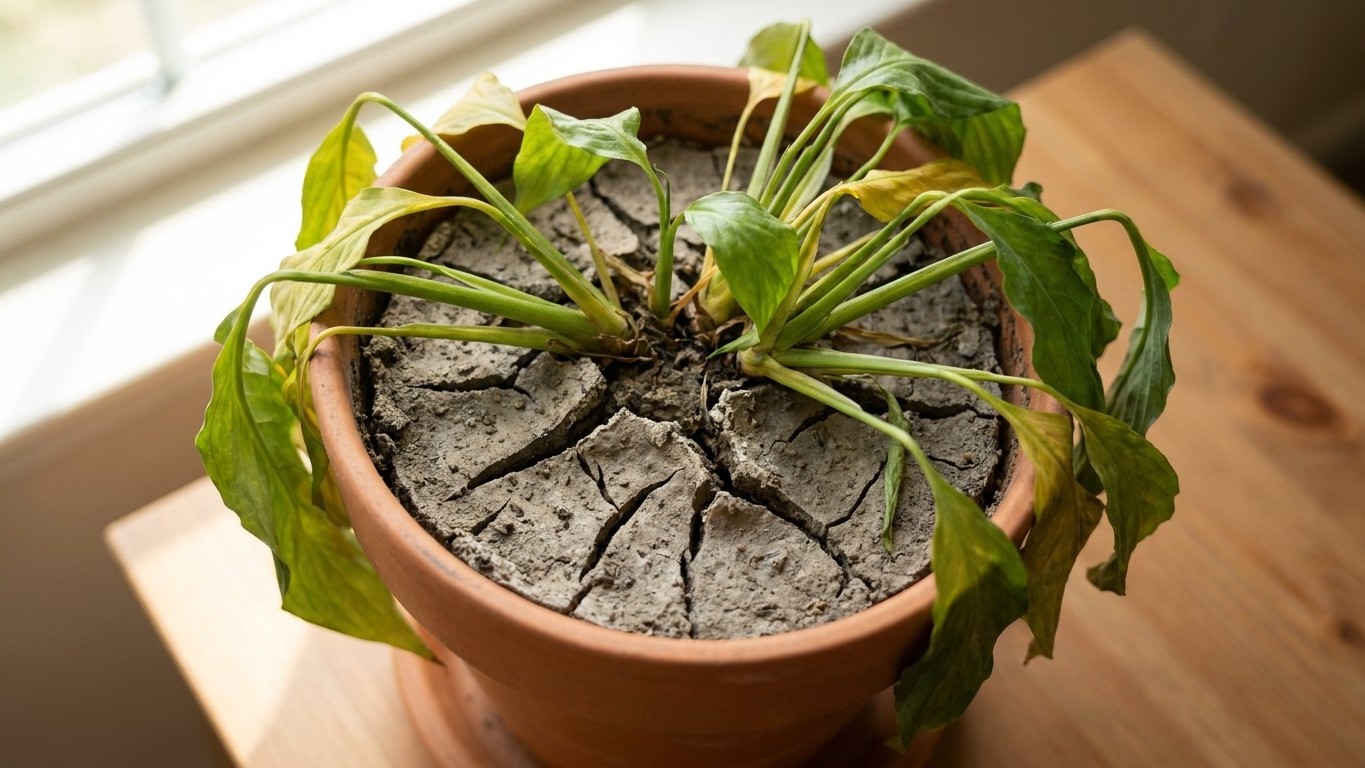
A month after spreading coffee grounds around her garden beds, a home gardener scraped back the surface and discovered something troubling: a hard, gray-brown crust sitting on top of her soil like a ceramic tile. Her plants were wilting despite regular watering. The culprit wasn’t drought. It was the very thing she thought was helping them.
Coffee grounds have become one of gardening’s most persistent “life hacks.” Social media feeds have been flooded with tips about spreading them around plants to boost nutrients, deter slugs, and improve soil. The idea is genuinely appealing, you’re recycling kitchen waste, feeding the garden, feeling virtuous before 9 a.m. The problem is that the application method most people use can actively starve their plants of water.
Key takeaways
- Coffee grounds dry into a water-repellent crust that can block water and air from reaching plant roots—even when you’re watering regularly
- The brewing process removes almost all acidity, making the popular myth about lowering soil pH completely false
- Uncomposted grounds trigger nitrogen-depleting microbes that actually starve plants of the nutrient you were trying to add
The Crust Nobody Warns You About
The fine particles of coffee grounds can lock together when they dry, forming a hard crust that prevents water and air from reaching plant roots. This isn’t a rare edge case or a theoretical risk, it happens reliably, and it’s the reason such finely textured particles tend to compact and form a crust that blocks water and air from reaching roots, which is why they are not recommended as mulch. The Old Farmer’s Almanac is blunt about it.
Thick layers of coffee grounds can compact and become hydrophobic, shedding the water needed for plant growth. If this organic matter dries out, it’s very difficult to rehydrate. Think about that for a second: you water your plants, the water hits the coffee crust, and instead of soaking in, it slides off to the sides. This hydrophobic crust prevents water from reaching plant roots, essentially creating drought conditions even when you’re watering regularly. Your plants are thirsty not because you forgot to water them, but because a supposedly helpful amendment is blocking every drop.
Grounds will dry into a water-repellent crust if they are placed too thickly, say half an inch. Half an inch. That’s not a particularly heavy application, it’s roughly the depth of a well-placed layer of wood chips. The difference is that wood chips are coarse and irregular, leaving gaps for air and water to pass through. Coffee grounds, ground to a near-powder consistency, pack together like wet sand drying in the sun.
The Nitrogen Trap (And the Acid Myth)
The water problem isn’t the only surprise. When large amounts of uncomposted grounds are mixed deep into the soil, the microbes that work to decompose them consume nitrogen from the soil to do their job. This can temporarily “rob” nearby plants of nitrogen. So you spread grounds to feed your plants, and the microbial activity they trigger actually depletes the very nutrient you were trying to add. When applying coffee grounds directly to garden soil, add some nitrogen fertilizer also to the soil. Nitrogen-eating microbes used in the decomposition of the grounds will grow in the soil, stealing available nitrogen from your plants.
Then there’s the acid myth, probably the most stubborn piece of gardening folklore around. Many people spread coffee grounds specifically around acid-loving plants like blueberries or hydrangeas, expecting a pH drop. After brewing, grounds are close to neutral — around pH 6.5 to 6.8. That means coffee grounds won’t lower soil pH enough to benefit acid-loving plants such as rhododendrons, azaleas, blueberries, gardenias and blue-flowering hydrangeas. The brewing process strips out most of the acidity. Oregon State University soil scientist Linda Brewer has been making this point for years, and yet the myth persists on every gardening forum from here to Portland.
“The big message is that generally people are too enthusiastic,” Brewer said. “You really need to take the recommended dosages to heart. I’ve visited a site where a raised bed was ruined by too much coffee grounds. Like most kitchen waste, it is a fine amendment for the garden, but like anything else, coffee grounds can be overdone.”
How to Actually Use Coffee Grounds Without Killing Your Plants
The good news: coffee grounds are genuinely useful. Although coffee grounds contain 1% to 2% nitrogen and small amounts of micronutrients, they aren’t a major source of plant nutrition, but they do contribute something real. Coffee grounds contribute small amounts of potassium, phosphorus, calcium and magnesium, and trace amounts of iron, copper, manganese and zinc. The solution isn’t to stop using them. It’s to change how you apply them.
When using coffee grounds as a soil amendment, working in a half inch to a depth of 4 inches is recommended. If used as a mulch on top of the soil, a layer of leaves or bark mulch helps keep the grounds from drying out and repelling water. Mixing them in, rather than piling them on top, is what separates a useful amendment from a water-blocking crust. If applying composted grounds directly to soil, stick to a thin layer, no more than ½ inch. Sprinkle on top or rake into the top 2 inches of soil.
The composting route is even smarter. Coffee grounds are superb for composting. Microorganisms break them down over a few months, releasing plant-available nitrogen. Their fine texture helps them mix and rot quickly. Just make sure coffee grounds make up no more than 15–20% of your total compost volume. Once composted, the crust risk disappears entirely, and the nutrients become genuinely bioavailable rather than locked up in decomposition competition.
For houseplants and containers, there’s an even cleaner option: steep used coffee grounds in water for 24–48 hours to create a nutrient-rich “tea” that can be used to water plants directly. This method is ideal for giving container plants and indoor plants a gentle, immediate nutrient boost without the risks of direct soil application.
One More Thing Worth Knowing
Fresh coffee grounds contain caffeine that can inhibit seed germination and stunt young seedlings. The chemical literally stops some plants from growing properly, just like caffeine keeps us awake by blocking sleep signals. So if you’re starting seeds or working around young transplants, keep the grounds away entirely until the plants are established. Do not apply coffee grounds near seedlings or young plants, as large amounts of grounds can suppress growth.
One detail that rarely makes it into the social media tutorials: damp coffee grounds on the surface of indoor plants can sometimes attract fungus gnats. Trade the soil-top application for the liquid “coffee tea” method indoors, and you sidestep both the crust problem and the pest issue in one move. The grounds are still doing their job, just through a different delivery system, and without turning your favorite fern into a no-water zone.
Sources : news.oregonstate.edu | positivebloom.com