
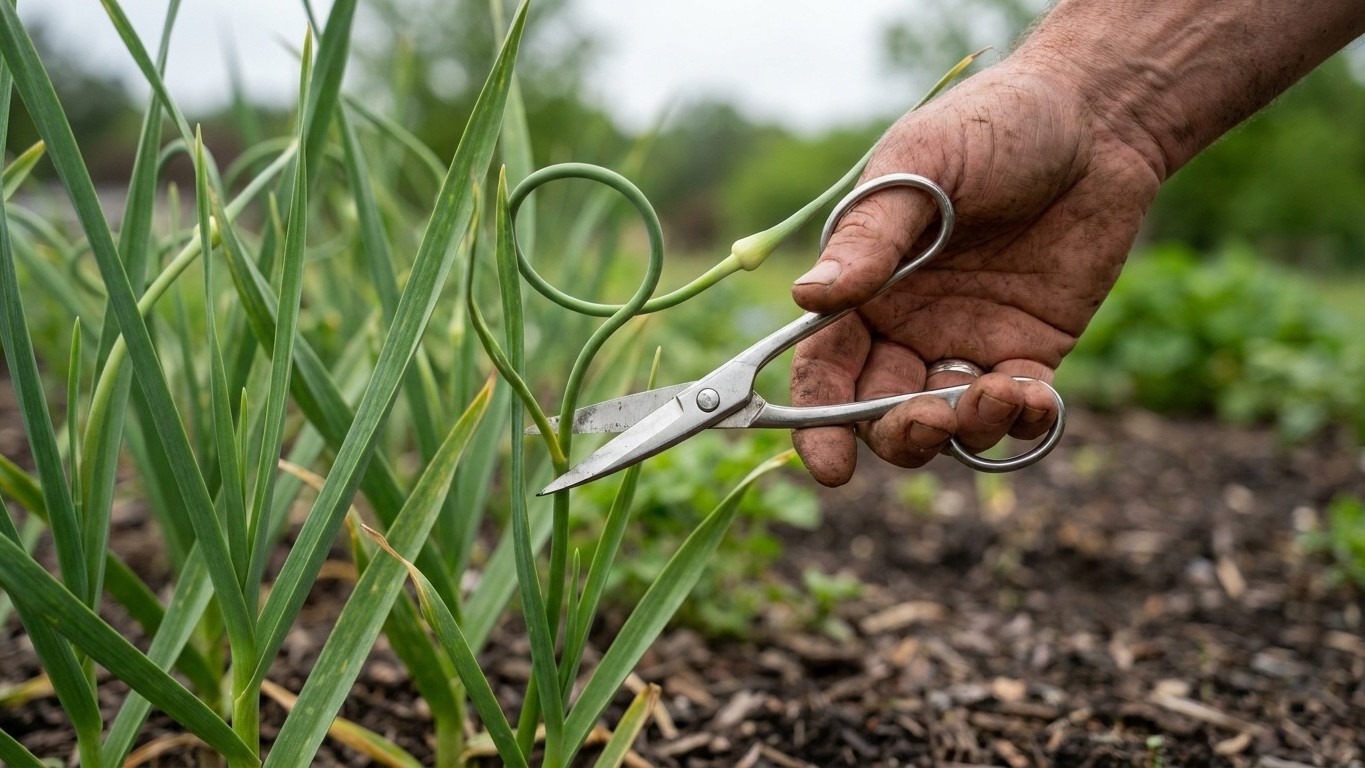
Garlic scapes are sneaky. Those spiraling green tendrils that shoot up from hardneck garlic in late spring look almost too pretty to cut, architectural, even sculptural. So the temptation to leave them alone, to let the plant do its thing, feels completely natural. The problem is that leaving them past their prime costs you the harvest. Not partially. Fully. The bulbs stall out around golf-ball size, sometimes smaller, and no amount of extra watering or waiting will reverse the damage once the window closes.
Key takeaways
- A single architectural tendril can redirect your entire garlic plant’s energy away from bulb development
- The difference between cutting at the right moment versus missing the window by a week can mean losing 25-40% of your harvest weight
- That invisible damage you can’t see happening underground becomes painfully obvious the moment you pull the stunted bulbs
What a scape actually does to the plant
A garlic scape is the flower stalk of a hardneck garlic variety, the plant’s attempt to reproduce sexually by forming a bulbil cluster at the top. Left alone, it becomes the plant’s primary energy destination. Photosynthesis keeps running, but instead of sending sugars and nutrients down into the developing cloves, the plant redirects them upward, fueling the scape’s growth and eventual seed production. The bulb, underground and out of sight, simply stops expanding. It’s not diseased or stressed — it’s just been told by its own biology to prioritize something else.
The timing matters more than most growers expect. Scapes typically emerge in late May to mid-June depending on your climate and variety. They start curling into that characteristic spiral, then gradually straighten as the flower head matures. The sweet spot for cutting is when the scape has made one full curl but before it straightens out completely, roughly a week to ten days after emergence. Miss that window and the competition for resources has already begun. Wait until after the scape straightens, and you’ve surrendered meaningful bulb development time that simply cannot be recovered.
The math behind the size difference
Studies from university extension programs, including research from Cornell’s vegetable program, have consistently shown that timely scape removal can increase bulb weight by 25 to 40 percent compared to plants where scapes were left intact. That’s not a marginal gain. On a productive bed of 50 plants, the difference between a golf-ball harvest and a proper full-sized head can translate to nearly twice the usable garlic by weight. For a home grower counting on that harvest to last through winter, the gap is deeply felt in December.
What makes this particularly frustrating is how invisible the problem is while it’s happening. The plant above ground looks perfectly healthy, the scape is lush, the leaves stay green. There’s no visible distress signal. You only discover the consequence when you finally pull the bulbs in July, hold them up, and realize they never got past the size they were three weeks ago.
Cutting the scape: the how matters as much as the when
Cut as low as you can without removing green leaf material. Snipping just the curled tip accomplishes almost nothing, the remaining stalk still draws energy. The goal is to remove the entire stem down to where it emerges from the topmost leaf sheath. Use clean scissors or a knife; it doesn’t need to be surgical, but a clean cut reduces the minor risk of introducing disease into an open wound on the plant. Some growers simply snap them off by hand at the base, which works fine.
The scapes themselves are entirely edible, and this is where the trade-off becomes a genuine bonus. Chopped and sautéed, they taste like mild garlic with a hint of green onion. Blended into a pesto with olive oil, lemon, and pine nuts, they’re genuinely excellent, a seasonal Ingredient that has a roughly two-week window before it disappears. Roasted whole at high heat until the tips blister, they make a compelling side dish. The harvest above ground compensates, at least partly, for the patience required below it.
What to watch for when the scapes are gone
After cutting, give the plants two to three weeks of continued growth before checking for harvest signals. The trigger for pulling garlic isn’t a calendar date, it’s leaf count. Garlic bulbs are wrapped in layers of papery skin, and each layer corresponds to a green leaf above ground. When roughly half the leaves have yellowed and died back (typically five or six leaves remaining green out of ten to twelve), the bulb has finished sizing and its outer wrapper has cured enough to give it storage durability. Pull too early and the wrapper is thin and tears easily, shortening shelf life. Pull too late and the wrapper deteriorates in the soil, leaving cloves exposed and prone to rot.
Soil moisture in the final two weeks before harvest matters, too. Reducing irrigation, or stopping entirely if rainfall allows, firms up the bulb and helps the wrapper dry down properly. Wet soil at harvest doesn’t ruin garlic, but it adds curing time and slightly increases mold risk during the drying phase. Cure the pulled bulbs in a shaded, well-ventilated spot for three to four weeks before storing. A garage with a fan running works better than most people expect.
One detail that often gets overlooked: softneck garlic varieties, the kind most commonly found in grocery stores, don’t produce scapes at all. The scape timing issue is specific to hardneck types, Rocambole, Porcelain, Purple Stripe, which tend to be the varieties serious home growers favor precisely for their complex flavor and large clove size. That large clove potential is exactly what gets sacrificed when the scape is left too long. The variety that promised the most delivers the least, not because anything went wrong with the soil or the planting, but because of a two-week window that passed quietly in late spring while no one was paying attention.