
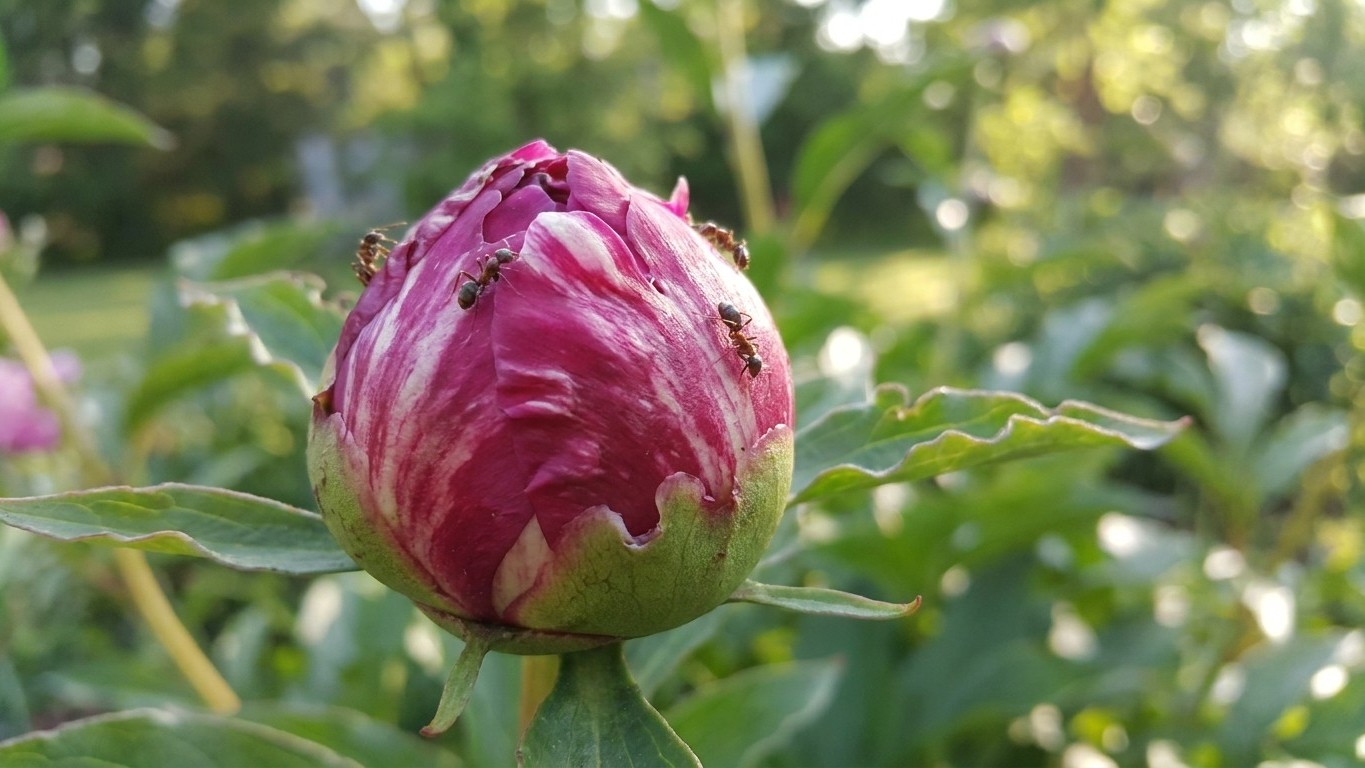
Ants on peonies are one of those garden sights that trigger panic in almost every new gardener. There they are, dozens of them, crawling over the tightly closed buds, and the instinct is immediate: grab the hose, blast them off, protect the flowers. That’s exactly what I was doing one afternoon in early May when my neighbor leaned over the fence and said, quietly and without any drama: “You’re killing your own blooms.”
She wasn’t being rude. She was saving me from a mistake that, it turns out, millions of gardeners make every spring, and one that has a surprisingly elegant explanation rooted in plant biology.
Key takeaways
- A chance comment over the fence reveals a gardening mistake that millions make every spring
- Peonies and ants have an ancient partnership that actually protects delicate buds from damage
- High-pressure water causes more peony failures than insects ever could
The Relationship Between Ants and Peonies Is Older Than Your Garden
Peony buds produce nectar. Not from their flowers, but from specialized glands on the outside of the bud called extrafloral nectaries, tiny nectar-secreting structures that exist purely to attract insects before the flower even opens. Ants drink that nectar. In exchange, they patrol the bud, warding off other insects that might damage the developing petals. It’s a classic mutualistic relationship, the kind that took thousands of years of co-evolution to refine.
The popular myth, still circulating on gardening forums, is that ants are somehow necessary for peonies to open. They’re not. A peony in a sealed greenhouse will open just fine without a single ant. But what is true is that ants do no harm to the plant, and actively contribute to its protection during one of its most vulnerable moments. Hosing them off repeatedly doesn’t just disrupt that relationship; it can stress the buds, bruise the delicate outer petals, and invite other pests that the ants were keeping at bay.
What the Hose Actually Does to a Peony Bud
High-pressure water on a closed peony bud is not benign. The outer petals, called sepals, are tightly wrapped around the interior, and they’re surprisingly fragile at this stage. Repeated soaking can promote botrytis blight, a fungal disease that thrives in wet conditions and is one of the most common killers of peony buds. The bud turns brown, goes mushy, and never opens. Gardeners who aggressively hose their peonies to remove ants sometimes blame the weather for bud failure when the cause was the intervention itself.
My neighbor, who has grown peonies for over thirty years in the same yard, put it plainly: she lost an entire row of Sarah Bernhardt peonies to botrytis one season because she’d been watering them from above to keep the buds “clean.” She switched to drip irrigation at the base and stopped interfering with the ants. She hasn’t lost a bud to the fungus since.
How to Actually Handle Ants If They Come Indoors
The one legitimate concern with ants and peonies is cut flowers. Bring a peony stem inside and you might bring a dozen ants with it. The fix is simple and requires no chemicals: shake the stem gently over the garden before bringing it in, then let the cut stem soak in a bucket of cool water for 20 to 30 minutes. The ants leave on their own. No hose required, no pesticide, no drama.
Pesticide use near peony buds is worth addressing separately, because it’s a more serious mistake than hosing. Systemic insecticides applied to plants in bloom, or pre-bloom, can travel through the nectar and affect pollinators well beyond ants. The peony’s extrafloral nectaries make it particularly efficient at distributing whatever is in its system. This is why many entomologists specifically flag peonies as plants to leave untreated during their budding window, which typically runs from late April through mid-May in most of the continental U.S.
The Broader Shift: Learning to Read What’s Normal in the Garden
What my neighbor actually gave me that afternoon wasn’t just a tip about ants. It was a framework for gardening that I’ve found more useful than any advice about fertilizers or pruning schedules: when something looks alarming in the garden, ask whether the plant has been doing this for centuries before you arrived.
Peonies are ancient plants. They’ve been cultivated in China for over 2,000 years, and the relationship with ants predates cultivation entirely. The ant-peony partnership is documented in botanical literature going back to the 19th century. The plant is not in distress. The ants are not a sign of neglect. The garden is doing exactly what it’s supposed to do.
This kind of ecological literacy, recognizing normal plant behavior versus actual problems, is the difference between a gardener who constantly intervenes and one who knows when to step back. Aphids clustered on rose stems? That’s a problem worth addressing. Ants on peony buds in May? That’s the system working. The two look superficially similar to a new eye, but the distinction matters enormously for outcomes.
One concrete step worth taking before next May: spend 10 minutes with your soil around the base of your peonies in early spring. If you see ant trails forming near the crown of the plant, that’s your early signal that the buds are beginning to develop their nectaries underground, weeks before you’ll see any visible bud. Those ants are already positioning themselves. They knew before you did.