
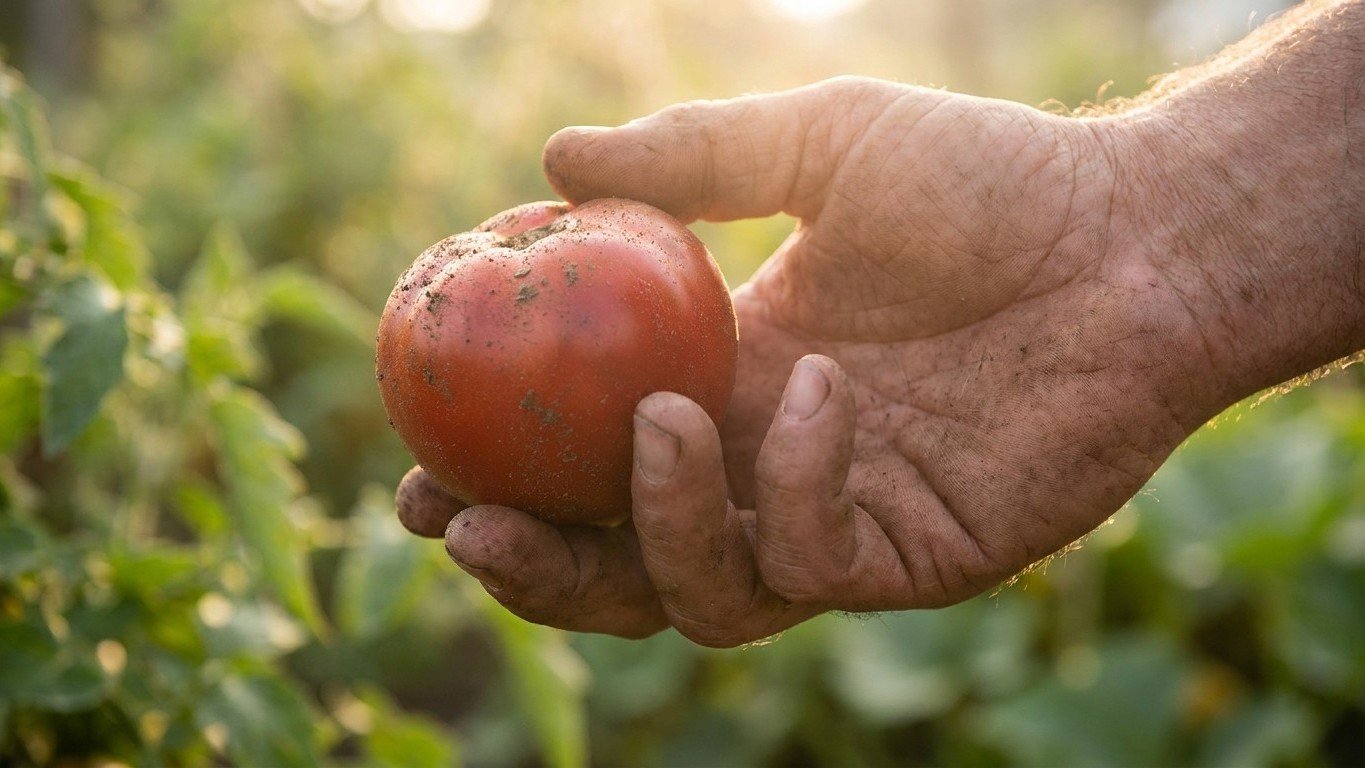
The market grower picked up the tomato, turned it over, pressed the skin gently with his thumb, and looked up. “You water them in the evening, don’t you?” He was right. And the clue wasn’t in what he saw, it was in what he tasted. A slightly watery, oddly bland flesh. Roots that had spent every night sitting in cool, damp soil instead of resting and preparing for the next morning’s photosynthesis surge. One habit, repeated all season long, silently degrading every tomato on the vine.
Key takeaways
- A single bite revealed what’s sabotaging your tomato flavor—and it’s not what you think
- Evening watering creates the perfect storm for disease and weak roots, but there’s a simple fix
- The exact morning window when tomatoes absorb water most efficiently—and why timing changes everything
Why evening watering is quietly sabotaging your harvest
When you water in the evening, moisture lingers on the leaves and soil surface for hours. Without the sun to help dry them, you’re inviting fungal diseases like blight, powdery mildew, and Septoria leaf spot, tiny black spots that cause leaves to yellow and drop. These aren’t exotic problems. They’re the most common killers of backyard tomato plants across the country, and they share one very specific appetite: most tomato plant diseases are a threat under moist conditions, and they also need relatively low temperatures to thrive. Evening watering delivers both, on a silver platter, every single night.
The science behind this is less complicated than it sounds. Blight spreads by fungal spores carried by insects, wind, water, and animals from infected plants and deposited on soil. When it rains, water hits the ground, splashing soil and spores onto the lower leaves of plants, where the disease shows its earliest symptoms. Watering from above in the evening recreates exactly that scenario, a manual rain shower, at the worst possible time. Avoid watering with overhead sprinklers in late afternoon or evening. If the plants stay wet all night, leaf spot infections are likely to occur. Purdue University’s extension service has been saying this for years. Most home gardeners just haven’t been listening.
There’s a root-level problem too, literally. In the evening, when temperatures drop, cold water sitting in the soil chills the roots. Stressed roots absorb nutrients poorly. This directly affects fruit quality. The tomato stops efficiently pulling up what it needs from the soil, and that shows up in the flavor.
Morning watering: what actually happens when you get the timing right
The best time to water your tomato plants is early in the morning. Doing so is most effective because it gives your plant time to move the water into the leaves before the primary heat of the day begins. That window, roughly 6 to 9 a.m., is when tomatoes are biologically primed to absorb. Photosynthesis kicks in with the light. Water moves up through the plant carrying dissolved nutrients. When you choose to water at dawn, the plant has sufficient time to absorb water and begin the process of photosynthesis, while at the same time, if by chance water fell onto the leaves, stem, or fruit, it would dry up before the midday sun intensifies.
The best time to water tomato plants is in the early morning, especially if you’re only able to use overhead irrigation instead of drip irrigation. Watering in the morning is ideal from a water efficiency standpoint, with less evaporation and water loss, and it also gives the foliage plenty of time to dry out. Efficiency matters too. Evening watering in a hot summer garden means a significant portion of moisture evaporates before roots can use it. The plant gets less than you put in.
What about the days you simply forget until after dinner? What’s most important is how the plant looks in the evening, after sunset. However, don’t water until the next morning. If you water at night, the already wetter conditions and low temperatures can promote disease. A wilting plant at 9 p.m. is uncomfortable to look at, but watering it right then is trading a cosmetic problem tonight for a fungal one next week.
The watering mistakes that go deeper than timing
Timing is the big one, but it’s not working alone. Where you aim the water matters just as much. Moisture, especially on the leaves, provides ideal conditions for the spores of diseases to take hold. Watering at the base of the plant can help prevent this; if you do use a sprinkler system or similar method, do so in the morning to allow the plant an opportunity to dry throughout the day. The USDA puts it plainly: keep water off the foliage. Always.
When you water too often, the roots do not need to grow deeply. Then, the second hot weather hits, they don’t have access to the water further down in the soil, and the plant suffers. Shallow, frequent watering produces shallow roots, the garden equivalent of raising kids who never learn to fend for themselves. Deep, less frequent sessions push roots downward, where soil temperatures stay cooler and moisture levels more stable. When watering your tomatoes, take your time to water slowly and deeply. This method encourages the roots to grow downward, seeking moisture, which leads to stronger plants. Aim for the water to penetrate at least 6 to 8 inches deep into the soil.
Inconsistency is the other silent killer, and it connects directly to one of the most frustrating problems home growers encounter. The conditions that cause blossom-end rot are closely linked to inconsistent soil moisture throughout the growing season. That dark, leathery patch on the bottom of an otherwise perfect tomato isn’t a calcium shortage in your soil. More than any other single factor, going from bone-dry to sopping wet is what triggers blossom-end rot. It slams the brakes on a plant’s ability to move calcium where it needs to go. The calcium is there. The plant just can’t access it when the moisture supply keeps lurching between drought and flood.
The practical fix: build a routine your tomatoes can count on
Drip irrigation is the gold standard. Drip irrigation systems can reduce water waste by up to 90% compared to traditional watering methods by delivering water directly to plant roots with minimal evaporation loss. For most backyard growers, though, a hose and a consistent schedule are enough. One inch of water a week is ideal for tomato plants, whether from rain or irrigation or both. Check the soil rather than the calendar, stick a finger two inches down before reaching for the hose. If it’s still moist, walk away.
Mulch does a lot of the heavy lifting between waterings. Mulch keeps the moisture in, the weeds out, and the soil temperatures regulated. It also prevents soil from splashing up on your plants, lowering your risk of disease. Lay down a good 2 to 3 inch layer of organic mulch around your tomato plants, straw, shredded leaves, or untreated grass clippings all work well. Just keep it a few inches away from the base of the stem to prevent rot. That single step reduces watering frequency, cuts disease pressure, and buffers against the moisture swings that lead to blossom-end rot.
Container growers face a harder challenge. When growing tomatoes in containers, they have limited soil to hold moisture. They are also exposed to wind, which will dry out the container. The type of container will determine how moist the plants stay, terracotta or other unglazed clay will dry more quickly than a glazed ceramic pot. A pot in full afternoon sun on a July day can go from damp to bone dry in under 12 hours. Morning watering becomes non-negotiable, and a second check by early afternoon on the hottest days is smart practice.
One thing the market grower knew that most home gardeners don’t: the flavor of a tomato is partly a record of its entire water history. You’re likely more at risk of overwatering than underwatering, as overwatering can negatively affect the flavor of your fruit. Stressed plants that have been pushed to grow deeper roots, watered at the right moment each morning, and never left sitting in cool, wet overnight soil tend to produce fruit with more concentrated sugars and firmer flesh. The timing of a simple daily chore, it turns out, is written directly into the taste of the tomato.
Sources : ruralsprout.com | thegardenbeds.com