
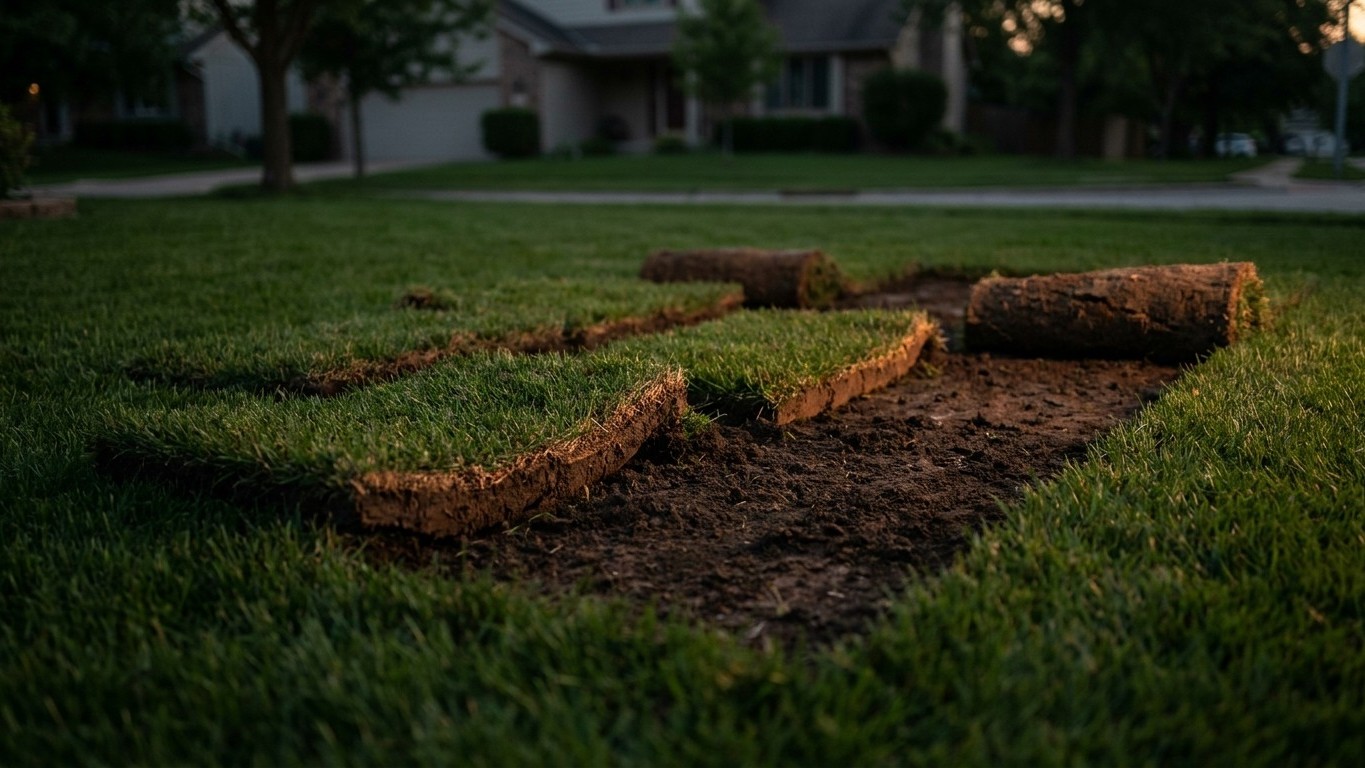
Every morning for nearly three weeks, the holes were back. Different spots, same damage, small craters scattered across the lawn like someone had gone at it with a golf club. The mole verdict seemed obvious. Moles are the classic spring villain, everyone says so, and countless gardening forums back it up. So I set repellents, tried those vibrating stakes, even read up on trapping. Nothing worked. Then I propped up a cheap trail camera near the worst patch and went to bed. The footage the next morning stopped me cold: a raccoon, methodically ripping up fistfuls of sod like it was peeling back a rug. Not a mole. Never was.
Key takeaways
- A homeowner’s three-week battle against lawn damage turned out to be the wrong enemy entirely
- Moles have a reputation problem, but the evidence on your lawn tells a completely different story
- A $35 camera answered the question that dozens of online forums and expensive treatments couldn’t solve
Why Moles Get All the Blame (and Usually Don’t Deserve It)
Moles have a reputation problem, not because they’re innocent, but because they’re too easy to blame. Moles hardly leave openings to their holes above ground. They feed on grubs and other soil organisms such as earthworms, and dig tunnels about 10 inches deep beneath the surface. Their holes usually have a raised, volcano-shaped mound of soil covering the opening. That raised ridge, that mini-mountain of displaced dirt — that’s the mole’s calling card. No mound? No mole.
The confusion also runs deeper than aesthetics. Moles prey on invertebrates, mainly insects and earthworms. One way to remember the difference is to use the first letter of their names: voles are vegetarian, moles eat meat. So if you’re watching your grass slowly die in strips and finding chewed plant roots, you likely have voles, not moles, a completely different animal. Moles rarely come to the surface, while voles spend some time aboveground. Foraging “runway” tunnels are the signs of activity noticed most by gardeners. Mole runways used for finding prey lie just beneath the surface of the soil. Vole runways are cut into the grass at the surface, and are especially visible after snowmelt. Two animals, two very different crime scenes.
And here’s what makes the misidentification so common: when holes and excavations mysteriously appear in lawns, it is helpful to note the season, location, and size, these are helpful clues when trying to identify the culprit and prevent further damage. Most homeowners skip straight to “mole” and start spending money on the wrong solution.
The Real Nighttime Crew Wrecking Your Lawn
Active at night, skunks and raccoons are rarely caught in the act of digging, and their lawn damage can look very similar. That’s exactly why a camera changes Everything. These animals don’t tunnel. They surface-forage, leaving a pattern of damage that looks almost random, and almost nothing like a mole trail.
In the spring, after enduring harsh winter conditions, these animals are on the hunt for food to regain weight. Finding food is their highest priority, but they may also be scouting for a safe place to live and raise their young. Your lawn, freshly thawed and packed with earthworms and grubs near the surface, is essentially an all-you-can-eat buffet that opens every April.
Skunks and raccoons have their own styles, though. Skunks typically leave small, neat, cone-shaped holes, while raccoons tend to peel up entire sections of sod in larger patches. Skunks create holes by pushing their noses into the lawn and then using their front paws to dig out the area. There can be so many holes rutted out that they coalesce together into a large disturbed patch of grass. Raccoons, by contrast, are almost surgical. Raccoons use their front paws more like hands and will lift and flip sod pieces over. Sometimes the sod appears as if someone has neatly rolled it back with the intent of transplanting it elsewhere.
What brings them to a specific yard? While damage to turfgrass caused by grubs feeding requires a relatively high population density, grub populations only typically have to be at five or more grubs per square foot to attract skunks and raccoons for feeding. Five grubs per square foot is not a dramatic infestation. It’s almost normal. Which means even a well-maintained lawn can become a target.
Birds are another suspect most homeowners never consider. Some species cache food like acorns or peanuts in the ground, hiding it from other birds and saving it for later. Some probe or scrape the ground as they forage for insects or earthworms. Either activity can create depressions or shallow holes in the lawn. Birds that might dig into a lawn to expose insects include Northern flickers, crows, blue jays, European starlings, grackles, cowbirds, red-winged blackbirds, and wild turkeys. A flock of starlings working a lawn in the morning leaves dozens of tiny probe marks, easy to mistake for insect or even mole activity at a glance.
How to Read Your Lawn Like a Crime Scene
The hole itself tells the story, if you know what to look for. Size matters first. Vole tunnel entrances are 1 to 1½ inches in diameter and no mound of soil is present. Eastern gray squirrels will bury and dig up nuts in the lawn and in mulched beds. Holes are typically 2 inches in diameter, shallow, and there is no mound of soil around them. To identify skunk damage, look for cone-shaped holes that are 3–4 inches in diameter. Skunk holes are usually surrounded by a ring of loose soil. Scale up to something chunky with visible sod chunks flipped over, and raccoon goes to the top of the suspect list.
Timing is an equally useful clue. Skunks are nocturnal, so the soil disruption happens overnight. If the damage is fresh every single morning and your yard was fine the previous afternoon, you’re dealing with a night visitor. Conversely, if your yard has a healthy population of earthworms, you may find 1-inch high piles of small, granular soil pellets, castings passed through the body of earthworms the night before, brought to the surface as tunnels were cleared. They are more common in spring and fall when soil moisture and temperatures are conducive to earthworm activity. Earthworm castings, not holes exactly, but often mistaken for something more sinister.
Consider purchasing a wildlife camera or pointing a security camera at the spot, since the first step in determining whether or what kind of response is needed is identifying the organism. Michigan State University Extension says it plainly, and they’re right. A $35 trail camera placed near the damage for two or three nights will tell you more than any online forum thread.
What to Actually Do About It
Once you’ve confirmed the culprit, the response becomes much clearer. For raccoons and skunks, the root cause is usually grubs. Do not assume that abundant grubs in the soil are the reason animals are digging. Verify that the lawn has a high grub population before using any grub control products. Grubs might be numerous in one location but largely absent in another, so check several areas. Treating for grubs you don’t actually have is money wasted and unnecessary chemistry in your soil.
If grubs are confirmed, timing your treatment right is everything. Apply nematodes in late summer or early fall to target young grub larvae; spring applications are ineffective. Spring is too late for that particular approach, the grubs have already matured and moved deeper into the soil where nematodes can’t reach them. For immediate protection, physical deterrents work surprisingly well. Lay hardware cloth, chicken wire, or bird netting across the lawn areas receiving damage and secure it to the ground with landscape staples or bricks. Though a determined raccoon can lift wire fencing or claw through bird netting, it can make digging just frustrating enough to deter feeding and send the raccoon somewhere else for its meal.
Scent-based repellents are worth trying in combination with other methods. Some products containing castor oil can be applied to the affected lawn surface to mask the scent of grubs, worms, and other insects, making them hard to find. Other products, such as coyote urine, can be applied to the perimeter of an area to deter the animals from entering. Scent repellents must be reapplied often, especially after rain events.
The longer-term fix is a dense, well-rooted lawn. A dense lawn is much more difficult for skunks and raccoons to overturn and is far less likely to sustain damage from them. Therefore, the first and most important step is to establish a dense stand of turf. Thin, patchy grass peels up easily, it’s practically an invitation. Aeration and overseeding in fall pays dividends every spring precisely because it closes off the easy entry points. The camera revealed the raccoon. But the lawn itself told the longer story.
Sources : canr.msu.edu | ask.extension.org