
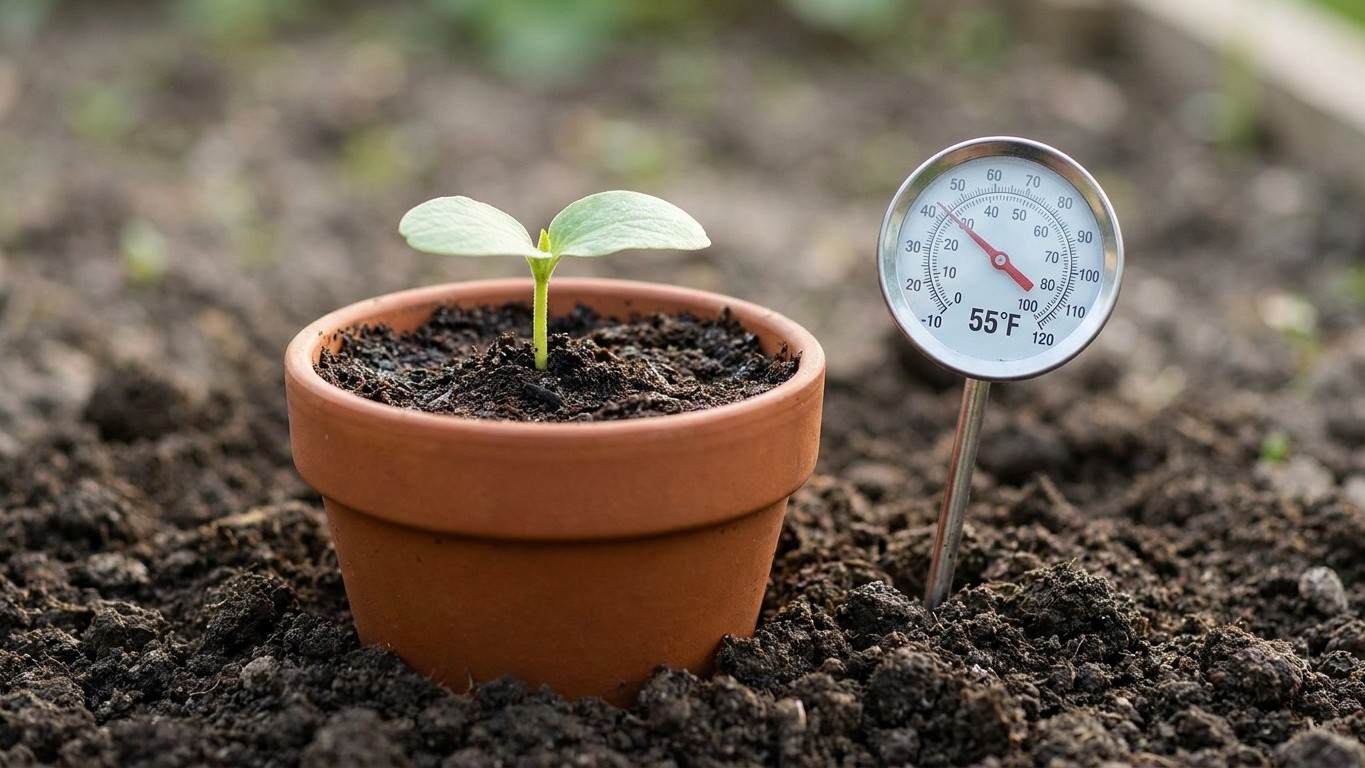
Cucumber seedlings are deceptive. At three weeks old, they can look impossibly healthy, deep green, standing straight, two or three true leaves already unfurled. The temptation to get them in the ground is real, and in a cold spring that drags on forever, it’s almost irresistible. Two years ago, I gave in. I moved my seedlings outside two weeks ahead of schedule because they looked ready. By mid-July, I was staring at stunted plants while my neighbor’s cucumbers were already climbing their trellis. That gap never closed.
Key takeaways
- A cucumber seedling can look ‘ready’ weeks before the soil actually is, triggering a root stall that never fully recovers
- Transplanting into soil below 60°F doesn’t kill the plant—it just pauses growth for weeks, and later-transplanted seedlings overtake early ones within days
- Cold nights trigger stress responses in young cucumbers that suppress growth hormones for days, and multiple cold snaps compound the damage exponentially
What “Ready” Actually Means for Cucumbers
The visual checklist most gardeners use, healthy color, upright stems, true leaves present, captures only part of the picture. Cucumbers are warm-season crops with a specific soil temperature requirement that has nothing to do with how the plant looks above ground. According to the University of Minnesota Extension, cucumber seeds and transplants perform best when soil temperature is consistently at or above 60°F, with 70°F being the sweet spot for rapid root establishment. Below that threshold, root development slows dramatically. The plant doesn’t die. It just… pauses.
That pause is the problem. A cucumber transplanted into 55°F soil will sit there looking almost fine for two or three weeks, which tricks you into thinking the early move paid off. Meanwhile, a seedling transplanted three weeks later into properly warmed soil will establish its root system in half the time and overtake the early transplant within ten days. The waiting game is real, and the soil wins every time.
Air temperature is the other variable people get wrong. Cucumbers are cucurbits, members of the gourd family, and they are genuinely cold-sensitive at the cellular level. A night at 45°F won’t kill a young cucumber plant, but it will trigger a stress response that suppresses growth hormones for days afterward. Do that three or four times in a two-week stretch, and you’ve essentially set the plant back by the same amount of time you thought you were gaining by transplanting early.
The Root Stall: Why Early Transplants Never Fully Recover
Root architecture established in the first two weeks after transplanting determines how aggressively a cucumber plant can uptake water and nutrients for the rest of the season. Transplant into cold soil, and the fine root hairs that do the actual work of absorption develop slowly or die back from cold stress. The plant compensates by redirecting energy to survival rather than growth, which means fewer lateral roots and a shallower overall system.
Here’s the practical consequence. A cucumber plant with a compromised root system hits a wall the moment summer heat arrives. When daytime temperatures push past 85°F in late June and July, that plant suddenly needs to move large volumes of water through its tissue to avoid wilting. A shallow, sparse root system simply can’t keep up. The result looks like heat stress, drought stress, or disease, and it is, technically, all three at once. But the original cause was a decision made two months earlier on a deceptively warm afternoon in April.
My own plants didn’t die. They produced cucumbers. But they produced them late, in smaller quantities, and the plants showed signs of powdery mildew by early August, a fungal condition that thrives when plants are under sustained physiological stress. Healthy, well-established cucumbers in the same conditions typically resist it longer. Mine never had the reserves to fight back.
How to Actually Time Your Cucumber Transplant
The standard advice, “after last frost”, is technically accurate but wildly insufficient. Frost dates tell you the minimum; they don’t tell you anything about soil temperature, which lags behind air temperature by two to three weeks in most regions. A $10 soil thermometer, pushed four inches into the ground in the morning before the sun hits the bed, gives you a more reliable planting signal than any calendar date.
Two weeks before your target transplant date, start hardening off seedlings properly. This means moving them outside for progressively longer periods, not just leaving them in a sheltered spot and hoping for the best. Start with two hours of outdoor exposure in a location protected from direct wind, then add an hour or two each day. By day ten, they should be spending full days outside and tolerating nights in the low 50s without flinching. Skipping or rushing this process is the second most common mistake after transplanting too early, and the two errors compound each other badly.
Raised beds warm up faster than in-ground plots, sometimes by as much as 8 to 10 degrees in early spring, which gives raised-bed gardeners a genuine window to transplant earlier. If you’re working with in-ground beds, black plastic mulch laid over the soil two weeks before transplanting can raise soil temperature by 5°F or more, which is often enough to bridge the gap. The University of Minnesota Extension documents this technique specifically for cucurbits in northern climates.
Seedling size, by the way, is not a neutral factor. Cucumbers transplant best when they have two to three true leaves and are three to four weeks old from germination. Older seedlings, five weeks or more, are past their optimal transplant window and tend to experience more root shock even under ideal conditions. So if you started seeds early and your seedlings are getting leggy and large, the answer isn’t to rush them outside. It’s to pot them up into a larger container and hold them at the right conditions indoors until the soil is genuinely ready.
One last detail that rarely gets mentioned: cucumbers transplanted into soil at the right temperature and with properly hardened-off roots can go from transplant to first harvest in as few as 50 to 60 days, depending on the variety. Transplant two weeks early into cold soil, and that window often stretches to 75 or 80 days, not because the variety changed, but because those first two cold weeks essentially don’t count toward productive growth at all.