
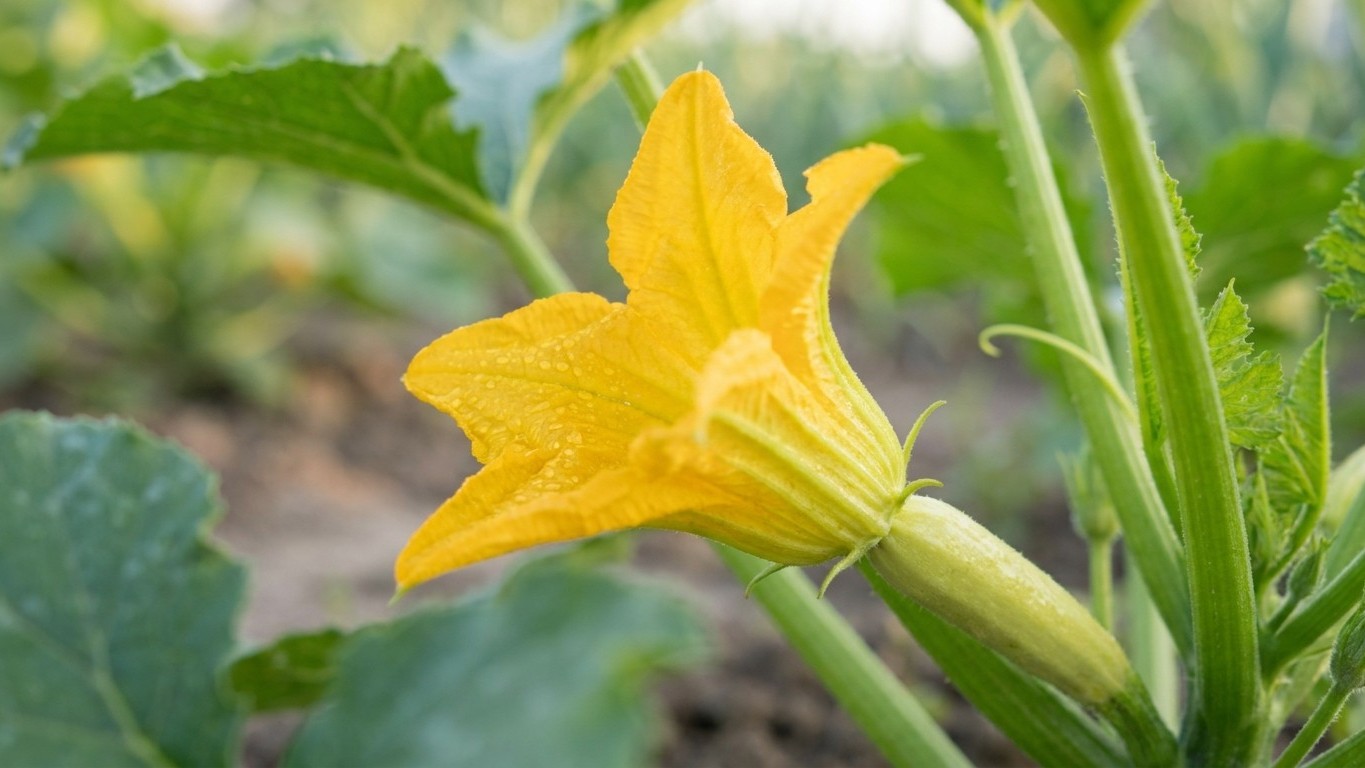
Every zucchini flower that fell off your vine tells the same story: it was picked too early, before the plant had a chance to do its job. Three days of waiting, then a cascade of tiny fruits dropping to the ground, it’s one of the most demoralizing sights in a summer garden. And the frustrating part? The timing felt right. Morning harvesting is exactly what every guide recommends.
The problem wasn’t the hour. It was the biology.
Key takeaways
- Male and female zucchini flowers look nearly identical but have opposite rules for safe harvesting
- Picking female flowers before bees have pollinated them (before 10 a.m.) tricks the plant into aborting the fruit within 72 hours
- Hand pollination gives you complete control and eliminates the guesswork of timing your harvests
Zucchini flowers aren’t all the same, and that distinction changes everything
Zucchini plants produce two distinct types of flowers: male and female. They look nearly identical to the casual observer, but their roles couldn’t be more different. Male flowers appear first, usually one to two weeks before any females show up, sitting on long thin stems with a simple stamen at the center. Female flowers come later, identifiable by the tiny proto-zucchini swelling at the base of the bloom, that’s the ovary that becomes your fruit.
Here’s where the cascade failure begins. If you harvest female flowers before they’ve been pollinated, the plant has no reason to support that developing fruit. The connection between the flower and the vine weakens, the tiny zucchini yellows at the stem, and within days it detaches. The plant isn’t being dramatic, it’s conserving energy. An unpollinated ovary is a biological dead end, and the plant treats it accordingly.
Male flowers, on the other hand, can be harvested freely once they’ve had a few hours to release pollen. A single male flower typically opens for just one morning, releases pollen, and then closes permanently. By the time you’re picking in the early hours, many male flowers have already done their job. But female flowers need that pollen first, and they need time to absorb it before you remove them from the equation.
The window between pollination and harvest is smaller than you think
Pollination in zucchini is almost entirely dependent on bees, particularly bumblebees and honeybees, which are most active between roughly 7 and 10 a.m. on warm mornings. Flowers open at dawn and begin closing by midday. So if you’re out there at 6:30 a.m. with a basket, you’re technically ahead of the bees, which means you’re also ahead of pollination itself.
A female flower that gets harvested before a bee visits it is functionally sterile. You’ve picked a beautiful, edible bloom, but you’ve sacrificed the fruit behind it. The plant will abort that zucchini within 48 to 72 hours, sometimes faster in heat. That’s the three-day window you noticed, not coincidence, just plant biology running its course.
The timing that actually works: wait until after 10 a.m. on days when you can see pollinator activity in the garden. Check that the female flower has already started to close slightly or shows signs of having been visited (pollen residue on the stigma, a slightly wilted appearance). Only then is it safe to harvest without sacrificing the fruit.
Hand pollination solves the problem entirely, if you do it right
Plenty of gardeners skip the bee lottery altogether by pollinating by hand, which gives you full control over when you harvest. The method is straightforward: pick a freshly opened male flower, strip away its petals to expose the stamen, and gently brush it against the stigma (the central sticky structure) of a female flower. One male flower can successfully pollinate two or three females.
The catch is timing, you still need to do this while both flowers are open, meaning the same early morning window. But once you’ve manually pollinated a female flower, you can safely harvest it a few hours later, after the pollen has had time to adhere and the stigma has had a chance to absorb it. Waiting until the following morning is even safer. The fruit will already be developing, and the plant won’t abort it even if you remove the flower.
This technique is especially useful in gardens with low pollinator traffic, urban plots, enclosed balconies, or areas where pesticide use nearby has reduced bee populations. In some regions, urban beekeeping surveys have documented up to a 60% drop in native pollinator visits to vegetable gardens compared to suburban or rural settings, according to research from pollinator conservation groups. Hand pollination bridges that gap reliably.
What to do when fruit drop is already happening
If the damage is done and fruits are already falling, the plant isn’t lost. Zucchini are vigorous growers, that’s both their strength and the reason your refrigerator is perpetually overwhelmed by August. New female flowers will appear within days. The key is to let the next wave of blooms go through a full pollination cycle before harvesting any flowers at all.
Check the plant’s overall health while you’re at it. Fruit drop can also signal inconsistent watering, calcium deficiency, or heat stress, all of which mimic the symptoms of pollination failure. A plant that’s water-stressed will abort fruits as a survival mechanism, regardless of whether pollination was successful. Zucchini need consistent moisture, roughly one to two inches of water per week, and they’re surprisingly sensitive to drought spikes during fruiting.
One detail most growers overlook: leaving a few male flowers unpicked on the vine even after harvesting nearby, specifically to keep attracting pollinators. Bees navigate partly by visual cues, and a plant that looks blooming and active draws more visits than one that’s been stripped clean. It’s a small behavioral nudge with measurable results, your harvest rate will reflect it by mid-summer.