
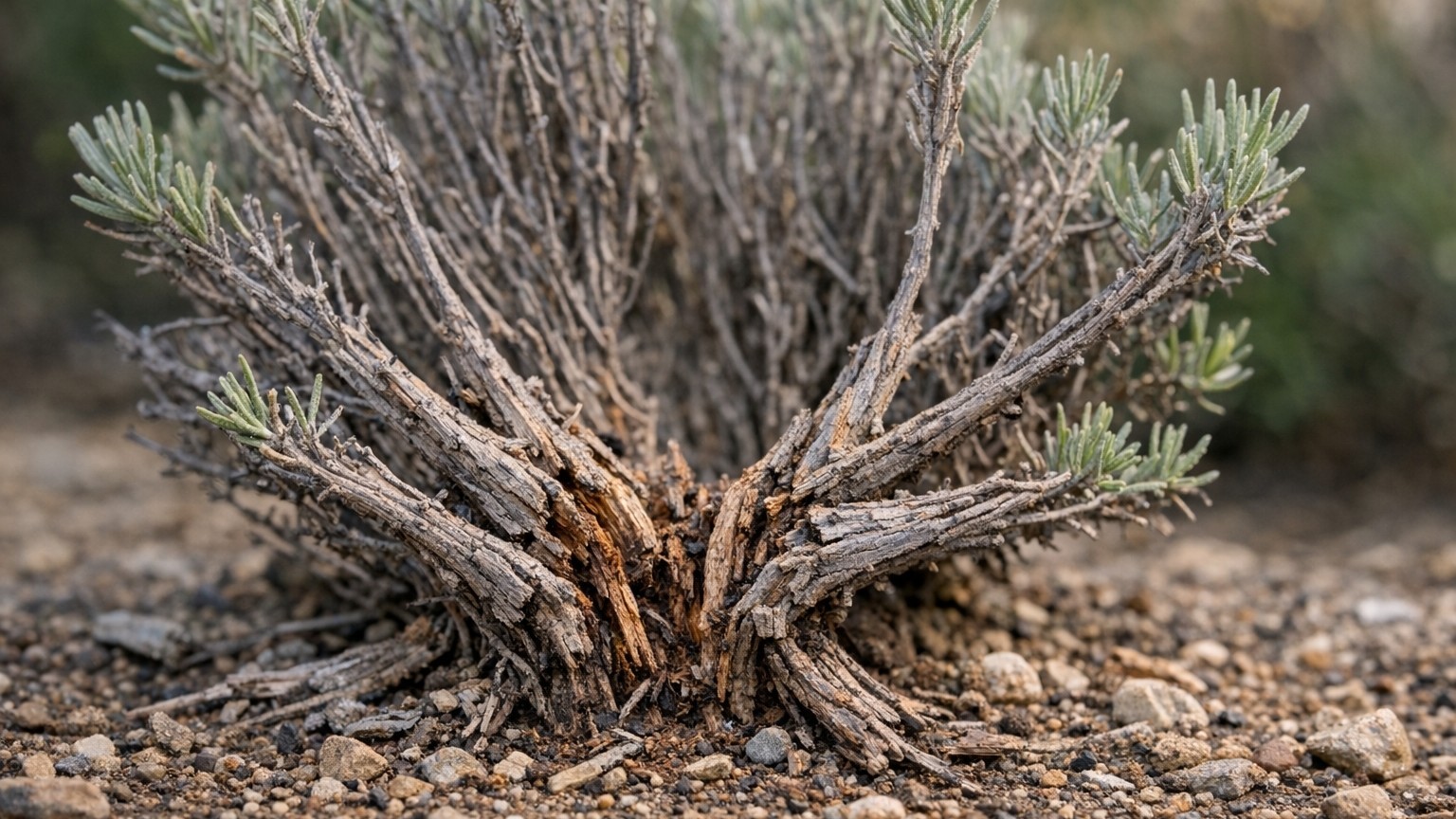
Lavender is one of those plants that rewards confident pruning, but only if you know where to stop. Cut too little, and your plant grows leggy and floppy. Cut too much, and you may be staring at a dead shrub by late summer. That second scenario is exactly what happens when gardeners prune lavender down to its woody base, convinced that the hard reset will produce denser, more vigorous regrowth. The plant almost never recovers.
Key takeaways
- Lavender wood contains almost no dormant buds, unlike roses and forsythia—a single aggressive cut can be fatal
- Summer splitting isn’t random: it’s structural failure caused by the plant’s desperate stress response to deep pruning
- The one-third rule exists for a reason, and timing your cuts matters more than most gardeners realize
Why Lavender Wood Is Not Like Other Stems
Most flowering shrubs tolerate hard pruning because they generate new growth from dormant buds hidden in old wood. Forsythia, roses, butterfly bush, cut them to stumps and they’ll push back with enthusiasm. Lavender operates by entirely different rules. The woody base of a lavender plant, that gray-brown trunk that develops after a few seasons, contains almost no viable dormant buds. Once you remove all the green foliage above the wood line, the plant has nothing left to regrow from.
Botanically, lavender belongs to the family Lamiaceae, a group that shares a particular characteristic: growth is concentrated in the soft, green upper portions of the stem. Below that transition point where green meets gray, the tissue has essentially gone dormant for good. Nursery growers actually use this knowledge to take semi-hardwood cuttings in late summer, selecting material just at the junction between soft green and slightly firmed stem. That zone is where the energy lives. Below it, very little happens.
The splitting you see by August is not a coincidence of timing. After an aggressive spring cut, the plant spends weeks attempting to push new growth from whatever microscopic buds remain on the wood. The stress of that effort, combined with summer heat and reduced foliage to regulate moisture, causes the main stems to crack and separate outward. What looks like the plant “falling open” is actually structural failure from the inside out.
The One-Third Rule, and Why Most Gardeners Ignore It
Professional lavender growers follow a simple guideline: never remove more than one-third of the plant’s total growth in a single pruning session, and always leave several inches of green foliage on every stem. This rule exists specifically because of the woody stem problem. As long as some green remains, the plant retains the resources it needs to generate new shoots.
The best time to prune is right after flowering, when the plant still has the full growing season ahead to recover. A second, lighter trim in early fall, removing spent flower stalks and tidying the shape, keeps plants compact without stressing them before winter. Spring pruning, by contrast, is risky. Cutting back in March or April means removing the very growth the plant has been protecting through winter, and if you go too deep, there’s no green tissue left to fuel recovery before summer arrives.
Timing also varies by variety. English lavender (Lavandula angustifolia) blooms once and can be pruned more firmly after its single summer flush. Spanish and French varieties (Lavandula stoechas, Lavandula dentata) bloom repeatedly and prefer lighter, more frequent trims throughout the season. Treating them all as identical is a common mistake that compounds the pruning damage.
Can a Butchered Lavender Plant Be Saved?
Honestly? Rarely, once the split has started. If you catch the problem early, say, two to three weeks after the cut, before the stems have physically separated — there’s a small window to act. Water consistently but avoid overwatering, which rots already-stressed roots. A light application of balanced granular fertilizer can help, though heavy feeding often does more harm than good at this stage by pushing weak, leggy growth. Some gardeners have success using soft horticultural twine to gently tie the main stems together, preventing the outward collapse while waiting to see whether any green shoots emerge.
If the plant has already split wide open by midsummer, the most productive decision is usually to remove it entirely and replant. Lavender grown from one-gallon nursery containers reaches mature size within two to three seasons. Starting fresh with a young plant and proper pruning habits from day one will produce better results faster than trying to nurse a structurally compromised shrub back to health.
There is one scenario where recovery is genuinely possible: if you notice just a few small green shoots emerging from the woody base within the first month after cutting. These rare survivors suggest the plant had some residual bud tissue. Leave those shoots completely alone, resist any urge to tidy or trim, and give the plant the entire rest of the growing season to build strength. The following spring, assess what you have before picking up the pruners again.
Building a Pruning Habit That Actually Works
The gardeners who keep lavender thriving for a decade or more share one habit: they start pruning young plants lightly and consistently, rather than letting them grow unchecked for three years and then attempting a dramatic correction. A plant that has been trimmed by a few inches each year after flowering never develops the dense, inaccessible woody base that tempts you into cutting too deep. The problem, in most cases, is not the pruning itself but the years of neglect that precede it.
A useful reference point: the Royal Horticultural Society recommends keeping lavender pruning to the green wood only, stopping before you reach the older gray stems, and doing so at least once a year to maintain shape. That consistent rhythm prevents the gradual woodiness that leads gardeners to make desperate cuts in the first place.
One detail that rarely makes it into basic care guides: lavender planted in clay-heavy soil is significantly more prone to the splitting problem because waterlogged roots weaken the plant’s structural integrity before pruning even enters the picture. A lavender pruned conservatively in fast-draining, gritty soil will almost always outperform one treated identically in dense, moisture-retaining ground. The pruning rule matters, but soil drainage may matter even more.