
Coffee grounds on blueberries sounds like a gardening no-brainer. Blueberries love acid soil, coffee is acidic, therefore coffee grounds are a gift from the caffeine gods, right? That’s what most of us believe. That’s what the internet told us. That’s what the top result on every gardening search seems to confirm. The problem is, the science tells a different story.
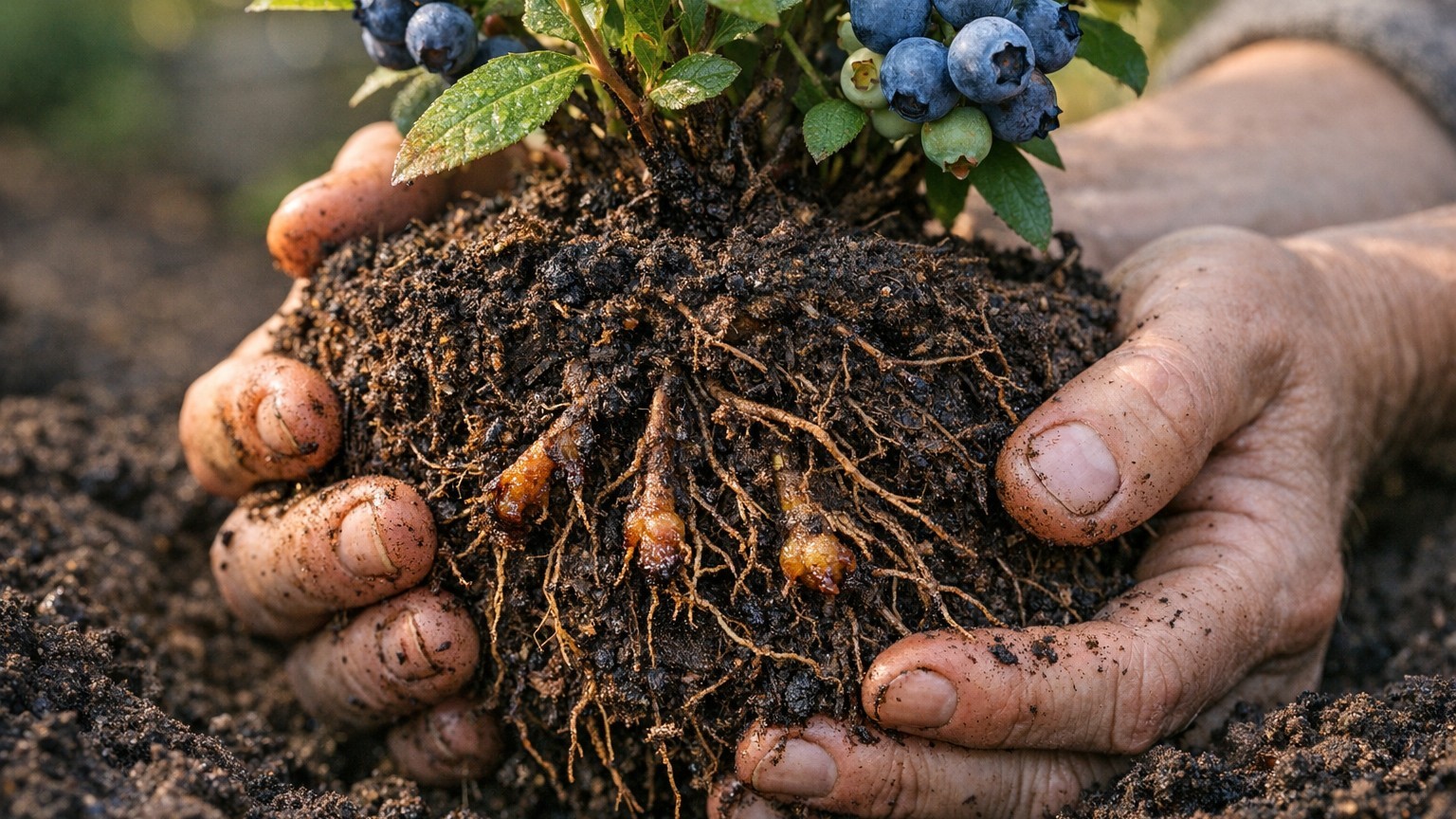
My neighbor, a retired soil scientist with a raised-bed vegetable garden that makes grown adults weep with envy, watched me dump a week’s worth of spent grounds around three blueberry bushes one Saturday morning. She didn’t say anything at first. She just walked over, crouched down, and asked me to dig one up. The roots were dark, slightly mushy at the tips, and the surrounding soil smelled faintly sour, not earth-rich sour, but the kind of sour that means something has gone wrong. “You’re not feeding them,” she said. “You’re drugging them.”
Key takeaways
- Your neighbor might be right: spent coffee grounds are damaging blueberry roots in ways you can’t immediately see
- The pH myth sounds logical but the real culprits are compaction, caffeine residue, and accumulation over time
- There’s a reason soil scientists recommend elemental sulfur and pine bark mulch instead of what the internet promised
The acid myth that refuses to die
Fresh coffee grounds do have a slightly acidic pH, typically between 6.0 and 6.5. Blueberries thrive in soil with a pH of 4.5 to 5.5. The assumption that grounds will close that gap is logical on the surface. But research from Oregon State University has shown that spent coffee grounds are actually close to pH-neutral after brewing, the acid largely leaches into the coffee you drink. What ends up on your plants is a different substance than what people assume.
The deeper issue is compaction. Coffee grounds have a fine, almost clay-like texture when wet. Spread in any significant volume, they mat together and form a crust that repels water and restricts oxygen from reaching the root zone. Roots need gas exchange to function. Blueberry roots in particular are shallow and fibrous, they don’t push through obstacles the way a tap root might. The mushy tips I found on my dug-up plant were a textbook sign of suffocation, not acid damage, and not a nutrient deficiency.
Caffeine: the part nobody talks about
Here’s where the conversation shifted for me. Caffeine is a natural allelopathic compound, a chemical that plants produce to suppress the growth of competing plants nearby. In the wild, caffeine in fallen coffee plant leaves inhibits seed germination in the surrounding soil. It’s an evolutionary weapon. Spent grounds still contain residual caffeine, and that residual amount is enough to stress certain plants, particularly when applied repeatedly in volume.
A 2012 study published in the journal Urban Forestry & Urban Greening tested the effects of coffee grounds on a range of plants and found that high concentrations actually suppressed plant growth across multiple species, including some typically considered acid-loving. The beneficial effects only appeared at very low concentrations, around 0.5% of total soil volume. Most home gardeners, myself included, are applying them at rates ten times that without realizing it.
The slow accumulation is what makes this tricky. You don’t see damage after one application. You see it after a season of weekly additions, by which point the plant is stressed, nutrient uptake is compromised, and the cause is genuinely hard to trace. Most people attribute the decline to something else, drought, pests, winter damage, and keep adding the grounds.
What blueberries actually need
Acidifying soil properly is a slower process than most people want to hear about. Elemental sulfur is the most reliable method: it reacts with soil bacteria over weeks to months and produces sulfuric acid, gradually lowering pH in a stable, measurable way. Aluminum sulfate works faster but can accumulate to toxic levels if overused. Neither is glamorous. Neither generates Instagram content. But both are what extension services from Penn State to the University of California recommend for blueberry growers who actually want fruit.
Mulching with acidic organic material is genuinely helpful, pine bark, wood chips from pine or oak, or pine needle mulch all contribute mild acidity as they break down, and they do it while improving soil structure rather than degrading it. The key difference is texture: chunky organic mulch keeps the soil loose and aerated, which is the opposite of what compacted coffee grounds do.
For fertilization, blueberries respond well to ammonium sulfate, which acidifies the soil slightly as a side effect of the nitrogen release. A soil pH test from your local extension office or a basic home kit will tell you exactly where you stand before you add anything, and that twenty-minute step will save you years of guessing.
The right way to use coffee grounds in the garden
Coffee grounds aren’t useless. They just aren’t the soil amendment people think they are. Mixed into a compost pile at modest proportions, roughly 10 to 20% of total material, they contribute nitrogen as they break down, and the composting process neutralizes the allelopathic effects of residual caffeine. The finished compost is genuinely beneficial and pH-balanced in a way that raw grounds never are.
Worm bins love them in small quantities. Worms process the organic matter efficiently, and vermicompost from a bin that includes some coffee grounds is rich in microbial life. The key word in both cases is “some.” Not a daily full pour. Not a thick mulch layer. A modest, intermittent addition to a larger system.
The blueberry bush I dug up that Saturday got replanted with fresh acidic potting mix, a proper pine bark mulch, and a measured dose of elemental sulfur based on an actual soil test. Two growing seasons later, it’s producing more than the two bushes that never got the grounds treatment. The neighbor was right. And the frustrating truth is that the gardening advice most confidently shared online is often the advice that has been repeated so many times that nobody stopped to check whether it was working.