
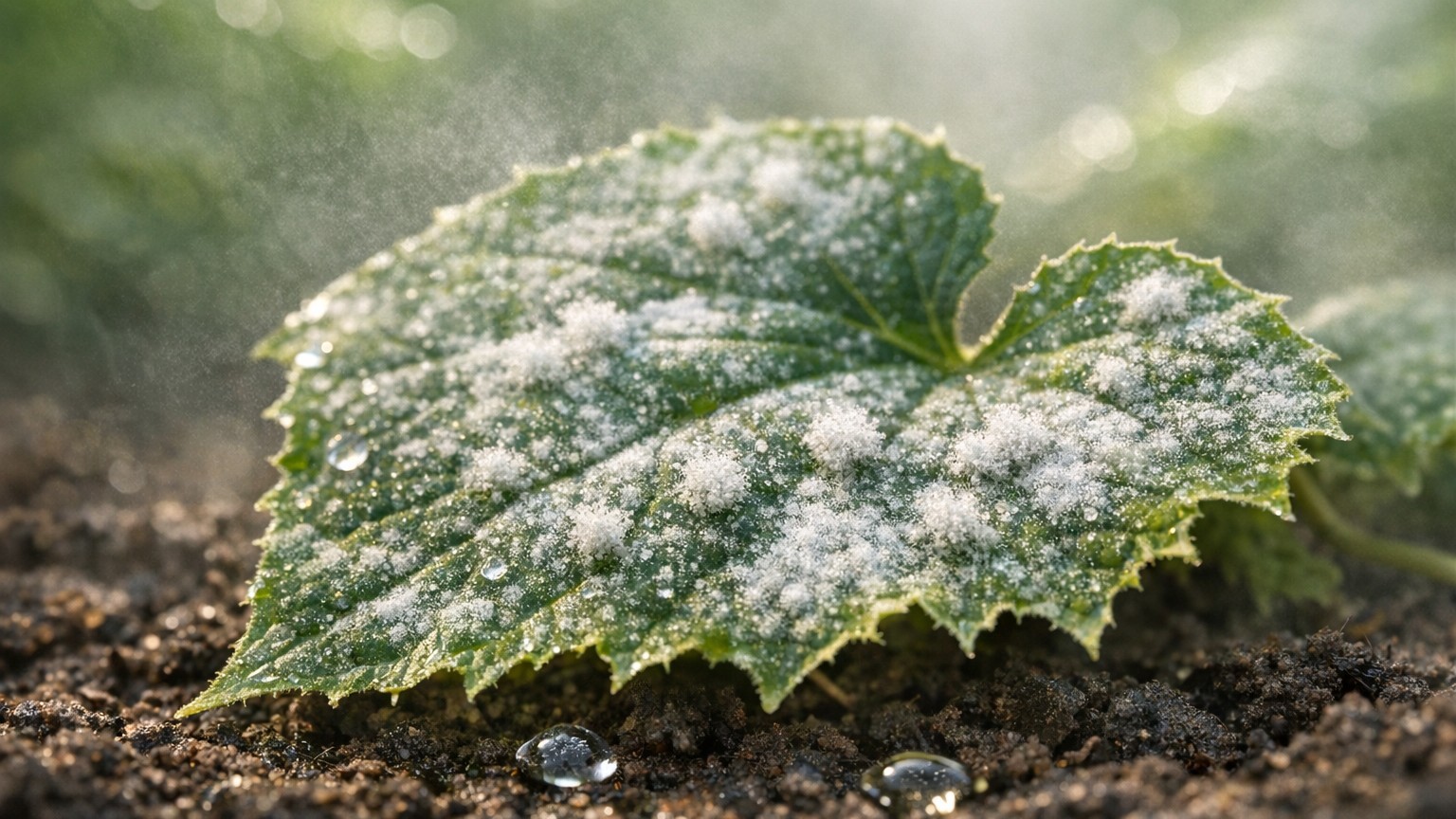
For three summers in a row, my cucumber plants looked healthy through June, then hit a wall. By mid-July, a white powdery coating would creep across the leaves from the base of the plant outward. The cucumbers kept forming, but they’d stay bitter and stunted. The culprit wasn’t the heat, the soil, or my watering schedule. It was the way I let the vines lie flat, pressed against wet ground, every single time it rained.
Key takeaways
- Why does ground-level humidity create the perfect breeding ground for powdery mildew spores?
- What’s the one critical timing difference between sprawling and vertical cucumber plants after rain?
- Which modern varieties have been bred to resist this disease—and does it really matter?
What that white film is actually telling you
Powdery mildew is the most common fungal disease in home vegetable gardens, and cucumbers are among its favorite hosts. The white or grayish coating you see on leaves isn’t residue from rain or mineral deposits, it’s a dense colony of fungal spores, primarily Podosphaera xanthii in cucurbits. Unlike most fungi, it doesn’t need standing water to germinate. Humidity between 50 and 90 percent, combined with warm temperatures in the 68–81°F range, is enough. Rain events don’t cause it directly; they set the conditions.
Here’s what makes ground-level sprawl so dangerous for cucumbers: the underside of leaves lying flat on soil stays damp for hours longer than foliage that gets airflow. After a summer rain, the ground releases moisture slowly. Leaves resting on that surface become a warm, humid microclimate, basically a petri dish. The spores, which travel on wind and contaminated garden tools, find exactly what they need to colonize.
A University of California cooperative extension study found that canopy humidity and leaf wetness duration are the two strongest predictors of powdery mildew severity in cucumbers. Not the amount of rain. The duration of moisture on leaf surfaces. That single distinction changes how you should be thinking about your whole growing setup.
The structural problem with letting vines sprawl
Ground-trailing vines create a cascade of compounding problems. Leaves touching soil can pick up soil-borne pathogens directly. Fruit that develops on the ground is vulnerable to rot on the contact side. Dense, overlapping foliage blocks the sun from reaching lower leaves, which never fully dry out between watering cycles. And when you walk through to harvest, you risk snapping stems without realizing it because you can’t see where the vine runs.
The sprawling habit is understandable, cucumbers grow fast, training them takes time, and some gardeners work with limited stakes or trellis materials. Letting the vines go is the path of least resistance. But by week six or seven of the growing season, you’re essentially paying a compound interest rate on that early laziness. Each rain event adds another layer of stress to plants already fighting off fungal pressure from below.
There’s a physical geometry to consider. A cucumber plant trained vertically on even a simple wire trellis exposes its leaves at multiple angles to wind and sunlight. After a rain, those leaves can dry within an hour or two. The same plant sprawling flat takes three to four times longer. Over a season with typical mid-summer rain patterns in most of the U.S., that difference in drying time accumulates into dozens of extra hours of favorable conditions for mildew development.
What actually works: vertical training and targeted interventions
Training cucumbers vertically is the single most effective structural change a home gardener can make. A basic cattle panel arch, a bamboo A-frame, or even a section of wire fencing zip-tied to garden stakes gives the vines a reason to climb. Cucumbers are natural climbers, their tendrils will grab anything within reach. The key is introducing the support early, when the plant is 8 to 10 inches tall, before it commits to spreading outward.
Spacing matters just as much as the support structure. Cucumbers planted 12 inches apart in a row do worse than the same variety planted 18 to 24 inches apart when it comes to airflow between plants. Crowding amplifies the humidity problem at ground level even when you’ve got vertical support in place. Thinning is one of those tasks that feels counterproductive but pays dividends in disease resistance.
For gardens where vertical training isn’t feasible, a layer of straw mulch under sprawling vines creates a physical barrier between leaves and soil, improves drainage, and lowers the humidity at ground level. It’s not as effective as vertical training, but it reduces direct soil contact and cuts drying time noticeably. Some gardeners also use row fabric to elevate foliage slightly off the ground, less elegant, but functional.
On the fungal side, preventive applications of diluted potassium bicarbonate or neem oil applied every 10 to 14 days during humid stretches have shown effectiveness in reducing powdery mildew spread in cucurbits. These work better as preventives than cures, once you see the white film spreading across more than 30 percent of your canopy, the season is largely lost for those leaves. The plant redirects energy, fruit quality drops, and the window for intervention has closed.
Picking varieties that fight back
Plant breeding has come a long way on disease resistance. Many modern cucumber varieties carry the PM designation, shorthand for powdery mildew resistance, in seed catalogs and nursery tags. Resistant varieties don’t become immune; they slow the disease’s progress enough to maintain fruit quality through a typical growing season even in humid conditions. For gardeners in the Southeast or Pacific Northwest where summer humidity is a constant, choosing a resistant variety at planting time is more impactful than any mid-season intervention.
One detail that surprises most gardeners: powdery mildew on cucumbers is host-specific. The strain attacking your cucumbers won’t jump to your roses or squash, different pathogen strains evolved for different hosts. Squash has its own, zucchini its own. Cross-contamination within the cucurbit family does happen, but the mildew coating your cucumber leaves in August isn’t a sign that your entire garden is at risk. It’s a localized structural problem, rooted in how those specific plants were set up to grow from the beginning.