
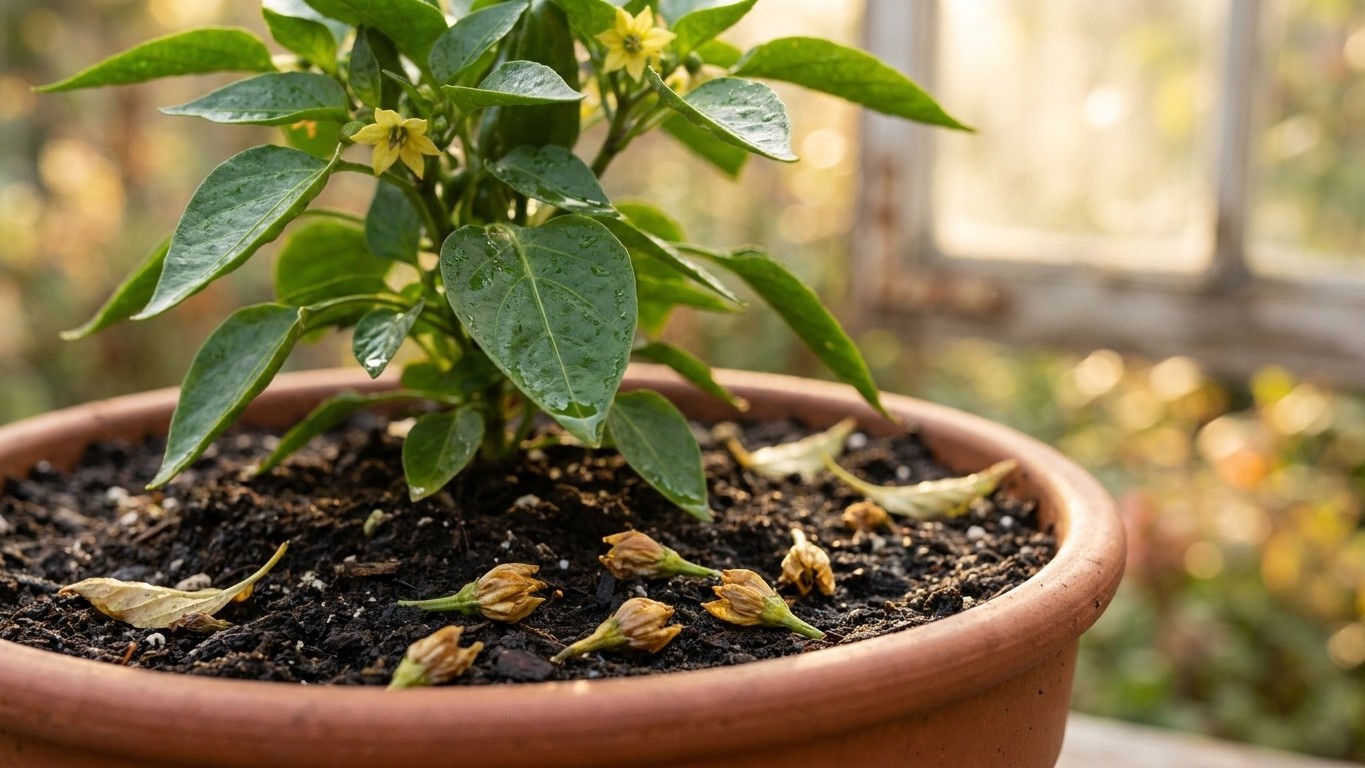
Forty-two degrees at 3 PM. A pepper plant that looked healthy, green, lush, and absolutely zero fruit. That was the summer that taught me watering time is not a neutral variable. After weeks of daily evening irrigation during a brutal heat wave, I walked out one morning to find a carpet of tiny dropped flowers at the base of each plant. The blossoms were intact, not wilted, not diseased. They had simply let go. And that single image forced me to rethink everything I thought I knew about growing peppers.
Key takeaways
- Peppers drop flowers when nighttime temperatures exceed 75°F—but watering timing can make the crisis worse
- Evening watering traps heat in soil, forcing roots to struggle precisely when pollen viability is already failing
- Simple interventions like morning watering, shade cloth, and mulch can recover a harvest within weeks of the heat breaking
Why Pepper Flowers Drop During Heat Waves
Pepper plants (Capsicum annuum and its relatives) are notoriously sensitive to temperature extremes at pollination time. When daytime temperatures climb above 90°F (32°C) and nights stay above 75°F (24°C), pollen becomes non-viable, it loses the ability to fertilize the ovule. No fertilization, no fruit set. The flower, sensing a failed process, abscises cleanly. The plant doesn’t struggle. It simply lets go and conserves energy for the next flowering cycle.
This phenomenon is well-documented in agricultural research. A study from the University of California Cooperative Extension found that pepper fruit set drops sharply once nighttime temperatures consistently exceed 75°F. The pollen tube, which needs to grow down into the ovary within hours of pollination, essentially collapses under heat stress. Watering schedule has nothing to do with the heat itself, but it can absolutely make the stress worse.
The Evening Watering Mistake That Cost Me a Harvest
Here is what I got wrong. Watering in the evening feels logical during a heat wave: the sun is down, evaporation is lower, the plant gets to drink through the night. Efficient, right? The problem is what happens to the soil temperature. Wet soil retains heat Differently than dry soil. During a heat event, soil that stays moist through the night holds onto the warmth accumulated during the day, keeping the root zone, and the crown of the plant, warmer than it would otherwise be.
Roots stressed by heat reduce their uptake of calcium and boron, two micronutrients directly tied to flower and fruit development. Low boron specifically impairs pollen tube growth, which is the last thing you need when your pollen is already struggling in high temperatures. So the evening watering, well-intentioned, was amplifying a problem I couldn’t see underground.
Morning watering changes the equation. Water applied at dawn is absorbed before the peak heat arrives, cooling the root zone precisely when it needs it most. By evening, the surface soil has dried enough to shed excess heat rather than trap it. This single timing shift can drop root zone temperature by several degrees, small numbers on paper, large numbers for a pepper flower trying to set fruit.
What Actually Helps Peppers Through Extreme Heat
Shade cloth is underused by home gardeners and almost miraculous in practice. A 30% shade cloth draped over pepper plants during peak afternoon hours (roughly 1 PM to 5 PM) can reduce canopy temperature by 8 to 10 degrees Fahrenheit. That margin is often enough to keep pollen viable and keep flowers attached. The plants photosynthesize enough in morning and evening light to grow well, they are not sun-starved, just protected from the killing hours.
Mulch is the second intervention most gardeners underestimate. A 3-inch layer of straw or wood chip mulch around pepper plants acts as insulation in both directions: it keeps soil cooler during the day and prevents the kind of heat retention at night that punished my harvest. Research from the Rodale Institute has shown that mulched plots can maintain soil temperatures 10-15°F lower than bare soil during heat waves. That’s the difference between a plant in crisis and one that keeps flowering.
Kaolin clay spray deserves a mention for serious growers. Applied as a diluted foliar spray, it creates a fine white mineral film on leaves that reflects solar radiation. Used in commercial orchards for decades, it has shown real results in vegetable trials for reducing heat stress. It washes off with rain and needs reapplication, but during a multi-week heat event it can provide consistent protection without shading the garden permanently.
One more thing most guides skip: resist the urge to fertilize heavily when plants are dropping flowers. High-nitrogen feeding during heat stress pushes vegetative growth at the expense of reproductive effort. The plant channels energy into new leaves rather than holding onto its remaining flowers. A light dose of a phosphorus-forward fertilizer (or none at all) is the better call until temperatures moderate.
Reading the Plant After the Drop
Flower drop is not a death sentence for the season. Pepper plants are prolific bloomers and will flower again once the stress eases. The question is whether the plant is in good enough condition to capitalize on the next window. A plant that suffered through weeks of evening watering in compacted, unshaded soil is going to rebound more slowly than one that was protected throughout.
After adjusting to morning watering, adding mulch, and rigging a simple shade cloth with bamboo stakes and zip ties, my plants reflowered within three weeks of the heat wave breaking. That second flush of flowers set fruit without issue, night temperatures had dropped back below 72°F, and the pollen was doing its job again. The harvest came late, running well into October, but it came.
Pepper plants can carry fruit through the first frost if given enough time. Varieties like Shishito and Aji Amarillo are particularly good at rebounding after heat stress and pushing a second productive cycle, worth keeping in mind when planning next season’s garden with late-summer heat waves increasingly written into the forecast.