
The yellow-legged hornet arrived in American backyards without fanfare. First detected in August 2023 near Savannah, Georgia, it has since spread into South Carolina. By this summer, the picture is considerably grimmer: despite extensive efforts in both Georgia and South Carolina to trap overwintered queens in spring and to destroy nests over the past two summers, this invasive species is likely established now in the southeastern USA. For garden lovers and backyard beekeepers along the East Coast, that’s not an abstraction. It’s a problem landing on the patio.
Key takeaways
- An invasive Asian hornet species is establishing itself in U.S. backyards faster than authorities can contain it
- Certain herbs and flowers produce compounds that trigger aversion responses in hornets’ sensory systems
- Strategic plant placement can create a layered defense before nests become established in your yard
A Predator That Knows What It Wants
Native to Asia, the yellow-legged hornet has spread across the world through cargo, taking a devastating toll on honey bees in Europe beginning in the 2010s, before arriving on U.S. soil. Europe’s experience offers a sobering preview: since its unintentional introduction to France in 2003, the Yellow-legged hornet rapidly spread throughout Europe, with estimated costs due to nest destruction reaching €23 million from 2006 to 2015. The U.S. is now on a similar trajectory.
Known to leave piles of headless bees at hive entrances, these hornets become highly efficient hunters once they identify their prey. Acting as ambush predators, they wait at hive entrances, snatching worker bees mid-flight with their legs as the insects depart. The hornets then dismember their catch, carrying only the thorax back to feed their young. The threat isn’t theoretical: honey bees are essential to U.S. agriculture, pollinating key crops such as almonds, cherries and blueberries, among many other fruits, and contributing over $20 billion annually.
The yellow-legged hornet is a social wasp species that constructs nests above ground made from paper-like materials. These nests can be found hanging in trees and on structures such as barns, garages and sheds. Nests can be large and contain up to 6,000 workers. That last number bears repeating: 6,000 workers, all actively hunting. In 2026, 4,279 traps have been set across nine counties in South Carolina alone. The scale of the response tells you everything about the scale of the problem.
What Your Garden Can Do Right Now
Plants won’t eliminate an established nest. Let’s be clear about that from the start. These natural repellents are best suited for preventing hornets from settling rather than dealing with established nests, which may require professional removal services. But as a preventive layer? The science is solid. A study testing 21 essential oils against yellowjackets and paper wasps found that 17 produced significant repellent effects, with standouts including clove, lemongrass, geranium, spearmint, pennyroyal, rosemary, lavender, citronella, and peppermint.
The key compounds driving repellency include eugenol (the active ingredient in clove oil), citral (found in lemongrass), and menthone (found in mint oils). These compounds trigger aversion responses in the insects’ antennae, essentially overriding the signals that would normally draw them toward food or nesting sites. Growing the plants themselves provides a continuous, passive version of that effect.
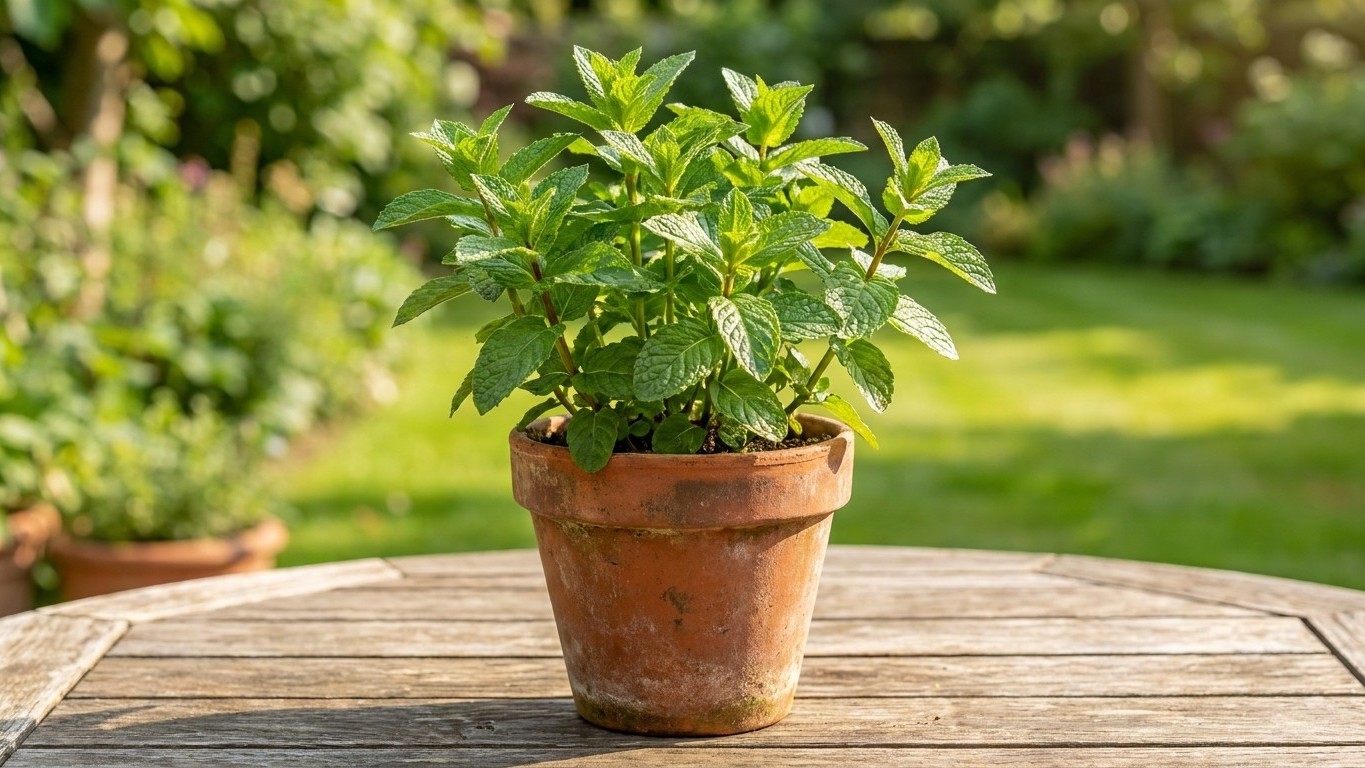
Mint deserves top billing. Peppermint, alongside other mint-scented plants, is considered one of the most effective against a wide range of insects. The catch: use pots to control spreading, as mint can overtake other plants. One pot by the back door, one flanking the patio steps. Done. Lemongrass is equally potent. Its citrusy scent is a natural wasp deterrent. Planting lemongrass in pots or near your outdoor living spaces can help you enjoy your time outside without the constant presence of wasps. It thrives in zones 8 to 11, making it a natural fit for the Southeast, which is precisely where Asian hornets are currently establishing themselves.
Rosemary pulls double duty. The scent of rosemary cuttings can help deter hornets and other types of wasps from creating nests in your garden. Rosemary can be grown around other plants that may attract wasps, especially as its scent is usually overpowering enough to mask those of other herbs. A low-maintenance, drought-tolerant hedge of rosemary along a fence line is essentially a slow-release deterrent that asks almost nothing of you.
The Layered Defense: Combining Plants for Maximum Effect
Single-plant approaches are fine. Combined plantings are better. Combining multiple repellent plants in clusters increases effectiveness. Pairing lavender with mint along patio edges provides a nearly impenetrable natural barrier. Think of it less like placing a single guard and more like building a perimeter.
Wormwood (Artemisia absinthium) earns a spot in any serious defensive garden. Hornets simply can’t stand its strong and astringent scent. Wormwood produces a highly potent essential oil rich in thujone, which has potential as a botanical insecticide. One important note: wormwood is not ideal as a pest-repellent addition to backyards with pets and children. Elevated pots on a porch railing solve that problem neatly.
Marigolds round out the toolkit with a visual bonus. Marigolds are often used in gardens for their vibrant colors and their ability to repel various pests due to their sulfur-containing compounds. These compounds can deter aphids. Also, larger pests like Asian hornets when planted strategically around your garden. A border of marigolds edging a vegetable bed accomplishes two things at once: it signals pest deterrence while keeping the garden looking intentional rather than fortified.
For placement strategy, distribution matters as much as selection. The key to using plants that deter wasps effectively lies in where they are positioned. Place them throughout your garden rather than clustering them in a single area. This prevents hornets from simply avoiding one zone and infesting others. Scatter them in flower beds, along edges, and near garden seating areas to create a naturally protective barrier.
What to Avoid Planting Near High-Risk Zones
The flip side matters just as much. Certain plants actively draw hornets in. Apple and pear trees are a magnet for many insects due to their sweet fruits and abundant nectar. They particularly attract Asian hornets during flowering season when nectar is plentiful. If you have fruit trees, manage fallen fruit religiously. Sunflowers produce ample pollen and nectar, making them attractive to various pollinators, including Asian hornets. Their large blooms can draw in hornets during the peak summer months when they search for food. None of this means you have to tear out the orchard, but it does mean thinking about where you place seating areas relative to blooming trees.
General yard hygiene amplifies Everything your plants are doing. Cleaning up food debris and sugary beverages around your patio is critical to discouraging invading stingers. Wasps tend to use old wood and other materials to make their nests, so clearing deadwood from garden beds removes prime real estate. A garden that is both fragrant with deterrents and clean of attractants gives you a genuine advantage.
The larger picture here is worth sitting with. The yellow-legged hornet is currently expanding its range and influence in South Carolina and Georgia, despite considerable efforts to eradicate and contain it. During 2025, it was reported for the first time in New Zealand, North Africa, Northern Ireland, Denmark, and Sardinia, suggesting this insect’s spread isn’t slowing anywhere on the planet. Your herbs and flowering borders are a small act within a much bigger story, but they’re an act you can take today, before the season peaks.
Sources : gardeningknowhow.com | flapest.com