
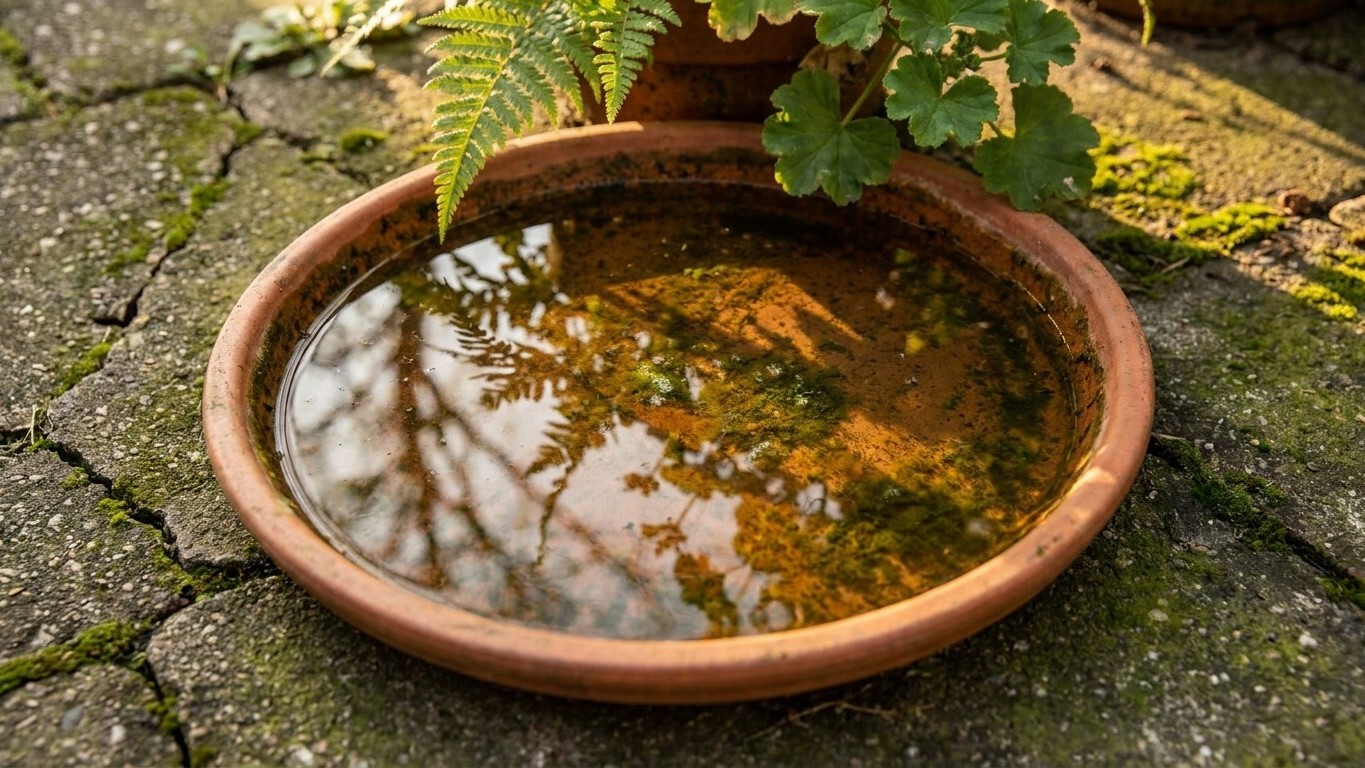
Standing water in a flowerpot saucer looks harmless. A little puddle under a terracotta pot, forgotten after watering, who would think twice? Last summer, after months of leaving my saucers filled, I knocked one over while rearranging the patio. What came out wasn’t just water. It was a thriving micro-ecosystem of larvae, algae, and something that looked unsettlingly alive. That single accident forced me to rethink a habit millions of plant lovers share without a second thought.
Key takeaways
- Mosquitoes can complete their entire breeding cycle in a flowerpot saucer in under a week during summer heat
- Standing water isn’t just a pest problem—it’s actively damaging plant roots and creating conditions for mold and algae blooms
- One simple habit change can transform your garden’s health in just two weeks
A mosquito nursery, right on your porch
The CDC has been clear about this for years: mosquitoes need as little as half an inch of standing water to complete their breeding cycle. A standard 6-inch saucer holds more than enough. The female lays eggs directly on the water surface, and within 7 to 10 days, less in hot weather, a new generation of adults hatches and takes flight. Your cozy container garden could be responsible for a meaningful portion of the mosquito population in your immediate backyard.
What caught me off guard was the timeline. I assumed stagnant water needed weeks to become a problem. But summer heat accelerates everything: at 80°F, the egg-to-adult cycle can compress to under a week. The saucers I checked in mid-July, having filled them at the start of June, had gone through multiple generations by the time I bothered to look. Dozens of translucent larvae, visible only when the tipped saucer let sunlight hit the water at the right angle.
What else is actually growing in there
Mosquito larvae are the headline, but they’re not the only tenants. Fungus gnats, those infuriating little flies that hover around your houseplants and bite — breed in saturated soil, and standing saucers keep the bottom inches of your potting mix perpetually wet. This creates prime territory for Bradysia species, the most common fungus gnat in American gardens. Their larvae feed on root tips and organic matter, which means a saucer full of water isn’t just a pest issue; it’s actively damaging your plants from below.
Algae grows fast in still, warm water with any light exposure. Once algae colonizes a saucer, it creates an organic layer that traps debris, feeds bacterial colonies, and eventually produces a biofilm that sticks to the pot’s drainage hole. Over a full summer, this can partially block drainage, which makes overwatering more likely, sets off root rot, and compounds the very moisture problem you didn’t know you had. The system feeds itself.
There’s also the mold question. Aspergillus and Penicillium species thrive in wet, warm environments, and outdoor saucers offer both. Most healthy adults won’t be affected by exposure, but people with respiratory sensitivities, young children, or immunocompromised family members spending time on a patio surrounded by saturated saucers face a real, if low-level, risk. It’s not panic-worthy, but it’s worth knowing.
The plant itself is suffering too
Plants need to breathe through their roots. When a saucer stays full, the soil never fully dries between waterings, and the roots sit in a low-oxygen environment. Root rot caused by Phytophthora or Pythium — both water molds, not true fungi, is one of the leading killers of container plants in the United States. The damage shows up as yellowing leaves and wilting that doesn’t respond to water, which often tricks gardeners into watering more, accelerating the problem.
What I noticed after tipping my saucers and letting them stay dry for two weeks: the plants looked better. A fiddle-leaf fig I’d nearly given up on pushed out two new leaves. A potted rosemary that had been struggling started standing upright again. I can’t claim a controlled experiment, but the pattern was hard to ignore.
Simple fixes that actually hold up
The solution isn’t to remove saucers entirely, they exist for a reason, catching overflow and protecting floors and surfaces. The fix is managing the water they hold. Empty saucers 30 minutes after watering, before the water has time to become stagnant. If you have large pots that are difficult to move, a turkey baster works perfectly for drawing out the standing water without disturbing the plant.
For gardeners who water on a schedule or use irrigation systems, consider self-draining saucers with a built-in reservoir that holds moisture for roots without creating a surface pool, several manufacturers now make these, and they’ve become standard in serious container gardening. Alternatively, pot feet (small risers that lift the container slightly) improve airflow underneath and help water drain away rather than pool.
Mosquito dunks, small donut-shaped tablets containing Bacillus thuringiensis israelensis, a naturally occurring bacteria, are a legitimate option for large saucers you genuinely can’t empty regularly. They kill mosquito and fungus gnat larvae without harming plants, pets, or beneficial insects. They’re approved by the EPA, widely available at garden centers, and one tablet can treat standing water for up to 30 days.
The deeper issue here is how easy it is to conflate looking after your plants with actually doing so. A full saucer reads as attentiveness, water is present, the pot isn’t bone-dry, the garden feels tended. But plant care, like most things worth doing, rewards looking below the surface. Tipping over that one saucer in July was, genuinely, the most useful thing I did for my garden all summer. Not because of what I learned from a book, but because of what was already moving in the water.