
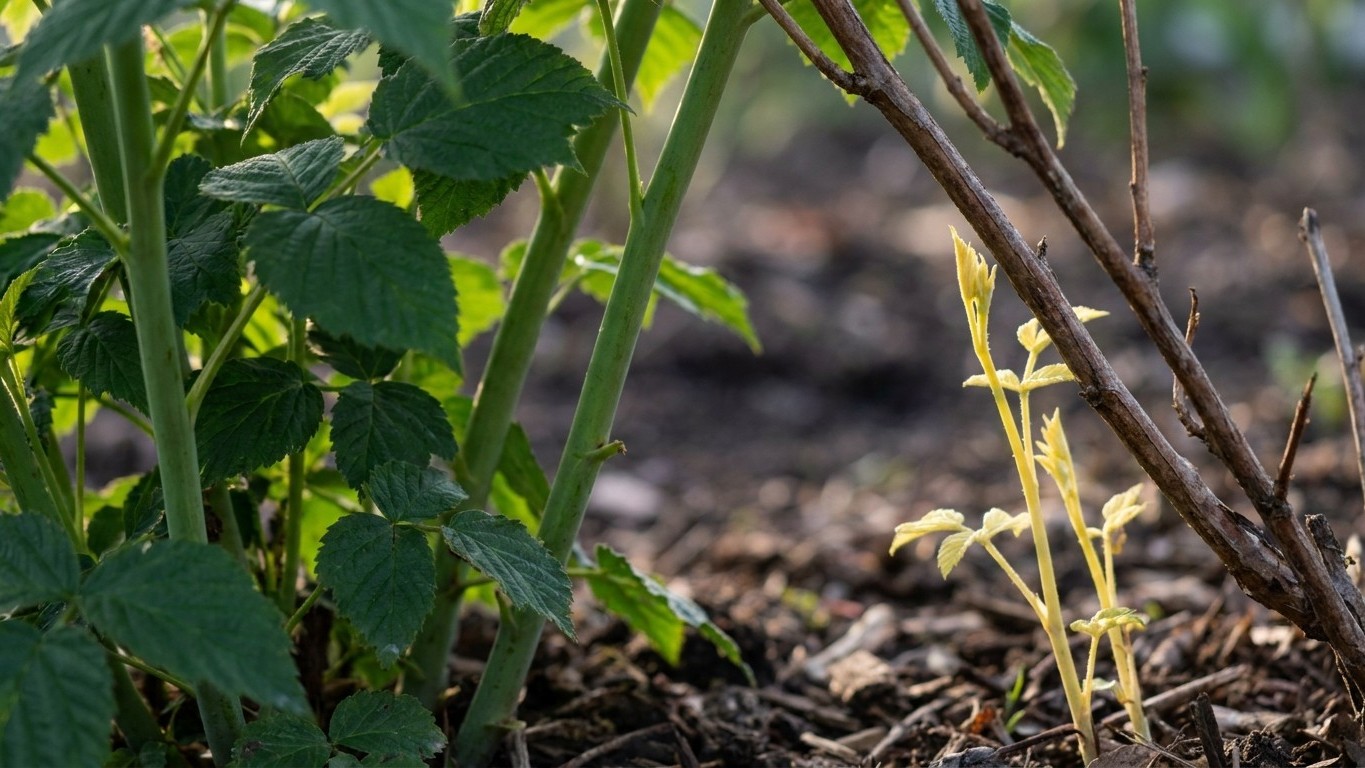
Old raspberry canes don’t just sit there quietly after harvest. They keep pulling water, sugars and nutrients from the root system long after the last berry drops, and that theft is exactly what leaves next year’s shoots pale, spindly and slow to establish. I skipped the post-harvest cleanup one July to save myself an afternoon of pruning. By the following spring, the new canes coming up were noticeably thinner than in previous years, and it took a soil test and a lot of reading to understand why.
Raspberries grow on a two-year cycle. The canes that fruited in July are called floricanes, and once they’ve delivered their crop, they’re biologically finished. They won’t produce berries again. But they don’t die instantly, and that lingering presence is the problem. A spent floricane still has live tissue, still has a root connection, and still competes with the fresh primocanes (this year’s new growth, next year’s fruiting canes) for every resource the plant can pull from the soil.
Key takeaways
- Dead floricanes continue competing for nutrients and resources long after they stop producing berries
- Weak, thin primocanes the following spring are a red flag that something is starving the plant
- One overlooked post-harvest task takes 20 minutes but determines the strength of next year’s entire harvest
Why Dead Wood Still Drains a Living Plant
A raspberry patch operates like a shared household budget. There’s only so much nitrogen, potassium and water the root system can gather in a season, and every cane demands a share, whether it’s productive or not. Research from university extension programs, including guidance published by Oregon State University’s Extension Service, consistently recommends removing spent floricanes as soon as possible after harvest specifically because they continue drawing on the plant’s carbohydrate reserves while contributing nothing back.
The math is simple once you see it laid out. A healthy raspberry crown might support six to eight canes total between old and new growth. If three or four of those are dead floricanes still standing, the primocanes are effectively splitting their nutrient allowance with freeloaders. Add in the shade those tall, leafy floricanes cast over emerging shoots, and you’ve got a double penalty: less food, less light.
There’s also a disease angle that’s easy to overlook. Spent canes are more vulnerable to fungal issues like cane blight and spur blight, and leaving them in place through late summer and fall gives spores a place to overwinter. Come spring, that dead wood can become a launch pad for infection on the very shoots you’re trying to protect.
What Weak Shoots Are Actually Telling You
Thin, pale new canes aren’t a mystery once you know what to look for. The classic signs, stunted height, reduced leaf size, a yellowish cast instead of deep green, all point back to a resource bottleneck. In my case, the new primocanes came up looking almost anemic compared to the thick, dark green shoots I’d grown in years when I cleared debris promptly.
Soil nitrogen was part of the story, but not the whole one. A basic home soil test showed nutrient levels weren’t drastically off. The bigger issue was competition and light access. Dead canes I’d left standing had toppled into a leaning tangle by late summer, shading the crown and blocking airflow. Poor airflow keeps humidity trapped around the base of the plant, which raspberries genuinely dislike, they’re prone to fungal problems in stagnant, damp conditions.
Weak shoots this year also mean a weaker harvest next year. Primocanes that struggle through their first growing season enter winter with less stored energy, and that deficit carries forward. A raspberry cane’s fruiting potential the following summer is largely set by how vigorously it grew as a first-year primocane, according to extension research on cane physiology. Skimp on this year’s care, and you’re borrowing against next July’s crop.
The Fix Takes Less Time Than You’d Think
Cutting out spent floricanes right after the final harvest is genuinely one of the fastest wins in home gardening. Using clean pruning shears, cut each finished cane down at ground level. Skip the temptation to leave a few inches of stub; it doesn’t help the plant and just creates another entry point for disease. The whole process for a modest 10-foot row takes maybe twenty minutes.
Timing matters more than most gardeners realize. The ideal window is within a week or two of the last harvest, while the distinction between old floricanes (brown, woody, often with peeling bark) and new primocanes (green, flexible, still growing upward) is easiest to see. Wait until fall and everything has toughened up and browned, making the job slower and increasing the odds you’ll accidentally damage a healthy cane while sorting through the tangle.
While you’re in there, thin the remaining primocanes too. Extension guidelines generally suggest keeping four to six of the strongest new canes per foot of row and removing the rest. This feels counterintuitive, more canes should mean more berries, right? But an overcrowded row splits resources just as thoroughly as dead wood does, just among living competitors instead of dead ones. Fewer, stronger canes consistently outproduce a crowded, weak stand.
Clear away the cut canes completely rather than leaving them to compost in place near the row. Diseased or pest-affected wood especially should leave the garden bed entirely, either bagged for municipal yard waste or burned where local rules allow, since backyard compost piles rarely reach temperatures high enough to kill off fungal spores or overwintering larvae.
My raspberry patch this July looks different from last year’s disappointing showing, thicker canes, richer color, none of that stretched, hungry look the primocanes had after I let the floricanes linger. The twenty minutes I thought I was saving last summer cost me a full season of vigorous growth, which is a trade I won’t make again. If there’s one task on the raspberry calendar that punishes procrastination fastest, this is it.