
Cucurbitacin. That’s the compound turning your cucumbers into something closer to aspirin than salad material, and it spikes when plants experience stress, particularly the kind caused by uneven watering during peak summer heat. A veteran gardener at my local community plot pointed this out after watching me drag a hose around every few days, whenever I remembered, instead of on any real schedule.
My mistake wasn’t lack of water. It was inconsistency. I’d soak the bed heavily on Sunday, forget Monday through Wednesday, then panic-water Thursday when the leaves started drooping. That stop-start pattern, according to horticulture extension research from Cornell and Purdue, is one of the most common triggers for bitter fruit in cucumber plants. The plant senses drought, ramps up cucurbitacin production as a defense mechanism, then gets flooded again before it can recalibrate.
Key takeaways
- A common watering mistake triggers a bitter-tasting defense compound in cucumber plants
- July heat and inconsistent moisture create the perfect storm for ruined harvests
- One simple schedule change—plus mulch—transformed years of failed crops
Why July Makes Everything Worse
Heat accelerates the whole problem. Soil that stays moist in May can dry out in six hours under a 95-degree July sun, especially in raised beds or containers with less thermal mass than in-ground plots. The gardener who set me straight has been growing vegetables in the same backyard plot for over twenty years, and she pointed to something I’d never considered: cucumbers pull most of their moisture from the top six inches of soil, a layer that bakes fast once temperatures climb.
Her fix was almost boringly simple. Water deeply, twice a week, rather than lightly every day or sporadically whenever guilt kicks in. Deep watering means soaking the root zone, not just misting the surface, aiming for roughly one to two inches of water per week according to guidelines from Iowa State University Extension. She uses a soaker hose left running for 45 minutes every Tuesday and Friday morning, rain or shine, adjusting only if an actual storm rolls through.
The Mulch Layer Nobody Talks About
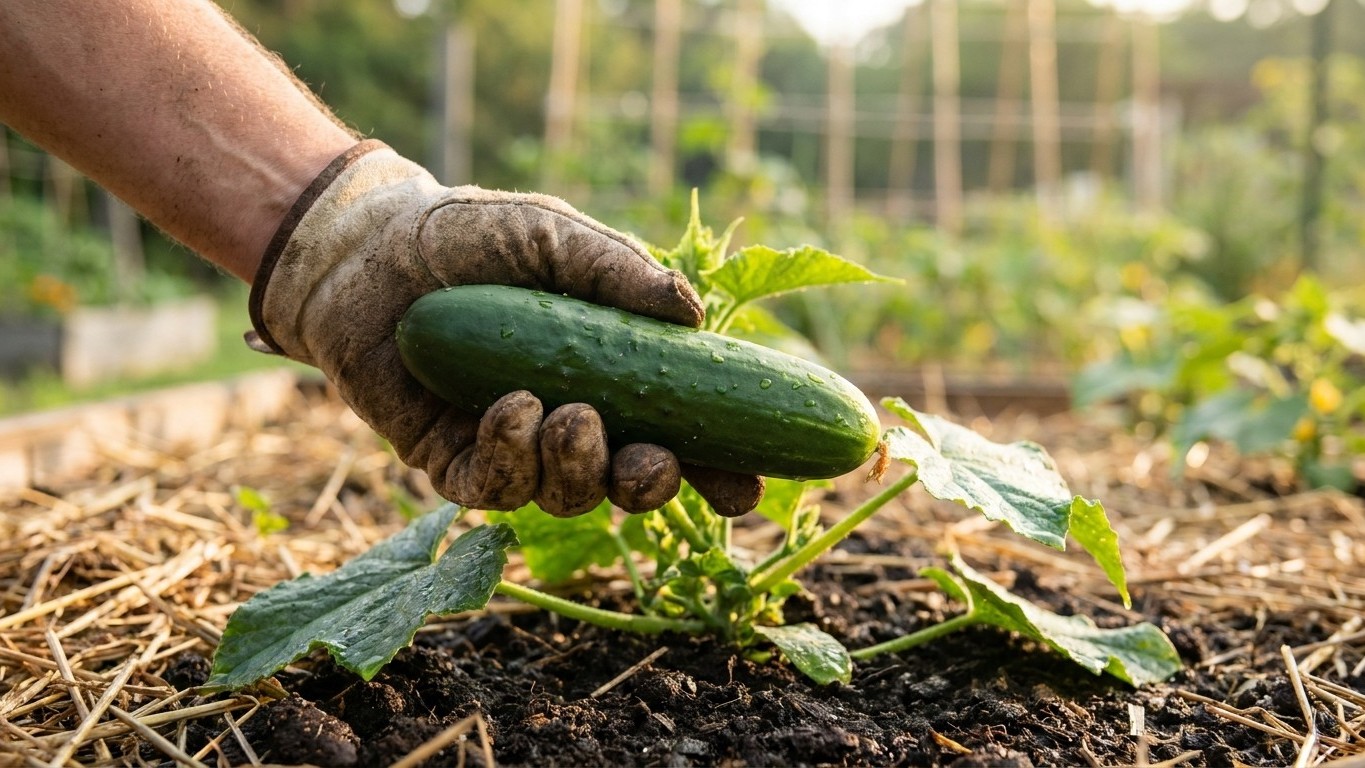
Consistency in watering only works if the soil can actually hold onto that moisture, and that’s where a two-to-three-inch layer of mulch, straw or shredded leaves works best, changes everything. Bare soil in full July sun can lose visible moisture within a day. Mulched soil retains it for three or four days longer, buffering the plant against those swings that trigger stress compounds in the first place.
I’d been gardening without mulch for three seasons, treating it as optional decoration rather than a functional tool. Once I added it, alongside the twice-weekly deep watering, the difference showed up within two weeks. The cucumbers coming off the vine tasted clean, almost sweet at the blossom end, with none of that acrid bite concentrated near the stem.
What Else Feeds Into Bitterness
Watering isn’t the only variable, though it’s the one most home gardeners get wrong. Genetics matter too. Some heirloom varieties carry a naturally higher baseline of cucurbitacin, meaning even perfect watering won’t eliminate all bitterness, only reduce it. Newer hybrid varieties are often bred specifically for low cucurbitacin expression, so if bitterness has plagued you for years despite your best efforts, the seed packet might be part of the story.
Soil nutrition plays a role as well. Cucumbers grown in nitrogen-poor or inconsistently fertilized soil tend to experience more stress overall, compounding whatever watering issues already exist. A slow-release balanced fertilizer applied at planting, then a light side-dressing once flowering starts, gives the plant steadier resources to draw from instead of lurching between feast and famine.
Temperature swings beyond just heat can trigger the same defensive response. A string of 95-degree days followed by a sudden cold snap, or vice versa, confuses the plant’s systems in ways similar to drought stress. There’s not much you can do about weather, obviously, but recognizing that a particularly bitter batch might follow a wild temperature week takes some of the guesswork out of troubleshooting.
Salvaging What You’ve Already Grown
If bitterness has already set in, the compound concentrates most heavily in the skin and the inch or so nearest the stem end. Peeling the cucumber and slicing off a generous chunk from the stem, then tasting a small piece before committing the whole vegetable to a salad, salvages more than most people realize. Some gardeners swear by rubbing the cut stem end against the body of the cucumber in a circular motion, claiming the white foam that emerges draws out bitter compounds, though the evidence for this is mostly anecdotal rather than backed by controlled studies.
Cutting bitter cucumbers into a cold saltwater soak for twenty minutes before use also seems to pull out some of the harsher edge, based on kitchen tradition passed down more than any formal research. It won’t rescue a genuinely stressed plant’s entire harvest, but it makes a rough batch usable instead of destined for the compost bin.
The real shift for me wasn’t a single fix but a mental one: treating cucumber watering like a schedule instead of a reaction. Marking two fixed days on the calendar, rain or shine, removed the guesswork that had been quietly wrecking my harvest for years. My neighbor’s plot, which I used to admire without understanding why her cucumbers always tasted better, runs on that same unglamorous discipline. Nothing exotic, just water on Tuesday, water on Friday, mulch doing its job in between.
This July, for the first time since I started growing my own vegetables, I pulled a cucumber straight off the vine and ate it standing in the garden, no peeling, no saltwater soak, no bracing for that bitter aftertaste. It just tasted like a cucumber is supposed to taste. Turns out that’s not luck. It’s a spreadsheet-level consistency most of us never bother to apply to something as ordinary as a garden hose.