
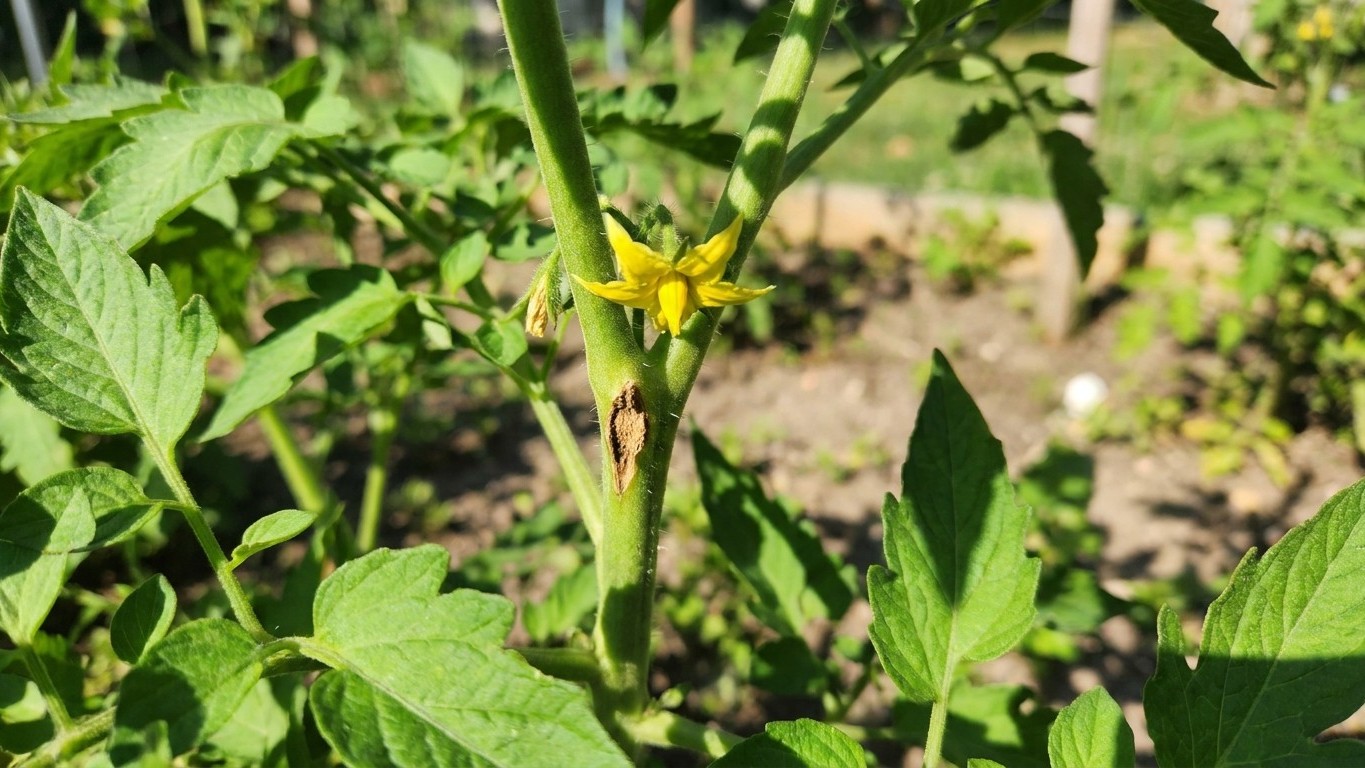
Ninety-five degrees. That’s the threshold where tomato pollen starts to die, according to research from university extension programs across the South and Southwest. Not wilt. Not struggle. Die. And no amount of deep watering, mulching, or fertilizing changes that chemistry once the mercury climbs past it for a few hours in the afternoon.
This trips up a lot of careful gardeners. You’ve done the drip irrigation. You’ve mulched with straw. You’ve fed the plants a balanced fertilizer on schedule. The foliage looks healthy, dark green, no signs of disease. And yet the flowers form, hang on for a day or two, then drop clean off the stem with nothing behind them. No swelling fruit, no green marble starting to form. Just an empty little scar where a flower used to be. It feels like a punishment for good behavior.
Key takeaways
- Tomato pollen dies at 95°F regardless of soil moisture—this is a temperature problem, not a watering problem
- Some varieties laugh off heat spikes while others quit entirely; heat-tolerant cherry tomatoes survive where beefsteaks fail
- Strategic shade cloth and morning watering can shift the odds, but accepting a summer pause might be your most realistic strategy
The Pollen Problem, Not the Water Problem
Tomato flowers are self-pollinating, but the mechanics require viable pollen grains to move from the anther to the stigma inside that same flower, usually shaken loose by wind or bee vibration. Pollen viability starts dropping once nighttime temperatures stay above 70°F and daytime highs push past 90°F. Cross that 95°F line, especially with humidity swings, and pollen grains clump or become sterile. The flower still opens. It still looks like a flower. But there’s no genetic material capable of finishing the job.
Water has almost nothing to do with this specific failure. A plant can sit in perfectly moist soil, roots cool and hydrated, and still lose every flower it produces that week. This is why so many gardeners describe the same confusion: they increased watering, thinking drought stress was the culprit, and nothing changed. The stress isn’t in the soil. It’s happening at the cellular level inside the flower itself, and it’s driven by air temperature, not root conditions.
Why Some Varieties Shrug It Off
Not every tomato reacts the same way. Cherry tomato varieties, and a handful of heat-tolerant slicing types bred specifically for southern climates, keep setting fruit well into the 95-100°F range. Larger beefsteak varieties tend to be the first to fail, often because their flowers require more sustained pollen viability to produce that bigger fruit mass. Home gardeners in Texas, Arizona, and inland California have known this for decades: switch cherry or grape varieties into the hottest weeks, keep the big slicers for spring and fall.
Extension agents at Texas A&M and University of Arizona have documented this pattern repeatedly, noting that heat-set varieties bred with tropical tomato lineage tend to maintain fruit set through short heat spikes that would otherwise stall production entirely. That’s not marketing language, it’s a measurable trait tied to pollen thermotolerance, and it’s worth checking seed packet descriptions for phrases like “heat-set” or “heat-tolerant” before planting in a region that regularly tips past 32°C in midsummer.
What Actually Helps (and What Doesn’t)
Shade cloth rated for 30 to 40 percent light reduction, hung during the hottest four to six hours of the day, can drop ambient temperature around the flowers by several degrees. That’s often enough to keep pollen inside the survivable range even when the general forecast says otherwise. Timing matters more than most people expect: covering plants from roughly noon to 5 p.m., then removing the cloth for morning and evening light, tends to work better than leaving shade up all day, since tomatoes still need six-plus hours of direct sun to keep producing at all.
Morning watering, rather than evening, helps for a different reason entirely: it keeps humidity lower overnight, which matters because warm humid nights (again, that 70°F-plus threshold) compound the daytime pollen damage. Overhead watering in evening hours raises local humidity right when the plant needs to cool down and reset, so a simple switch to early morning watering, even without changing volume, can nudge conditions back toward viable.
What doesn’t help: extra fertilizer. Excess nitrogen tends to push leafy growth and doesn’t address the pollen viability question at all, and in some cases pulls energy away from flower and fruit development, worsening the visual problem. Pinching off flowers during the worst heat spike is a strategy some growers swear by, essentially telling the plant to conserve energy rather than waste it on flowers destined to drop anyway. There’s some legitimate logic there, though it’s more of a triage move than a fix.
The Bigger Picture for Home Growers
Climate data from NOAA shows that stretches above 32°C are becoming both more frequent and longer in duration across much of the tomato-growing United States, particularly in the Southeast and Southwest. That means this flower-drop pattern, once considered an occasional midsummer nuisance, is turning into a structural planning problem for home gardens rather than a one-off bad week. Gardeners in these zones are increasingly treating tomatoes as a spring-and-fall crop, with a deliberate pause in fruit-set expectations during peak summer, rather than trying to force season-long production.
Timing the planting calendar backward from your region’s average date for sustained 32°C-plus days changes the whole strategy. Instead of planting in early spring and hoping for a long uninterrupted harvest, many experienced growers now plant early enough to get a full fruit set before the heat arrives, accept a lull in July and August where the plant survives but doesn’t produce much, then get a second wave of flowering and fruit set as temperatures ease in September. It’s less romantic than the idea of a tomato plant cranking out fruit from June through October, but it matches what the plant’s own biology can actually deliver.
One detail that surprises a lot of gardeners: tomato plants that stop setting fruit during a heat spike aren’t necessarily struggling. They can look completely fine, keep growing new stems and leaves, and simply be in a holding pattern until conditions shift back into range. Pulling a stressed-looking plant in frustration during a heat wave often means losing weeks of future production that would have resumed on its own once nights cooled below that 70°F mark.