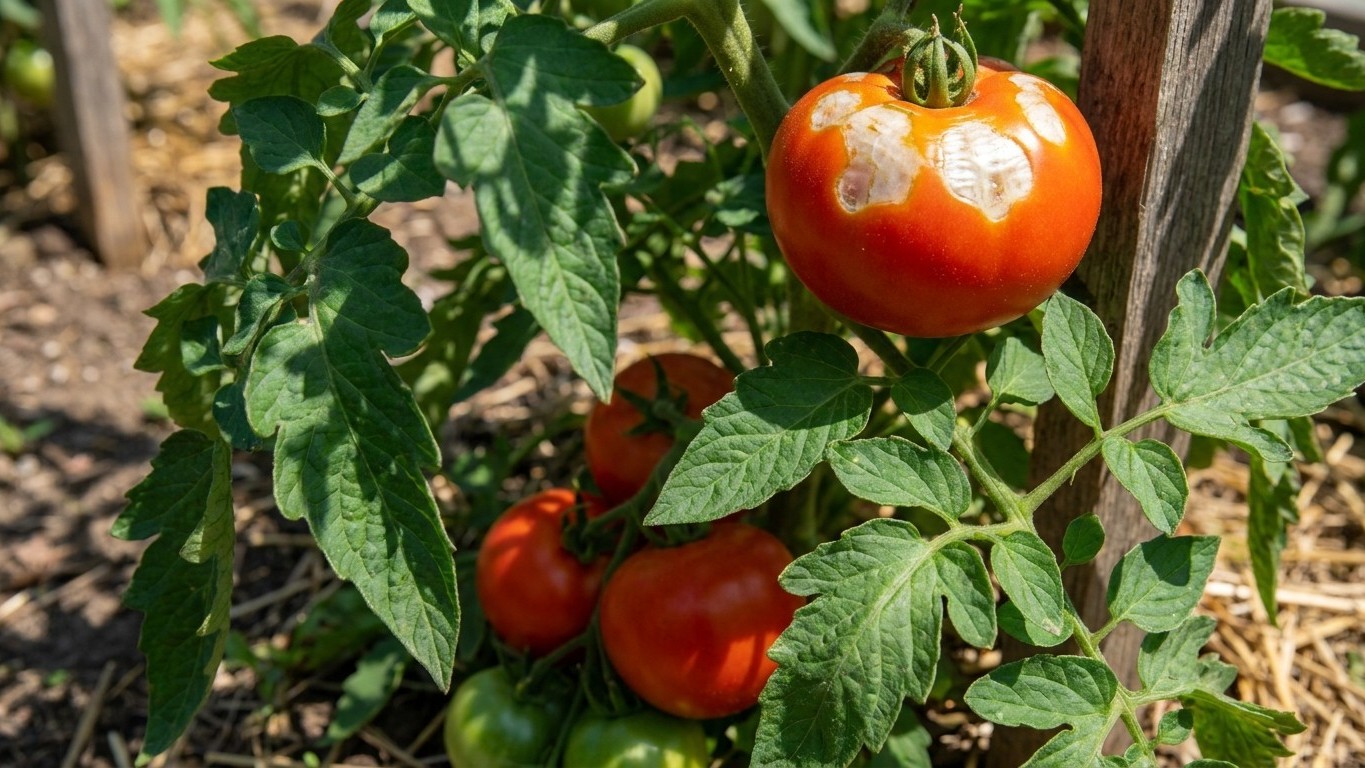
Every July, the same scene plays out in backyard gardens across the country: a gardener grabs the pruning shears, eyes the leafy mess around the tomato plants, and starts clipping. The logic feels sound. More air, less humidity, fewer fungal problems. But that quick snip-snip during a heat wave is exactly what turns a green tomato into a fruit with pale, leathery scars that never go away. The condition has a name: sunscald, and once it sets in, there’s no undoing it.
Once damage occurs, it cannot be reversed. Sunscald usually develops when the plant’s natural protection is disrupted. Healthy foliage acts as a living shade canopy for developing fruit. Strip that canopy away right when the mercury climbs, and the fruit that was perfectly shaded on Monday can show blistered white patches by Thursday.
Key takeaways
- A single pruning session during a heat wave can permanently scar developing tomatoes with sunscald damage
- The foliage you’re removing isn’t just clutter—it’s a critical natural sunscreen for the fruit
- Simple solutions like shade cloth and strategic timing can protect your harvest without abandoning pruning entirely
What actually happens to a naked tomato in the sun
Sunscald isn’t a disease in the traditional sense. Unlike many plant diseases, sunscald is not caused by a pathogen. It is simply sun damage to exposed fruit tissue, usually triggered by intense sunlight combined with high temperatures and sudden loss of protective leaf cover. Think of it as a sunburn with a vegetable twist. Too much sun can lead to sunscald, which is the equivalent of a sunburn for tomato plants, occurring when tomatoes are under direct sun exposure without any protection, similar to a sunburn after prolonged contact with sunlight and heat.
The visual signature is unmistakable once you know what to look for. Sunscald typically shows up as light-colored spots on the side of the tomato that faces the sun, starting off looking slightly water-soaked or blistered, then turning thin, papery, and wrinkled. Left unchecked, the damage gets worse fast. It’s a physiological disorder that stems from too much sun and heat, especially when fruits are suddenly exposed, and once this damage sets in, the fruit becomes vulnerable to fungal infections like Alternaria, which can quickly take over and ruin your harvest. A cosmetic blemish turns into an actual rot problem within days. One backyard grower who documented the issue in her own garden noted plainly: the tomatoes near the bottom of the plant, or shaded by leaf cover, are fine, while the ones exposed at the top weren’t.
Why the “clean plant” instinct backfires
The impulse to strip leaves comes from a real concern. Dense foliage traps moisture, and moisture invites mildew. That’s legitimate horticultural thinking most of the year. The problem is timing. After more than 30 years of growing vegetables in hot inland valleys and other sun-intense climates, sunscald appears most often during heat waves, after heavy pruning, or when plants suddenly lose foliage due to stress. A pruning session that would be harmless in a mild June turns destructive the moment a heat dome parks itself over the garden in late July or August.
The mechanism is almost mechanical in its simplicity. Tomato plants naturally want to protect their flowers and fruits from intense direct sunlight by growing layers of leafy foliage above them, and if you over-prune, overhead irrigate, or face plant disease, your tomato plants may lose the lush canopy they need to shield susceptible fruits from the summer sun. Gardeners with the tidiest-looking plants in the neighborhood are sometimes the ones losing the most fruit to scarring. Structure matters too, since tomatoes are especially prone to sunscald because fruit often develops on the outer edges of the plant canopy, the exact spot most likely to get cleared during a pruning pass.
How to protect the harvest without letting the jungle take over
The fix isn’t to abandon pruning altogether. It’s to change what gets cut and when. Pruning tomatoes properly so you don’t remove too much foliage matters, because some growers can get overzealous and accidentally remove too much plant foliage. A good rule during a heat spell: leave anything green and functional alone, no matter how crowded it looks. If you need to prune your tomato plants, focus on removing only dead or diseased branches, taking care to leave the healthy foliage to provide natural shade for fruits and other plant parts. Even leaves that look a bit tired can still be doing their job. Even dried leaves are fine to leave on tomato plants if there are no signs of disease.
Shade cloth is the backup plan when pruning has already gone too far, or when a heat wave arrives faster than expected. It is especially useful during heat waves above 95°F. A stapled sheet of breathable fabric over the cage costs less than a bag of mulch and buys the fruit real protection during the worst afternoon hours. For a quick fix on individual fruits caught exposed, a simple option is clipping a sheet of newspaper to the cage or plant, not touching the fruit, until you are ready to pick it.
Water management plays a supporting role most people overlook. When watering tomatoes, water directly at the base of the plants, avoiding overhead watering, which can encourage excessive humidity and conditions favorable for disease, and even intensify the effects of the sun. Stressed, thirsty plants produce thinner, weaker leaves that shade less effectively, which compounds the problem right when the sun is strongest. Mulching helps close that loop by keeping roots cooler and moisture steadier through the hottest stretch of the day.
What to do once the damage is already there
Sunscald doesn’t mean the whole tomato is lost. Although sunscald is unsightly, it doesn’t actually affect the edibility of the fruit, and as long as there are no secondary infections of black mold or rot, you can simply cut off the sunburnt part of the skin and eat the rest of the fruit. The smartest move with fruit that’s already started to blush is to get it off the vine early. Once healthy tomato fruit starts to show color, known as the breaker stage, removing it from the plant eliminates the risk of sunscald along with other threats like splitting or cracking, and the fruit will continue to ripen to full color and flavor off the vine.
Some varieties are simply more vulnerable than others, which matters if this happens every single summer in your garden. Bigger tomato varieties are more susceptible to sunscald, so growers in hotter regions may want to lean toward smaller types, since cherry tomato varieties often fare better in hot climates and typically have less sunscald. Next season, that might be the real fix: not a different pruning schedule, but a different plant altogether.
Sources : epicgardening.com | gardeningknowhow.com