
The mower deck sat at its lowest notch for three summers straight. My logic seemed airtight: shorter grass, less surface area, less water lost to the sun. Then a gardener doing seasonal work next door watched me finish a pass at just under an inch and asked one question that stopped me cold: “Where do you think the roots are going to hide?”
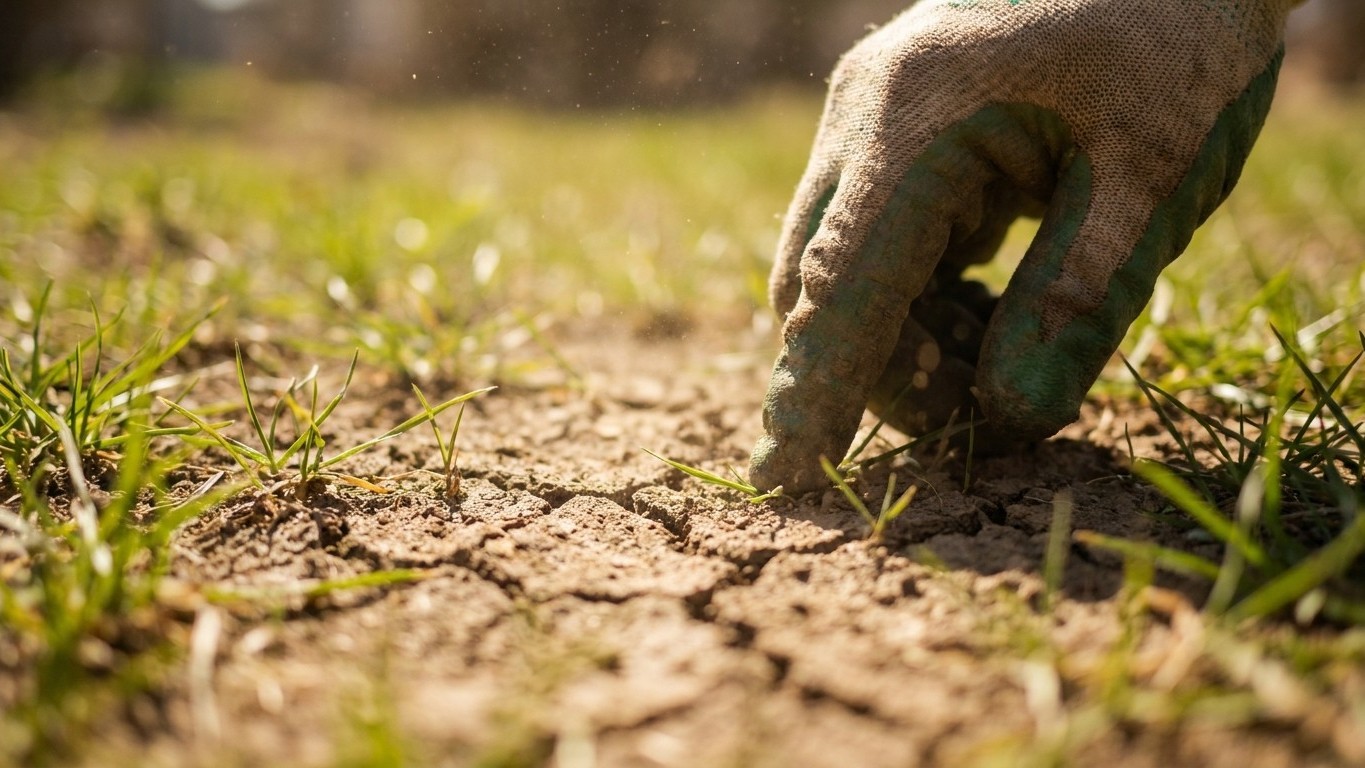
He crouched down, pushed his fingers into the exposed dirt between the blades, and showed me soil that was already hot to the touch at ten in the morning. Without the overhead canopy of tall grass to shade the ground, the sun bakes the earth, evaporating the precious reserves around the roots. Every close cut I’d been so proud of was doing the opposite of what I intended. I wasn’t saving water. I was inviting the sun straight to the roots and asking my sprinkler to make up the difference.
Key takeaways
- A neighbor’s gardener reveals what happens to exposed soil when grass is cut too short during heat
- Scientists agree on one number that changes everything about summer lawn survival
- The simple timing and technique shifts that prevent brown patches without fancy irrigation systems
Why shorter grass backfires in a heatwave
The mechanics are almost embarrassingly simple once someone explains them. Cutting grass short actually harms it in summer heat, since shorter grass has shallower roots with less access to deep soil moisture, and less blade surface to shade the ground, which accelerates evaporation and dries out the lawn faster. Grass isn’t just a decorative carpet, it’s a living solar panel, and the length of the blade determines how deep the plant can afford to send its roots. Plant grass height is often proportional to the depth of rooting, so if grass plants have roots that penetrate more deeply into the soil, they are able to access water that is deeper in the soil — water that stays put long after the top inch has turned to dust.
There’s also a fluid-dynamics problem nobody warns you about at the garden center. Grass blades function as the primary surface for evapotranspiration, and cutting these blades during extreme heat creates an open wound on every single leaf, causing increased evapotranspiration and rapid dehydration that the root system cannot replenish in real-time. Picture it as slicing open a water bottle instead of sipping from the cap. That’s what a scalped lawn is doing under a 95-degree sky, and it explains why my “efficient” habit left brown patches by July every single year.
The number that changed my mowing height for good
Turfgrass scientists keep landing on the same range, regardless of which university or lawn-care company you ask. During the heat of the summer, it is recommended to raise the mower up to its higher setting or 3½ to 4 inches, since when the lawn is kept a little higher during these stressful conditions, it will retain moisture and reduce the chances of heat stress and drought. Virginia Tech turfgrass researchers put it even more plainly for homeowners battling drought: the best strategy for summer is to mow at a 3-4 inch height, or even taller.
The shade a few extra inches of grass throws over bare soil does more work than most irrigation schedules. Taller grass blades provide shade to the soil, reducing water evaporation and keeping the roots cooler. One lawn care specialist frames it almost like insurance for the plant itself: “A temporary increase in mowing height can help reduce stress by providing additional shading of the soil surface, conserving moisture, and promoting deeper root growth.” I’ve started thinking of the extra length less as neglect and more as sunscreen.
The number that stuck with me from that conversation was 90. That critical point is when the temperature dials hit 90°F, and one lawn care co-owner warns homeowners not to mow their lawn if they’re experiencing a huge heatwave, because once that thermometer goes above 90 degrees, you really need just to leave your mower in the garage. I now check the forecast before I check my calendar. If triple digits are coming, the mower stays parked, full stop.
What I actually do differently now
Raising the blade solved half the problem. The other half was timing and technique, things I’d never bothered to think about when I was chasing a putting-green look. The one-third rule became non-negotiable in my routine: never remove more than 1/3rd of the leaf blade during a mowing event. If the lawn has gotten shaggy while I waited out a heat spell, I now split the job into two sessions rather than scalping it back to size in one pass, because a single aggressive cut undoes weeks of careful shading in an afternoon.
Timing matters almost as much as height. Irrigating during the heat of the day is considered very inefficient since evaporation rates are typically highest during this time, so watering early in the morning whenever possible makes the most sense. I moved my sprinkler timer to before sunrise and stopped mowing anywhere near midday. A dull blade doesn’t help either: clean cuts will ensure minimal water loss, while lawn cut with dull mower blades can lead to shredded, torn, and ripped grass blades that leak moisture. I sharpen mine now roughly every eight hours of use instead of once a season out of pure laziness.
None of this made my lawn look like a golf course, and honestly, that was never really the goal. What changed is that it stopped going crispy by mid-August. The gardener who set me straight didn’t hand me a miracle product or a fancier sprinkler head. He handed me a fact I’d been ignoring for years: the blade of grass is doing a job for the soil beneath it, and the day I stopped cutting that job short, the water I was already using finally started to count for something.
Sources : news.vt.edu | foreveryard.com