
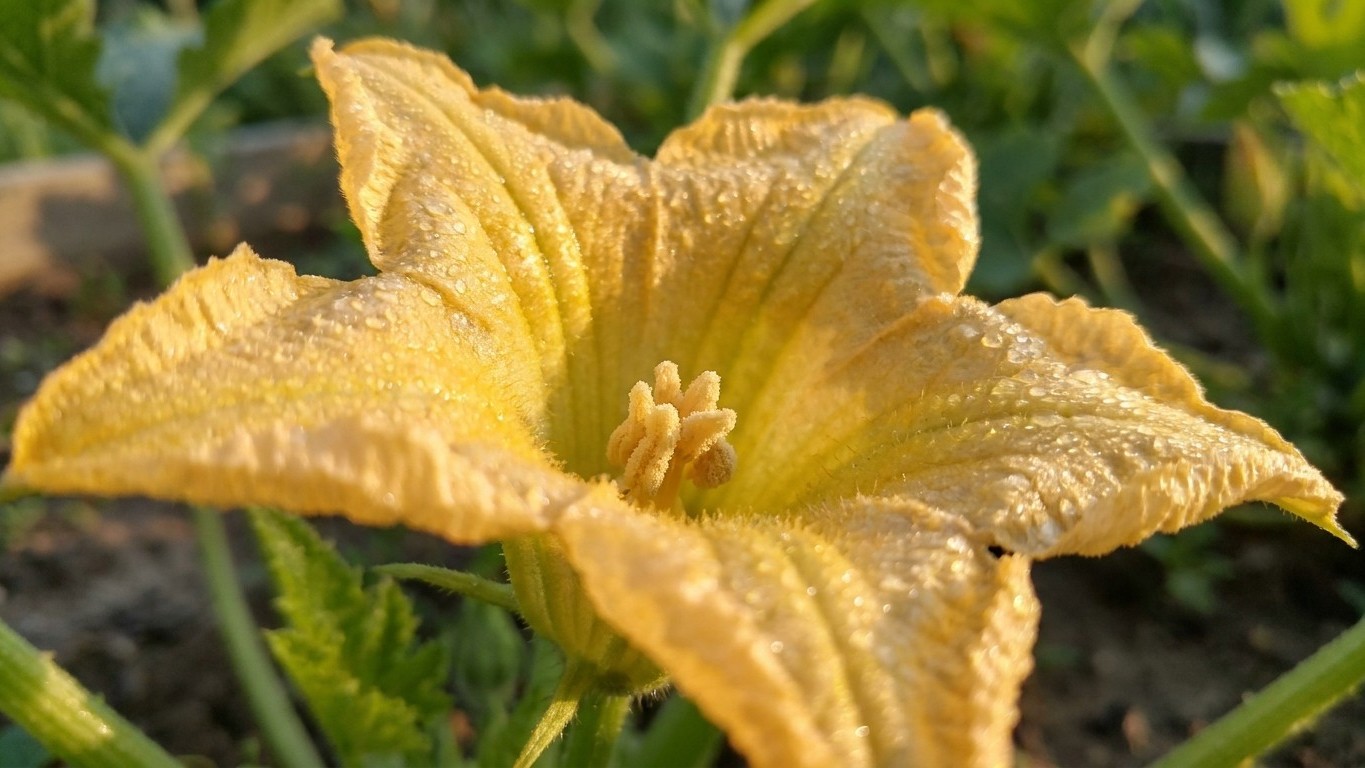
Every fruit had shriveled to a wet, yellow stub within days of the flower opening. Not one zucchini on that plant had made it past the size of a thumb. So one morning, before the sun cleared the fence line, I crouched down and pulled a blossom open with my fingers instead of waiting for it to fall off on its own. Inside: nothing. No sticky pollen smeared across the center, no dusting of yellow grains, no sign that anything had visited overnight. The flower was clean. Too clean. That emptiness was the whole story.
Key takeaways
- Female zucchini flowers only stay open for a few morning hours and need multiple bee visits to set fruit—most gardeners miss this window entirely
- Male and female flowers rarely bloom at the same time on the same plant, creating a pollination mismatch that causes fruits to shrivel before they start
- A five-minute morning hand-pollination routine completely changed everything within days
A Flower That Only Gets One Morning
Zucchini blossoms don’t linger. A female squash blossom gets just one morning to be pollinated. It opens at sunrise, closes by afternoon and never opens again. That’s the detail most people miss when they’re watching their plants from a distance instead of getting close at dawn. Zucchini flowers tend to open up wide in the morning and are often closed by the afternoon, so it is important to hand pollinate in the morning. Miss that window, whether you’re a gardener with a paintbrush or a bee looking for breakfast, and the fruit behind that flower is done before it started.
The math is stricter than it sounds, too. Research suggests it typically takes about 8-12 bee visits to deliver enough pollen for a well-formed squash within those few morning hours. A single distracted bumblebee bumping into the flower once isn’t enough. Multiply that by however many female flowers open on a given morning, and you start to see why a quiet, bee-scarce backyard falls short so easily.
Two Flowers, Two Jobs, One Timing Problem
Zucchini plants don’t grow one type of flower. They grow two, and only one of them ever becomes a fruit. These are vines that produce separate male and female flowers. Successful Pollination of the male and female flower is imperative for the plant to produce fruit that will grow and mature. A female flower is easy to spot once you know what you’re looking for: it has a swollen “receptacle” below the flower that looks like a little zucchini. The male flower has no such swelling; it just sits on a single straight stamen pointing out from the centre of the flower that holds all the pollen.
The trouble is that these two flowers rarely show up on schedule together. In the beginning, zucchini only produce male flowers, so if early on you’re seeing flowers but no squash, that’s okay. The plants are training bees to come by and look for pollen. Later, when females finally arrive, a new mismatch can appear: a female opens on a morning when no male happens to be ready, or vice versa. For pollination to happen, a male flower and a female flower need to be open at the same time. But zucchini flowers don’t stay open for long; they usually bloom for just a few hours in the morning of a single day. If a female flower opens when there are no male flowers available, pollination won’t happen, and the female flower will eventually dry up and fall off without producing any fruit. That’s essentially what I’d been watching all week without realizing it. Flowers opening on a rotation that never quite lined up with a visiting bee, or with a matching flower of the other sex.
What an Empty Flower Actually Tells You
A shriveled baby zucchini looks alarming, almost like disease. It isn’t, most of the time. Sometimes what looks like rot is really a fruit that was never properly pollinated. Zucchini produce separate male and female flowers, and a female flower has a tiny immature fruit behind it. If that flower is not adequately pollinated, the little fruit starts to grow, then stalls, yellows, shrivels from the blossom end, turns soft, and drops off. It can look very much like rot, but the cause is a pollination shortfall, not calcium or disease. There’s a quick way to tell the difference from actual blossom end rot, too: the telltale sign is timing and size, the fruit is small, only an inch or two long, and it yellows and rots shortly after the flower opens rather than after the fruit has grown for a while.
Weather plays its own quiet role here. Bees are picky. Bees don’t want to collect pollen if it’s too cold, raining, or they have to work too hard. A stretch of overcast mornings, or a garden set in partial shade, is often enough to keep pollinators away right when the flowers need them. Poor pollination can also be a side effect of light levels that are too low because pollinators tend to prefer foraging in sunnier areas, particularly on cooler days. Zucchini plants require six to eight hours of full sun per day to perform their best. None of that showed up as a diagnosis until I actually looked inside the flower and saw the bare, pollen-free center staring back at me.
Taking the Bees’ Job for a Few Mornings
The fix, once I understood the problem, took about five minutes a day. In the morning when flowers are open, pick a male flower (it has a thin straight stem and a pollen-covered stamen, with no fruit behind it), peel back the petals, and gently rub the pollen onto the center of a female flower (the one with a baby zucchini behind it). One male can pollinate several females. A cotton swab or small paintbrush works just as well if you’d rather not pick the flower. Collect pollen on a cotton swab from the male flowers, then rub it onto the stamen of the female flowers. This will pollinate the female flowers enabling a fruit to be formed.
Timing still matters more than technique. Do it too late in the day and the flower has already closed for good, so the ideal time is typically between 6 AM and 10 AM, depending on your local climate, since morning is when pollen is most plentiful and active, increasing the chances of successful pollination. Within a few days of doing this by hand, the difference showed. Little fruits that used to yellow and drop within 48 hours started swelling steadily instead, staying green and firm past the point where they’d always failed before.
If hand pollination feels like one chore too many, there’s a shortcut some gardeners reach for without ever touching a flower: planting a parthenocarpic variety that doesn’t require pollination to set fruit, such as ‘Easypick Gold’, ‘Partenon’, or ‘Cavili’. Worth keeping in mind for next season, especially if your yard doesn’t get much bee traffic to begin with.
Sources : scienceofcooking.com | theartofdoingstuff.com