
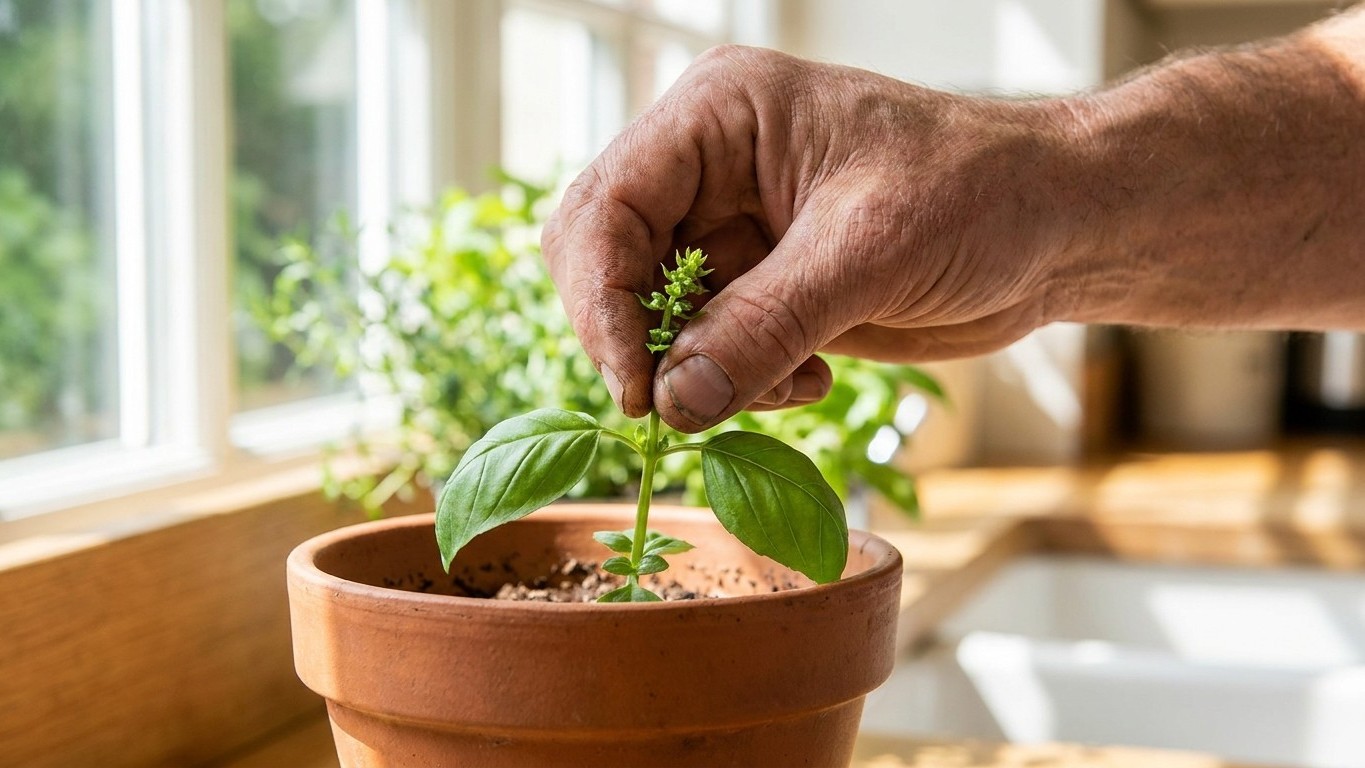
Basil doesn’t ask permission before it bolts. One week the pot on your windowsill looks lush and full, the next it’s shooting up thin stalks topped with tiny white or purple blooms. The fix isn’t a new fertilizer or a shadier spot. It’s a two-second pinch, done in the right place, at the right moment.
Here’s what’s actually happening under those pretty flower spikes: bolting is when a basil plant shifts its energy from leaf production to flowering and seed production. Once it bolts, leaf flavor drops sharply and the plant begins to decline. The plant isn’t malfunctioning. It’s doing exactly what an annual herb is built to do once certain environmental conditions trigger it, heat above 80°F is one of the most common causes, pushing basil to flower as a survival response. Long summer daylight adds to the pressure. Longer daylight hours can also signal to basil that it’s time to complete its life cycle, pushing the plant to bolt even faster.
Key takeaways
- Why July heat triggers basil to flower as a survival response, not a sign of failure
- The exact spot where you cut determines whether your basil branches or stays leggy
- What happens to basil’s flavor the moment flower buds appear, and why waiting costs you
Where you cut matters more than how often
Most people respond to a flowering basil plant by yanking off the top leaf or two and calling it done. That’s the mistake. A leggy basil plant with one tall stem and few side branches is usually the result of cutting in the wrong spot. The place where you make your cut matters just as much as how often you cut. The actual technique: snipping just above a healthy leaf pair tells the plant to send out two new shoots from that spot instead of continuing upward. Use clean scissors or garden snips for this. No fancy tools required, either. You can also pinch with your fingers if the stem is soft and young.
Timing beats effort here. Catch the buds before they open and you’re working with the plant’s biology instead of against it. The first clue is a small cluster of tiny buds forming right at the center of the stem tip. These buds are easy to miss if you only glance at the plant from a distance. Get in close every few days during hot stretches, because July heat can accelerate bud formation quickly. A plant that looked fine on Monday might show visible buds by Thursday, especially during a stretch of hot, dry days. One gardening resource puts a number on the payoff: within 4–7 days, 2–4 new shoots will emerge once you pinch correctly. That’s not a plant limping along. That’s a plant multiplying.
Why the flavor clock is ticking too
The leaves themselves are the real casualty of ignoring flower spikes. Once the flower spikes appear on the plant, the leaves develop a less-appealing flavor. This isn’t a myth passed around community gardens. It’s a straightforward energy trade-off: whenever this aromatic plant flowers, basil gets tall and stops producing large leaves. In fact, the plant redirects all of its energy up to the tips where the blooms appear. So every day you leave a flower spike untouched, you’re trading away the exact thing you planted basil for in the first place.
The good news: this window closes slower than you’d think if you stay on top of it. When small, tightly packed clusters of green buds appear at the very top of a stem, that is the clearest early signal that bolting has begun. Catching this stage early gives you the best opportunity to redirect the plant’s energy back toward leaf production. Wait too long, though, and the damage compounds. By the time those buds open into small white or purple flowers, the stems have often already stiffened and the leaves closest to the flowering tip have started to shrink and lose their flavor.
Regular harvesting doubles as prevention, which is the part most home cooks miss. Harvesting basil consistently is not just about gathering leaves for cooking; it also sends the plant a signal to keep producing new growth rather than shifting toward flowers and seeds. Each time you remove a stem by cutting it above a leaf node, you are essentially doing the same thing as pinching. The plant responds by branching at that point, which leads to more stems and more leaves over time. Pluck single leaves off the top and you’re doing the opposite of what you want. Gardeners who harvest only occasionally, taking a few leaves here and there without cutting full stems, often end up with a plant that bolts faster because the main growing tips are left in place.
What to do once it’s already flowered
If you’re reading this because your basil already looks like a bouquet, don’t panic and don’t compost the whole thing. Yes, but act quickly. Remove all flower spikes and cut the plant back to a healthy set of leaves. The plant will redirect energy back to leaf production. Expect a slight quality dip on the leaves that were closest to the blooms. Bitterness is usually a sign that the plant has already bolted or is under stress from heat or underwatering. If your basil has flowered, even briefly, the leaves near the flower stem will taste more bitter. Strip those leaves and use the lower, younger foliage instead.
One caveat worth knowing before you go into full pinch-mode: full recovery isn’t guaranteed the way delaying bolting is. Once bolting initiates, biochemical changes in leaf tissue are irreversible. Removing flowers prevents seed set and may encourage limited new leaf growth, but existing leaves retain reduced sweetness and increased bitterness. That’s why prevention beats rescue every time, and why a quick daily glance at your basil is worth more than any watering schedule tweak.
Skip watering more, skip fertilizer, skip moving the pot indoors. What your July basil actually needs is your thumbnail, a pair of healthy leaves to cut above, and a habit of checking in every few days. Don’t have time for a full harvest today? You can pinch off the flowers as a temporary solution stop your basil plant flowering until you get around to trimming the plant. Save those buds, by the way. Toss them straight into a salad or over pasta. Basil flowers are a small, fragrant bonus for the gardener who caught them in time.
Sources : housedigest.com | aol.com