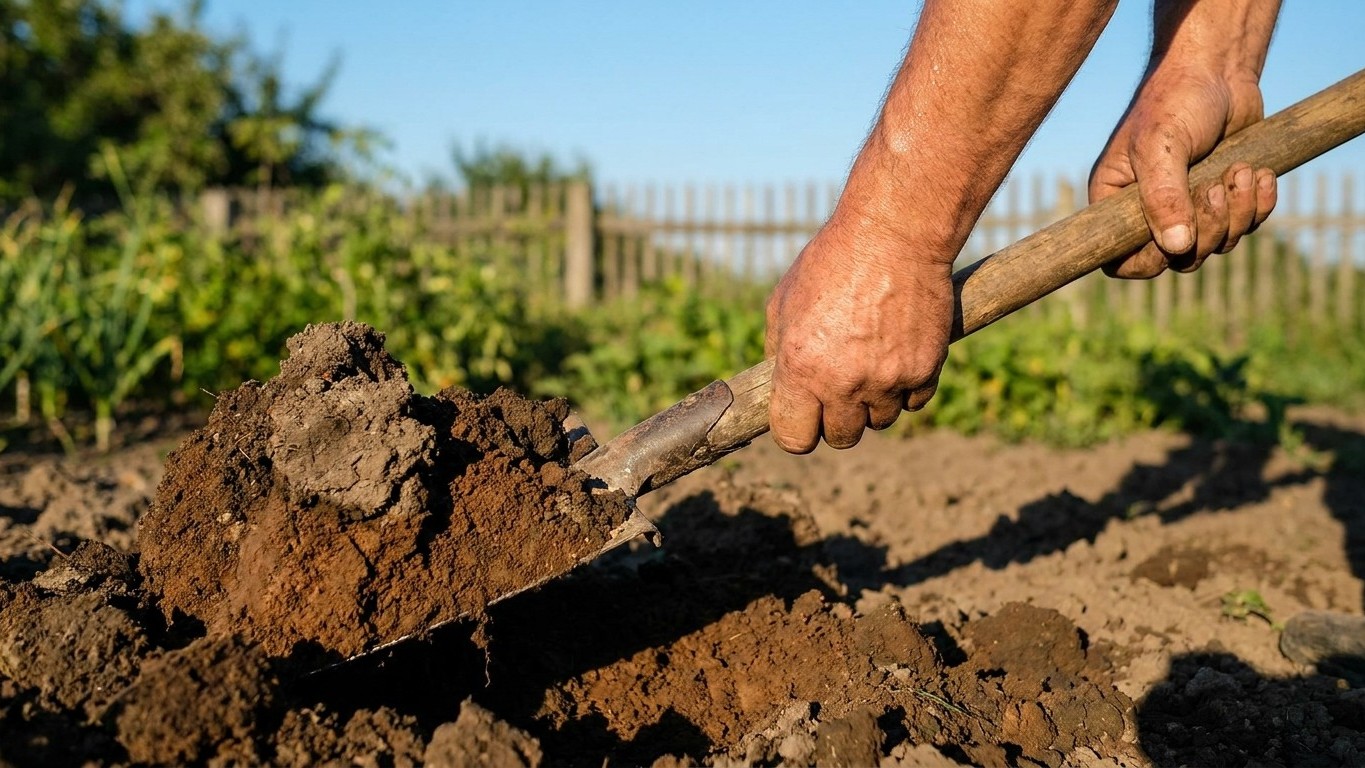
My father would grab a spade every July, turn over a single clump of dirt, squint at it in the sun, and nod like he’d just read tea leaves. As a teenager, I thought it was pure superstition, a quirky ritual with no real purpose. Turns out he was tapping into something that plant pathologists and university extension agents now teach as an actual practice: using peak summer heat to reset the soil before the next planting cycle.
The mechanism is simpler than it looks, and hotter than most people realize. Soil solarization works by trapping radiant energy from the sun under a thin plastic tarp to heat the soil at temperatures high enough to kill soil organisms, and soil temperatures of at least 110°F to 125°F, held steady for at least four weeks in the top 6 inches of soil, will prevent the emergence of many annual weeds and mesophilic fungi. My father never used plastic sheeting. He didn’t need to. Just exposing a spadeful of earth to direct July sun, flipping it so the cooler underside faces up, does a scaled-down version of the same thing.
Key takeaways
- A father’s mysterious July soil-turning habit hides a powerful agricultural principle that universities now teach
- Soil temperatures of 110-125°F can eliminate dangerous pathogens, weeds, and pests—without chemicals
- The real genius isn’t in the digging itself, but in reading what the soil tells you about readiness
Why July, specifically
Timing isn’t arbitrary here. Soil solarization works best in the hottest month of the year when days are long and skies are clear, which for many zones is the few weeks before and after the summer solstice in June or July. Extension offices across the country point to the same window. June, July and August are the best months to solarize your soil since this is when temperatures are highest. In Oklahoma, agents recommend the same stretch: the recommended time for treatment in Oklahoma is from July to early September.
There’s a threshold effect at play, too. Researchers at the University of Florida Institute of Food and Agricultural Sciences found that most soil organisms die when temperatures reach 102 to 104°F, making solarization highly effective at eliminating unwanted growth. That’s roughly the temperature of a hot bath, cranked into the ground instead of a tub. My father’s single overturned clump wasn’t reaching those depths for weeks the way a plastic-covered plot would, but it gave him a snapshot: how hot, how dry, how alive the soil actually was before he committed seeds to it.
What’s really happening under that clump of soil
The payoff isn’t just dead weeds. Soil solarization is an ideal solution for killing weed seeds, controlling nematodes and pests, eliminating soilborne plant pathogens, and improving tilth and soil biology. Full-scale solarization, done properly with plastic sheeting, goes after specific culprits familiar to anyone who’s lost a tomato patch to root disease. Solarization controls many important soilborne fungal and bacterial plant pathogens, including those that cause Verticillium wilt, Fusarium wilt, Phytophthora root rot, Southern blight, damping-off, crown gall disease, tomato canker, and potato scab.
There’s also a nutrient bonus most gardeners overlook. Beyond killing pests, solarization improves soil health by breaking down organic matter and releasing nutrients like nitrogen, calcium, magnesium, and potassium. Heat, acts like a slow-motion compost accelerator. Whatever leaf litter, dead roots, or straw got worked into the bed in spring starts breaking down faster once the ground hits July temperatures. My father would toss the turned clod back, satisfied, because he already knew what four weeks of Georgia sun would do to whatever seeds and spores were hiding in it.
Not every soil pest gets the memo, though. Some perennial weeds, like Johnson grass, may have deep roots or rhizomes that heat won’t reach. And the process is selective rather than a scorched-earth wipeout. Although many soil pests are killed by solarization, many beneficial soil organisms are able to either survive solarization or recolonize the soil very quickly afterwards, and important among these beneficials are mycorrhizal fungi and fungi and bacteria that parasitize plant pathogens and aid plant growth. That’s the detail that would have made my father grin: the sun does the sorting for you, killing what hurts your plants while leaving the helpers intact.
Where a July turn can backfire
Here’s the nuance that took me longer to appreciate than the practice itself: not all summer tilling is created equal, and a full garden till is a different animal than a single test spadeful. Digging deep and often during a heat wave carries real risk. Tilling exposes precious moisture to the sun, causing it to evaporate, drags dormant weed seeds into the light and warmth triggering an explosion of unwanted growth, and a heavy spade will slice through delicate microscopic networks of mycorrhizal fungi your plants have spent all spring developing. That’s why extension guidance separates a genuine solarization project (weeks under sealed plastic) from casual midsummer digging around living plants.
The practical answer sits in the prep work. If you’re actually converting a bed for fall planting rather than just checking soil, extension horticulturists lay out the sequence plainly: turn the soil to a depth of 7 to 8 inches, incorporating compost or garden soil if needed, and if incorporating large amounts of undecomposed organic matter, sprinkle nitrogen over it before turning it under, since this speeds up decomposition and provides nitrogen for soil organisms and plants. Rake soon after, because raking the soil soon after turning it prevents excessive drying and maintains good texture.
My father’s ritual, it turns out, wasn’t about the spadeful itself. It was a diagnostic, a way of reading moisture, texture, and warmth before deciding whether the ground was ready to be worked at all. Squeeze test included: wet a handful of soil and squeeze it in your fist, since clay-heavy soil forms a tight, slippery ball, sandy soil crumbles easily and feels gritty, and loamy soil holds together loosely but crumbles under slight pressure, which is the ideal balance. He never called it science. He just called it knowing your dirt. Turns out those are the same thing.
Sources : gardeningknowhow.com | rasnetwork.org