
Every morning, thousands of backyard chicken keepers scoop a handful of cold wood ash and rub it into their hens’ feathers, convinced they’re winning the war against mites. And every night, the mites come out anyway, feed for an hour or two, then vanish before sunrise into a hiding spot the ash never touched. That’s the uncomfortable truth about poultry red mite: dusting the bird treats the wrong side of the problem.
Key takeaways
- Red mites only feed on chickens at night, then vanish into hidden spots ash will never reach
- A single warm week can turn a few mites into thousands, reproducing in your coop’s woodwork while you treat the birds
- One coop can stay infested for 9 months after chickens are gone—even secondhand coops pose a hidden threat
The mite that isn’t where you think it is
The species responsible for most coop infestations, Dermanyssus gallinae, doesn’t behave like lice or the northern fowl mite, which cling to feathers around the clock. The main difference between these two mites is that red mites are not found on chickens during the day, while the northern fowl mite spends its entire life cycle, day and night, on the chicken. Red mites operate on a strict night shift. They hide in cracks and crevices of the coop during the day and emerge at night to feed on your birds’ blood before returning to their hiding places to digest and reproduce.
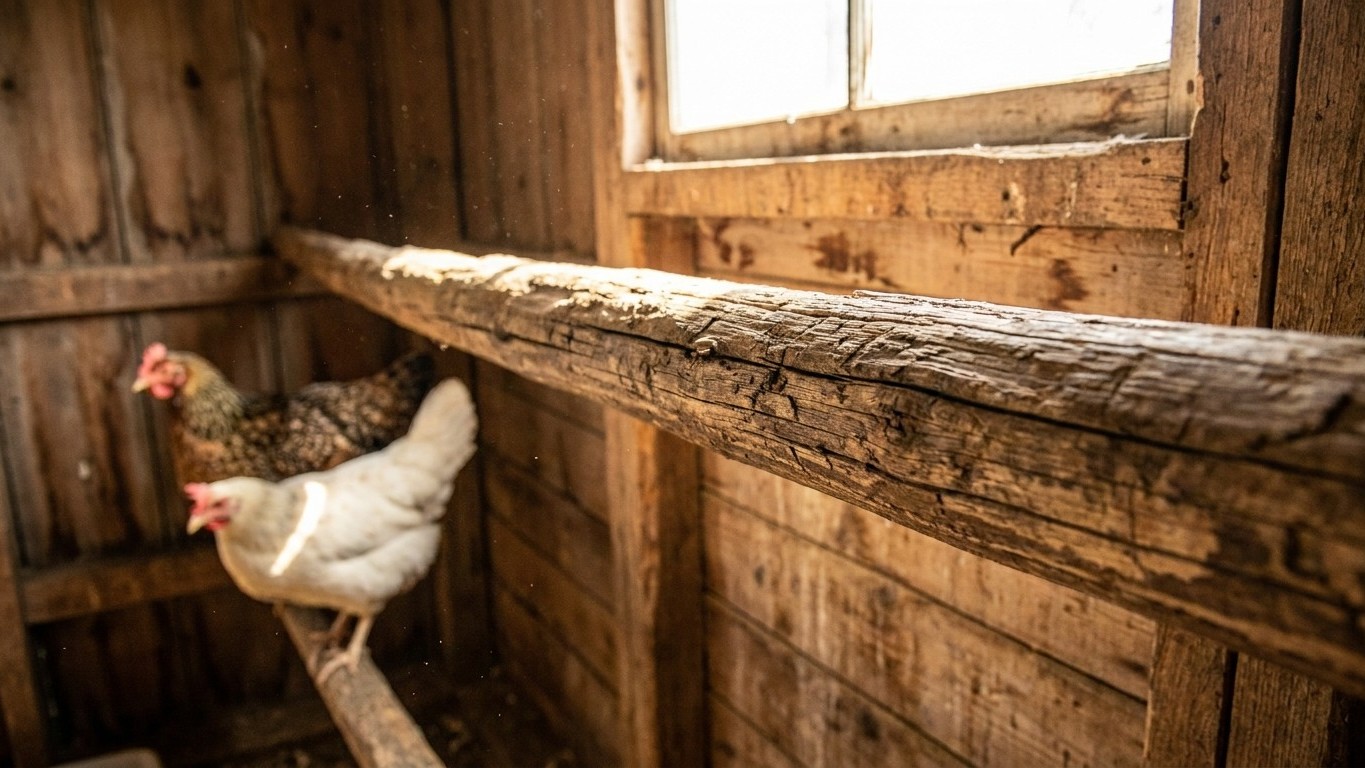
The favored real estate isn’t subtle once you know where to look. Poultry red mites are nocturnal feeders that hide during the day under bird droppings, on roosts, in nest boxes, and in cracks and crevices of the chicken house, where they deposit eggs. One poultry keeper who photographed an infestation under magnification noted that the coop door normally closes against a piece of wood, leaving a small gap, and that gap was packed with mites at every life stage. Even the perch itself is fair game: poultry red mites can be found in chicken houses during the day, particularly in nest boxes, in cracks, where roost poles touch supports, or on birds at night.
What makes this parasite so hard to shake is its speed. The red mite lifecycle is extremely fast, taking just 7 to 10 days from egg to adult, depending on environmental temperature. A single warm week can turn a handful of stowaways into a full-blown population explosion in the woodwork, feeding on your flock every single night while you keep treating the birds themselves.
Why the ash bath isn’t wasted, but isn’t enough either
Wood ash dust bathing does have a real, documented role in chicken care, so it’s worth being fair to it. Charcoal or wood ash added to a dust bath helps to suffocate parasites such as mites, lice, fleas and ticks. It also delivers minerals: calcium is the most abundant element in wood ash, but it’s also a good source of potassium, phosphorus, and magnesium. For a mite that happens to be riding on a hen’s skin at the moment she flops into the dust, ash can genuinely smother it.
The catch is timing. Since red mites only visit the bird for a feeding window at night, the odds that they’re actually on a hen’s body during her afternoon dust bath are slim. Poultry red mites are tiny, so you must look closely at what looks like dirt on the birds, and since chickens engage in dust bathing, observing their skin at night may require patience to see any potential movement. Even seasoned keepers on poultry forums have noticed the gap between folklore and results: even wood ash in a dust bath may not deter an infestation of lice or mites, so it’s important to check birds regularly for external parasites. Ash is a supporting player, not the main defense.
Where to actually aim your treatment
The fix has to go where the mites actually spend their day, and that means dismantling the coop’s hiding spots rather than just fluffing feathers. Regular cleaning disturbs the cracks and crevices where red mites hide, and painting the inside of the coop is another way to cover up many of the hiding places. A light-colored coat of paint does double duty, since a light paint color makes mites easier to see, and a painted interior is much easier to clean and disinfect. For gaps you can’t paint over, a silicone gel can seal larger cracks and crevices.
Cleaning technique Matters More Than people expect. Jet-washing or hosing should be avoided, since it tends to scatter mites and eggs rather than remove them, while high temperatures and thorough cleaning of every surface are far more effective. Strip the bedding, scrub every seam, and pay special attention to the spots that veteran keepers flag as hotspots: a dusting powder concentrated on the perch ends and nest boxes helps catch mites you missed and those that come out at night to feed. Sequencing counts too, since removing dirt and debris first is essential because it exposes the mites to the treatments.
Don’t underestimate how much damage a hidden population can do while you’re busy treating the wrong target. In a particularly bad infestation, hens may lose more than 3 percent of their blood by volume every night. A recent night-vision monitoring study of laying hens found the toll on rest is severe too: infested flocks showed a nearly 23-fold rise in behaviours linked to the mites, such as head shaking and head scratching, evidence that these nighttime raids genuinely disrupt sleep, not just skin.
Here’s the detail that surprises most new keepers: an empty coop isn’t a safe coop. A poultry house can remain infested for up to 9 months after affected birds are removed. That empty run you inherited from a previous flock, or that secondhand coop you bought off a classified ad, could still be harboring a population waiting for its next blood meal, ash bath or not.
Sources : ncbi.nlm.nih.gov | poultrydvm.com