
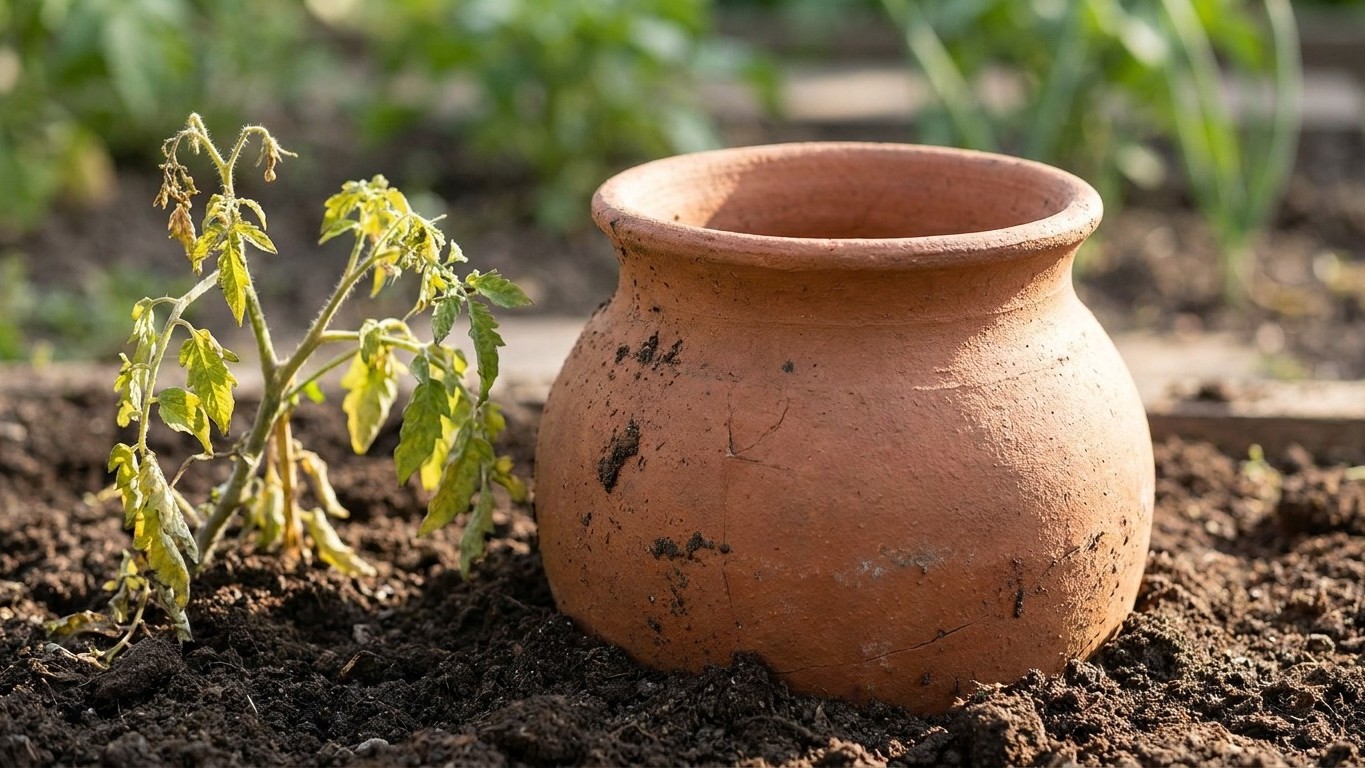
Sealing an olla with varnish is the gardening equivalent of putting a raincoat on a sponge. The whole system depends on the clay staying naked, and a protective coating undoes that in one move.
An olla, that bulbous terracotta jar you bury in the ground to water tomatoes on autopilot, only works because of one specific property of unfired… no, of low-fired, unsealed clay: its walls are riddled with microscopic pores. The use of low-fired, clay ceramic vessels known as ollas is an ancient technique for the efficient irrigation of crops. The system has survived for millennia precisely because it’s dumb-simple: no pumps, no batteries, no app reminding you to water the basil. Just fired earth, buried in dirt, doing its job quietly underground.
Key takeaways
- A gardener sealed their olla with varnish thinking it would extend its life underground
- A month later, plants were wilting despite a jar full of water just inches away
- The physics behind why this ancient irrigation trick requires raw, breathable clay to function
What Actually Happens Inside a Buried Clay Jar
The physics is almost embarrassingly elegant. Olla irrigation works through soil moisture tension, also called suction tension, which increases as the soil dries out since dry soil has a greater capacity to absorb water. Fill the jar, bury it, and the surrounding earth essentially pulls water out of the vessel exactly as fast as it needs it, and not a drop faster. When the soil around the olla is dry, the soil pulls the water through the wall of the olla and into the soil, providing water for the roots.
That’s the mechanism your varnish job interrupted. A coat of sealant, whether it’s polyurethane, epoxy, or a Decorative pottery glaze, closes off those pores at a microscopic level. Unlike glazed pottery, unglazed clay contains microscopic pores that allow water to move slowly through the walls of the vessel. Once you glaze or varnish that surface, you’ve built a very pretty, very useless bucket. The water you poured in just sits there, trapped, while the soil around your tomato roots stays bone dry, three inches from a jar holding a gallon of water it will never release.
Gardeners who’ve made this mistake report exactly the scenario in the title: a month goes by, the jar looks fine on the surface, and the plants nearby are wilting despite what should be a steady underground water supply. Dig up the jar and it’s often still nearly full, or the water inside has gone stagnant and slightly foul, because nothing ever left. Meanwhile, other guides are explicit about this exact failure mode. It’s important that these pots are unglazed since glazed pots will prevent water from seeping through the terracotta into the soil. Same warning shows up almost everywhere olla instructions are written: the pots need to be unglazed clay, otherwise the water will be sealed inside and won’t seep out.
Why This Trick Is Older Than Most Countries
The instinct to protect a garden tool by coating it makes sense in almost every other context. Varnish wood, it lasts longer. Seal a terracotta pot you’re using as a planter above ground, and you slow down cracking from freeze-thaw cycles. But an olla isn’t a container. It’s a membrane. Long before drip irrigation systems, timers, and soaker hoses existed, ancient farmers around 4,000 years ago in parts of China, the Near East, and later many other arid regions discovered that a simple unglazed clay pot buried in the soil could slowly release water directly to plant roots. That “release” is the entire product. Waterproof the walls and you’ve kept the water in exactly the way you’d want for a canteen, which is precisely the opposite of what a garden needs.
The appeal of the original design is that it requires almost no maintenance and no guesswork. Instead of flooding the soil and allowing much of the moisture to evaporate, the water moves exactly where it was needed: into the root zone. Compare that to hand-watering, where half the water pools on the surface and evaporates before roots ever touch it, and the appeal becomes obvious. One cottage gardener’s tally puts a number on the waste that ollas are designed to eliminate: you can reduce your waste water by 70% for about $5 using just a clay pot.
Fixing It Without Starting Over
The good news: this mistake is entirely reversible, and it doesn’t require buying a new jar if the varnish job was recent and thin. Coarse sandpaper or a wire brush can strip a light sealant coat back down to bare clay, though anything baked-on or epoxy-based is tougher to remove completely and may leave patches sealed regardless of how hard you scrub. When in doubt, the safer move is simply buying an unglazed terracotta pot for a few dollars at a garden center and skipping the whole “improving on the design” impulse. You can tell that a pot is unglazed because it will be that classic terracotta red color with no shiny finish, glaze or paint. If it gleams, it seals. If it’s matte and slightly rough, chalky almost, it breathes.
There’s also a middle path some gardeners use to make ollas last through harsh winters without touching the working surface: dig the pots up at the end of the growing season to prevent breakage over cold winter months. That’s the legitimate way to extend an olla’s life, storage indoors during freezes, not a protective coating that blocks the one function the jar exists to perform.
One detail worth knowing before your next attempt: the porosity that makes ollas work is also why they eventually degrade. Untreated terracotta buried in acidic or highly mineral soil can slowly erode over several seasons, which is a real trade-off against durability. But that’s a conversation about lifespan measured in years, not about whether the thing works at all. A varnished olla fails in the very first month, which is exactly what makes the mistake so instructive: sometimes the fix you’re sure will help is precisely the thing standing between your plants and the water sitting a few inches from their roots.
Sources : naturelostvault.com | secretsofthegreengarden.com