
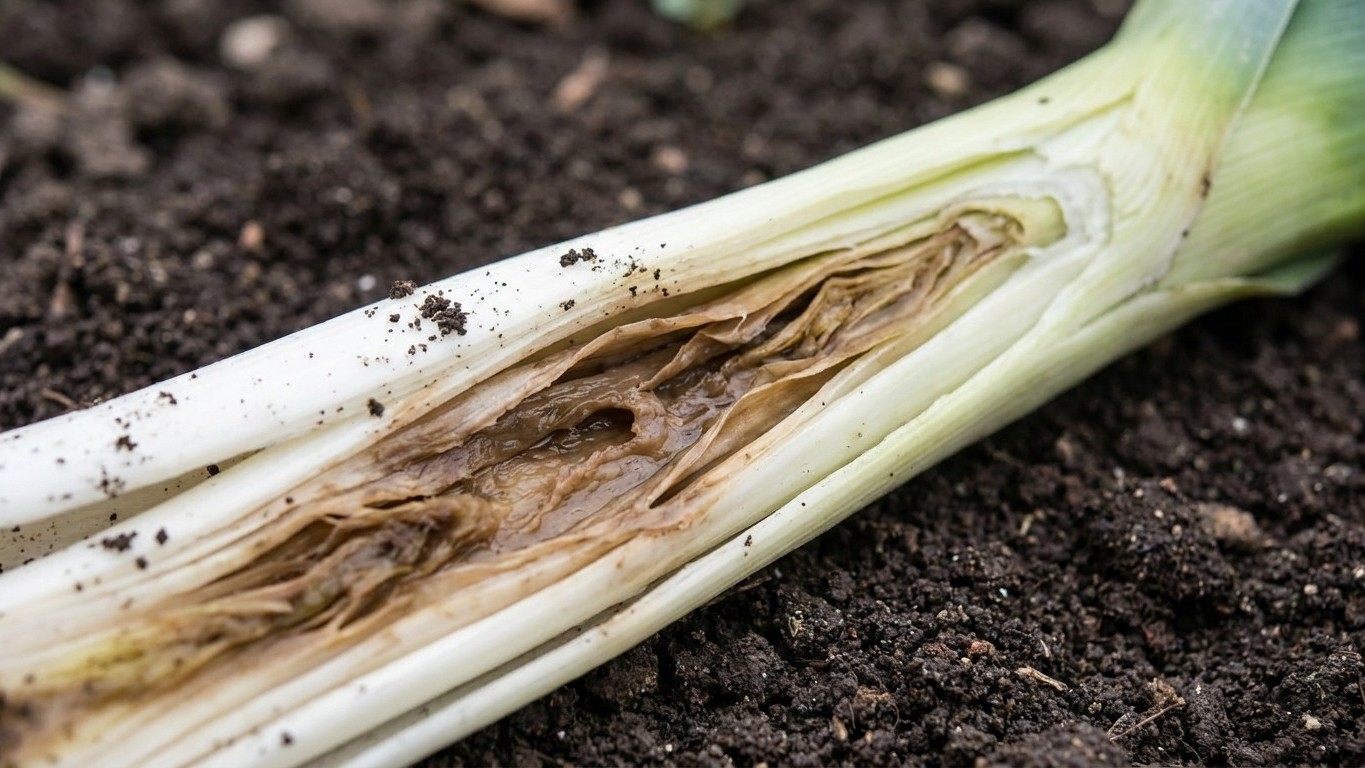
Cats digging in freshly turned soil are a familiar nuisance for anyone growing vegetables in a backyard bed. A layer of garden netting seemed like the obvious fix, stretched loose over young leek transplants to stop paws from scratching around the base. What nobody expected was that the same barrier would end up doing something far more valuable: keeping out an insect that can hollow a leek from the inside before anyone notices a problem.
Key takeaways
- Leek moths and allium leafminers tunnel inside stems, invisible until harvest time when damage is irreversible
- A fine mesh net (0.8mm weave) on hoops stops adult insects from laying eggs—but only if timed to their peak activity windows
- One row stayed pristine under netting; the neighbor’s uncovered leeks crumbled into mush at the first cut
The real threat was never the cats
By November, the difference between the two rows told the whole story. One set of leeks, netted since spring, stood firm with tight white shafts. The other, left uncovered next door, looked fine from the outside but crumbled at the first cut, stems reduced to mush and frass. The culprit wasn’t a rodent or a fungus. It was almost certainly one of two small flying insects that specialize in alliums and do their damage completely out of sight.
The leek moth (Acrolepiopsis assectella) is the more established of the two threats in North America and Europe. The first flight of the leek moth occurs in April-May, as soon as nighttime temperatures approach 54°F (12°C), and after mating, the female lays hundreds of eggs on leek leaves in the evening, with larvae hatching ten days later. Once hatched, the caterpillars don’t stay put on the surface. The caterpillar burrows deeper into the leek stem which it gnaws at from the inside. A gardener checking on their crop through summer might see nothing alarming, then discover the truth only when it’s time to harvest. Leek moth numbers and associated damage typically increase as the season progresses, which explains exactly why an autumn harvest can look so much worse than a midsummer check-up suggested.
A newer lookalike making things worse
Complicating matters is a second pest that has spread rapidly since the early 2000s: the allium leafminer (Phytomyza gymnostoma). In recent years, allium leaf miner has become more widespread and become a regular nuisance, mostly hitting leeks where it can cause considerable damage. The symptoms mimic leek moth damage closely enough to fool an untrained eye. Gardeners first notice the leaves twisting in mid-autumn, then the stems start to collapse, and when they come to harvest, there will be lots of pale creamy maggots and dark brown pupae, the size of rice grains between the layers rendering them inedible. The distinguishing detail, for anyone curious enough to dissect a ruined leek, is anatomical. This could be mistaken for leek moth, but the lack of head and legs, and the presence of pupae in the leek are the tell tale signs that it is allium leaf miner.
Both pests share a nasty side effect that goes beyond the initial feeding damage. Affected plants often develop secondary infections and rot, meaning even leeks that survive the initial tunneling can turn into a soggy, foul-smelling mess in storage weeks later. That’s the cruel twist of these pests: the visible damage in November is often just the beginning of a decline that continues long after the plant is pulled.
Why a simple net works so well
The accidental cat-deterrent turned out to be textbook pest control. Plants can be effectively protected by covering them with an insect-proof mesh, at times when the adult flies are active and laying eggs. Timing matters as much as the mesh itself, since these insects have distinct windows of activity rather than attacking all season long. Peak adult activity is March to April and September to November for the leafminer, while the moth follows its own separate schedule earlier in the year. Covering a bed randomly, or only during summer, can miss both waves entirely.
Mesh size deserves attention too. Standard bird netting or loose mesh won’t cut it, since the adults responsible for the damage are tiny flies and moths capable of slipping through anything but a tight weave. Products designed specifically for leaf miners and thrips use a mesh around 0.03 inch (roughly 0.8 mm) to block even the smallest adults Mesh size: 0.03 inch x 0.03 inch (0.8 mm x 0.8 mm) from reaching the leaves in the first place. That fine a weave still lets in light, air, and rain, so the plants underneath grow normally.
Support matters as much as material. Draping fabric directly onto leaves leaves gaps where determined insects can still reach the surface and lay eggs, so raising the cover on hoops closes that loophole. The best option is to use hoops to hold the cover off the plants, because when fabric sits directly on leaves, insects can still poke through and lay eggs. Weighing down the edges with soil, bricks, or garden pins matters just as much, since a single unsecured corner gives a determined female moth all the opening she needs.
For anyone tending a small allium patch, the season-long commitment sounds like more effort than it is. Placing an insect net as early as May, choosing a very fine mesh set on arches with no gaps, and keeping it on leek plots until October covers the riskiest stretch without demanding constant attention in between. Watering and light feeding still happen right through the fabric, so the routine barely changes.
One detail rarely mentioned in the pest-control guides: leek moth pupae can survive the winter tucked inside unharvested leeks left in the ground, meaning a lightly infested bed one autumn can seed a heavier infestation the following spring if the old stalks aren’t cleared away. The leek moth usually spends winter well protected beneath heaps of dead leaves, among twigs or in bark crevices, and sometimes even lays dormant as a pupa in unharvested leek. A thorough autumn cleanup, alongside that fine net, does more to protect next year’s crop than most gardeners realize.
Sources : amazon.com | theartofdoingstuff.com