
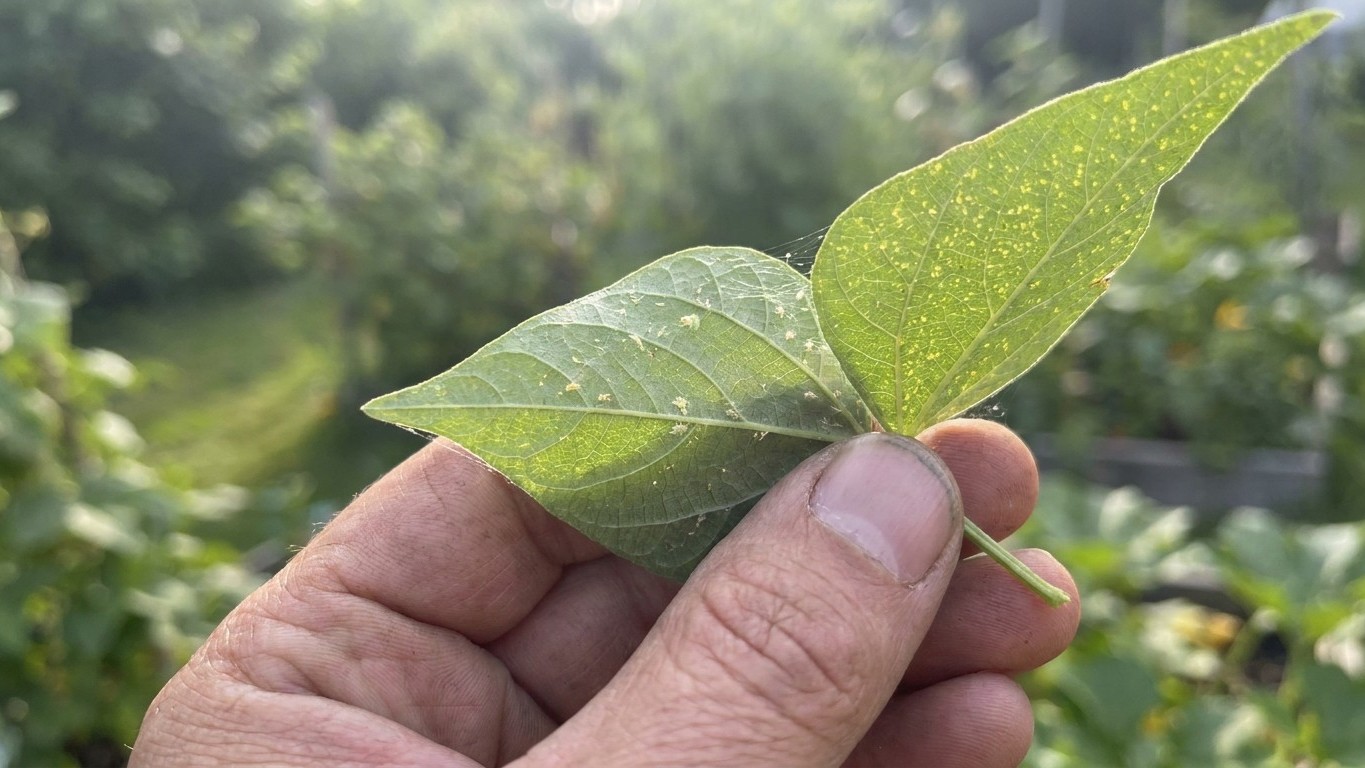
Base watering felt like the smart move. During a brutal stretch of 32°C days, every drop mattered, and soaking the roots directly seemed like textbook water-wise gardening. Then one afternoon, almost by accident, a leaf got flipped over. Underneath: a dusty, stippled mess that had clearly been building for days. The bean plants weren’t thirsty. They were under siege, and nobody had checked the one place that mattered.
Key takeaways
- A water-saving technique that extension experts recommend nearly backfired because of one hidden ritual it eliminated
- The exact weather conditions that stress beans are also the breeding paradise for a tiny pest most gardeners never see coming
- The five-minute weekly habit that catches infestations before they spiral into irreversible crop damage
Why base watering backfired, even though it’s technically correct
Watering at the base isn’t a mistake. Agricultural extension advice consistently favors it: keeping watering at the soil line to keep the leaves dry, using soaker hoses or drip lines run at the soil line so water reaches the roots without wetting the leaves. It reduces evaporation, prevents fungal diseases, and delivers moisture right where roots can use it. Bonnie Plants notes that tubes and emitters deliver water exactly where you place them, at the base of the plant, and nowhere else, since drip irrigation was perfected for agriculture in desert climates where every drop counts.
The problem wasn’t the technique. It was what that technique quietly stopped: the ritual of touching the plant. When you spray foliage or hose down a canopy, you’re forced to look at leaves up close. Skip that step for two straight weeks of heat, and you lose your only early warning system. Beans are famously thirsty to begin with, beans have the highest water use of any common garden vegetable, using ¼ to over ½ inch of water per day depending on temperature and wind. That thirst is exactly what makes them a magnet for trouble during a heat spell, because a stressed, dehydrated plant is a weaker plant.
The pest that thrives on exactly the conditions I was fighting
Flip a struggling bean leaf during a heat wave and there’s a good chance you’ll find spider mites. These aren’t insects but tiny arachnids, and heat is their favorite weather. According to the University of Maryland Extension, spider mites are small arthropods typically found on the undersides of leaves during hot weather, and populations develop and increase rapidly in hot, dry conditions. Washington State University’s extension service is blunt about the stakes: severe infestations can cause entire leaves to turn yellow and drop, sometimes resulting in considerable leaf loss and reduced yield.
What makes mites so dangerous is the speed of their comeback. University of Minnesota Extension research on the two-spotted spider mite explains that hotter temperatures above 90 degrees Fahrenheit accelerate reproduction, while cooler temperatures slow it down, and with females producing up to 100 eggs each, populations can explode. That’s roughly 32°C in the temperature you were dealing with, sitting right in the mites’ preferred breeding zone. Once feeding starts, the damage compounds on itself: leaves lose photosynthetic surface as feeding continues, water loss from damaged leaf surface becomes uncontrolled, and both photosynthetic rate and leaf water status decline with increasing levels of spider mite injury. a plant already stressed by heat gets pushed into a downward spiral it didn’t start on its own. And the timing couldn’t be worse agronomically: spider mite feeding reduces effective leaf area and accentuates drought stress, leading to reduced pod set, fewer seeds, and smaller seed size.
What actually catches an infestation before it’s too late
The fix isn’t complicated, but it does require breaking the base-watering habit for five minutes a week. Extension experts recommend a simple physical check rather than relying on visual scanning from above. The Northern Gardener blog puts it plainly: gardeners should inspect plants regularly and thoroughly every three to five days during times of heat and drought, and look for them on the bottom of the leaves. Washington State’s Pacific Northwest handbook adds a practical tip for scouting: infestations usually begin on the lower portions of the plants and move upward, so evaluating is most efficient if randomly selected older, lower leaves are picked and inspected for stippling on the upper surface and webbing, mites, and feeding scars on the lower surface.
Once mites show up, the treatment that experts trust most doesn’t involve chemicals at all. Maryland Extension recommends a direct hose blast: hose off plants to cool and clean them, since hosing leaf undersides dislodge the mites. That single piece of advice quietly contradicts the pure base-watering approach. Some overhead water, aimed specifically at leaf undersides rather than as a general soak, becomes a legitimate pest-control tool during a heat spell, not just an inefficient use of water. Broad-spectrum insecticides are explicitly discouraged, since they wipe out the predatory insects that would otherwise keep mite numbers in check on their own.
Rethinking what “saving water” actually means
The deeper lesson here isn’t about mites specifically. It’s that drought stress and pest pressure are two sides of the same coin, and treating water conservation as a purely mechanical exercise (soaker hose on, timer set, done) can blind you to what’s happening in the canopy. Mulch helps here too: a mulch layer blocks direct sunlight from hitting the soil surface, slows evaporation dramatically, and temperatures underneath mulch stay cooler, reducing stress on both roots and beneficial soil organisms, while moisture remains trapped longer. A properly mulched bed needs less water in the first place, which means less anxious rationing and more attention freed up for the plants themselves.
Next heat wave, the base watering stays. But now there’s a standing weekly appointment: gloves off, one leaf per plant, turned over, checked under real light. It takes less time than refilling a watering can, and it’s the difference between catching a problem in its first week and discovering it in its third, when the yellowing has already spread past the point of any hose blast fixing it.
Sources : ncbi.nlm.nih.gov | hortsense.cahnrs.wsu.edu