
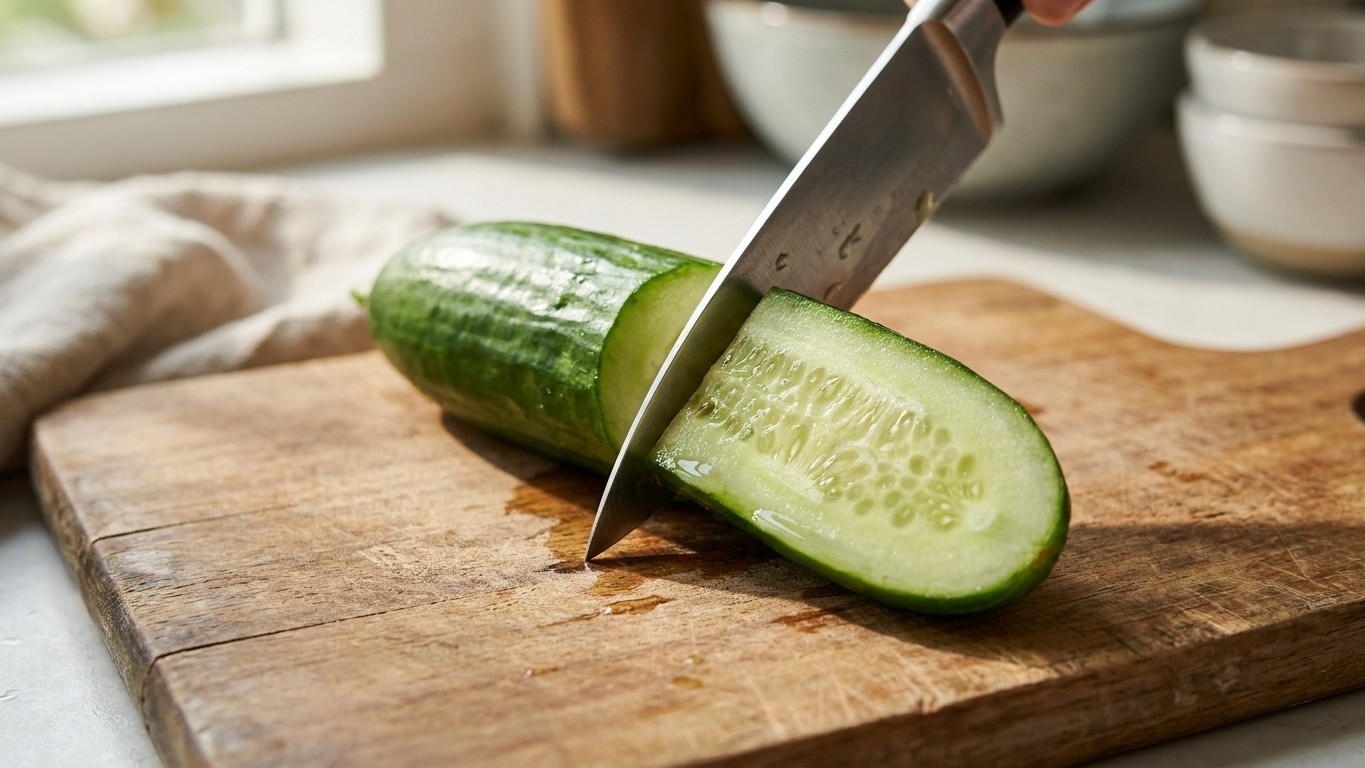
Two days. That’s all it took to turn a promising cucumber harvest into something I couldn’t force myself to swallow. I skipped watering my raised bed in late August because the hose bill was creeping up and the forecast promised a cooldown that never really arrived. When I finally cut into the first cucumber off the vine, the flesh near the stem hit my tongue like a mouthful of quinine. There was no walking that back.
Key takeaways
- A two-day watering gap in late August turned an entire harvest unpalatable—but why such a short timeline?
- Cucumbers produce a defense chemical that floods the fruit under stress, and shallow roots mean plants panic in hours, not weeks
- Peeling, cooking, and pickling won’t save bitter fruit—but the plant itself can recover and produce sweeter cucumbers within days
Why 48 Hours Without Water Was Enough to Wreck the Flavor
Cucumbers don’t have a slow-motion reaction to drought. They have a chemical one, and it’s fast. The plants produce cucurbitacin, a bitter chemical that protects the plant from predators like cucumber beetles, squash bugs and slugs, and it usually stays in the stem and leaves but can work its way into the fruit, causing bitter cucumbers. That last part is the trap. Under normal conditions, the compound stays where it belongs. Add stress, and the plant’s internal chemistry shifts direction.
Heat was already working against me before I even skipped the watering can. When a cucumber plant struggles with extreme heat, inconsistent water, or sudden Temperature changes, it responds by pushing these bitter compounds into the developing cucumbers. Late August in most of the country means exactly that combination: baking afternoons, occasional cool nights, and soil that swings from soggy to bone-dry within a week. I hadn’t caused the heat wave. But I’d handed the plant one more reason to panic.
What surprised me most, researching this after the fact, is how little slack the plant actually has. Cucumbers have a shallow root system, typically reaching only 3 feet deep compared to the 6 to 8 feet deep that many other vegetables achieve, and this shallow root system concentrates entirely in the top 6 inches to 2 feet of soil where moisture fluctuates dramatically. There’s no deep reservoir to draw from during a dry spell. The roots feel the drought almost immediately, and the fruit pays for it within days, not weeks.
The Water Math Nobody Bothers to Do
I’d always treated cucumber watering as a vague, “keep it moist” kind of task. Turns out there’s an actual number attached to it. For garden cucumbers, that’s usually one inch of water each week until the fruit sets, then up it two inches for optimum growth. During a heat spike like the one that hit my garden, even that baseline isn’t enough. If you are in the hottest part of summer or an extremely dry climate, bump that up to 1.5 to 2.5 inches weekly or even to a full 3 inches during peak production.
Here’s the part that reframed my whole approach: cucumbers are basically water wearing a green peel. They’re also about 95 percent water, so ensuring they receive the right amount of hydration is key for their fruit development and overall health. Skipping the hose to save a few dollars on my water bill was, in effect, asking the plant to manufacture fruit out of nothing. It doesn’t do that gracefully. Instead of shrinking the harvest evenly, it protects itself first and sacrifices flavor.
The instinct to save water by watering less often, but heavier, backfires too. Inconsistent watering can lead to several issues, significantly affecting the health and productivity of cucumber plants, and can result in bitter-tasting cucumbers, as stress caused by drought periods can alter the fruit’s flavor. My two skipped days weren’t a rounding error. They were exactly the kind of swing between dry and wet that pushes cucurbitacin production into overdrive.
What You Can (and Can’t) Do Once the Damage Is Done
I did try to salvage that first cucumber before tossing it. There’s an actual technique for this, developed decades ago by a University of Florida vegetable crops professor. James M. Stephens came up with a method of peeling a cucumber to avoid serving bitter-tasting cukes: start peeling at the blossom end of the fruit, slice away one strip of the green peel toward the stem end and stop about one inch from the stem, then wash off the knife blade and repeat. It helped, marginally. But peeling only manages the surface problem.
Cooking or pickling won’t rescue a bitter batch either, which I learned the hard way after trying to brine my way out of it. While removing the skin and stem-end can reduce bitterness, it doesn’t get rid of it entirely, and cooking and pickling don’t reduce the cucurbitacin. If a bite makes you wince, that’s your answer. Compost it and move on.
The one genuinely encouraging discovery: the damage doesn’t have to be permanent for the whole plant. Bitter cucumbers are a temporary problem, and a little water, mulch and patience will provide relief. I also found that a single vine can produce a mix of results depending on when each fruit developed. Sometimes a single plant may have some bitter fruits and some nice-tasting cucumbers, so taste each one to double-check before composting, and the same plant may also produce sweeter fruits as growing conditions improve. My second and third pickings, watered properly this time, came out crisp and mild. The plant forgave me. The fruit I’d already ruined didn’t.
What I Changed for the Rest of the Season
Purdue Extension’s advice stuck with me because it’s specific rather than vague. Watering during droughty periods, 1 to 1.5 inches of water in a slow, gentle application, will help keep bitterness out of subsequent fruits. I switched to a soaker hose set on a timer for early morning, which also sidesteps the fungal issues that come from wetting the leaves at night. I stopped guessing and started checking the soil with a finger a couple inches down before deciding whether to water at all.
Mulch made the biggest visible difference, buying the soil an extra day or two of moisture retention on the hottest afternoons. It’s a cheap fix compared to the alternative: an entire harvest that tastes like a mistake. My hose bill went up slightly that month. My cucumber count, and the number I could actually eat straight off the vine, went up a lot more.
Sources : purdue.edu | plantlyze.com