
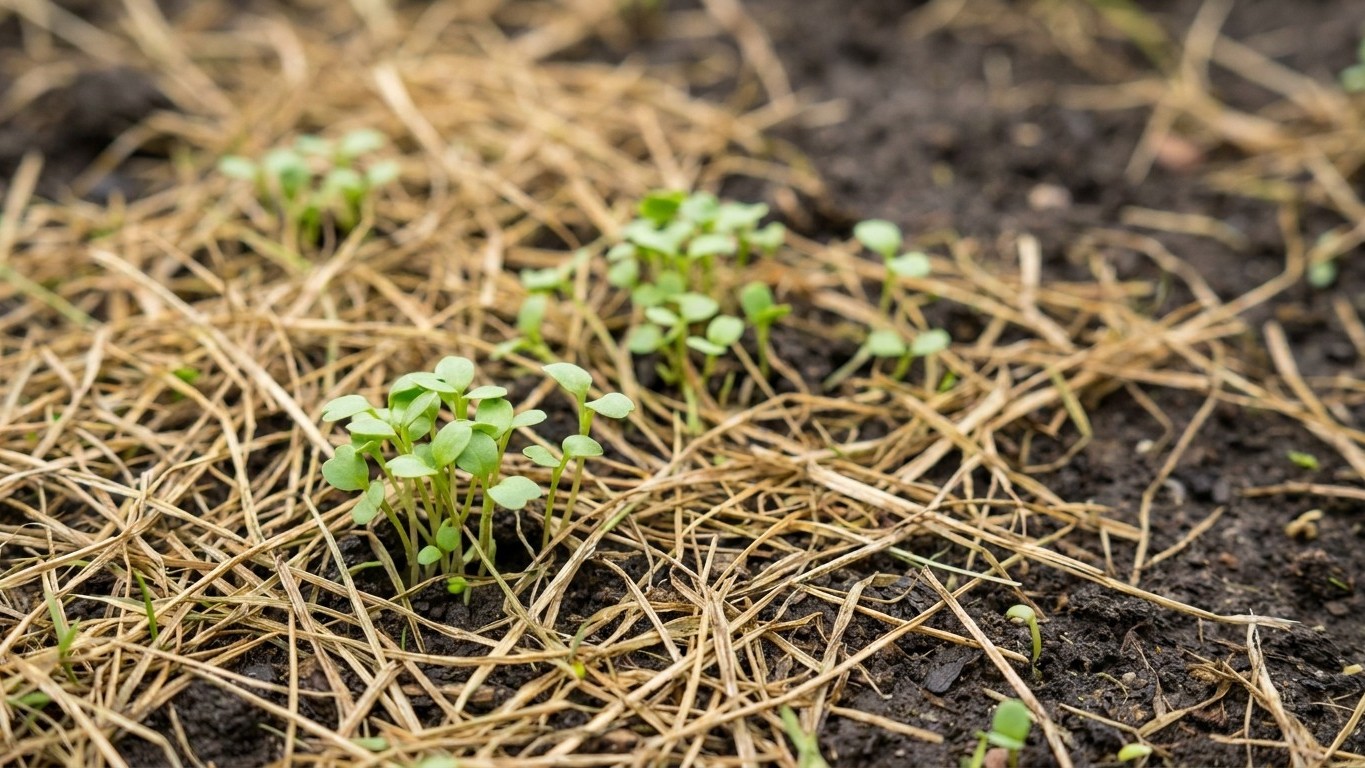
Ten days. That’s all it took for the tiny white seeds scattered across a scraggly corner of lawn to push through the soil and unfurl their first true leaves. The excitement lasted about as long as the germination itself, because a single overlooked step, leaving mowed grass sitting on top of the new seedlings, turned a promising fix into a lesson about timing within timing.
Key takeaways
- Tiny clover seeds need just ten days to sprout, but there’s a hidden countdown clock that starts the moment the mower runs
- A thin layer of grass clippings can completely smother germinating seedlings too fragile to fight back
- There’s still time for a do-over, but only if you understand the real reason the first attempt failed
Late August Isn’t the Problem, It’s Actually the Sweet Spot
Sowing dwarf white clover in the last weeks of summer is far from a rookie mistake. Best windows are spring (April–May) or late summer (August–September) at soil temperatures of 50°F or above. By late August, soil is still holding onto summer warmth while air temperatures start easing off, which happens to be exactly the combination clover seed wants. White clover and its dwarf form microclover typically sprout in about 5 to 10 days when conditions are right, with soil temperature being the key driver, germinating and growing best in cool, moist conditions between roughly 50 and 85°F. Ten days on the calendar wasn’t luck. It was the seed doing exactly what it’s built to do under those conditions.
The plant itself is forgiving too. Microclover and standard white Dutch are both Trifolium repens, with microclover being a dwarf cultivar sporting 2–4mm leaves versus 8–15mm for standard white Dutch. That smaller footprint is precisely why homeowners reach for the dwarf variety when patching bare spots rather than converting an entire yard. It blends in instead of announcing itself. And once it takes hold, it spreads naturally through creeping stems called stolons, helping it fill in bare spots over time. That self-repairing habit is the whole appeal, a lawn that mends its own holes instead of demanding fresh seed every spring.
Ten Days to Sprout, Then the Real Clock Started Ticking
Here’s where things went sideways. The regular mowing routine didn’t pause for the new seedlings. A pass with the mower, clippings left where they fell, and by the time anyone thought to lift that mown grass off the patch, the damage was already locked in. Young clover at that stage is barely an inch tall, still running on stored energy from the seed and desperate for light to start photosynthesizing on its own.
Grass clippings sitting on top do more harm than most people expect. Leaving clippings on the lawn creates a mat that blocks the fine clover seed from reaching the soil surface. Even worse when the seed has already germinated: a mat of clippings smothers cotyledons the same way a wet blanket smothers a candle. Clover seed is extremely small, with a single pound containing roughly 700,000 to 800,000 seeds, and at that size even a thin layer of grass blades or clippings can prevent the seed-to-soil contact required for germination. Established seedlings aren’t immune to the same problem in reverse. Shade them for a few days during their most vulnerable growth stage and they either stretch weakly toward whatever light filters through, or they simply give up.
Thatch works against new clover in a similar way, just more slowly. Thatch, the layer of compressed dead grass stems and roots between the grass blades and the soil surface, is the second barrier to clover seed germination after the grass canopy, and a layer more than half an inch thick will intercept most of the seed before it reaches soil. Combine a thatchy patch with a stray layer of clippings and the seedlings are fighting a battle they were never equipped for.
What a Clean Overseed Actually Looks Like
The extension recommendation that gets skipped most often is disarmingly simple. Illinois Extension’s overseeding guidance is specific: “Mow the grass low before seeding,” setting the mower to the lowest setting to reduce competition with existing grass, then removing clippings after mowing. Not raking them into a pile three days later. Bagging them, or blowing them off, immediately, before the seed ever hits the ground. That single habit change would have saved this whole patch.
Soil prep matters just as much as the sowing rate. Broadcasting is straightforward, roughly ¼ to ½ pound per 1,000 square feet, with the tiny seed mixed with dry sand for even spread. But rate means nothing if the seed can’t reach bare dirt. Scarifying or lightly raking the mowed area exposes enough soil for real contact, and skipping that step is the second most common reason patch jobs fail. Soil chemistry plays a quiet role too, since clover relies on a bacterial partnership to fix its own nitrogen. Get the pH into a workable range and that relationship functions the way it’s supposed to; ignore it and seedlings limp along yellow and thin even with perfect moisture.
Was It Actually Too Late, or Just a Setback?
Clover is stubborn in a good way. A smothered patch rarely means total failure, it usually means a second seeding is in order, ideally within the same window before soil temperatures drop below that 50°F threshold. Zone matters here too. White clover is a Zones 3–9 perennial, most vigorous in Zones 5–7, which gives a fairly generous margin for a late-August do-over in most of the country. Once seedlings are established and reach a few inches tall, mowing at that stage should wait until plants hit 3 to 4 inches, with the mower set around 2 inches, and never cutting more than one-third of the plant height at once to avoid shocking it.
The real takeaway isn’t about the seed at all. It germinated exactly on schedule, doing its part in ten honest days. The failure point was human: a mower running on autopilot, clippings left where gravity dropped them, and a few days’ delay that turned a minor oversight into a patch that needs redoing before the first frost closes the window for good.
Sources : outsidepride.com | thelawnforum.com