
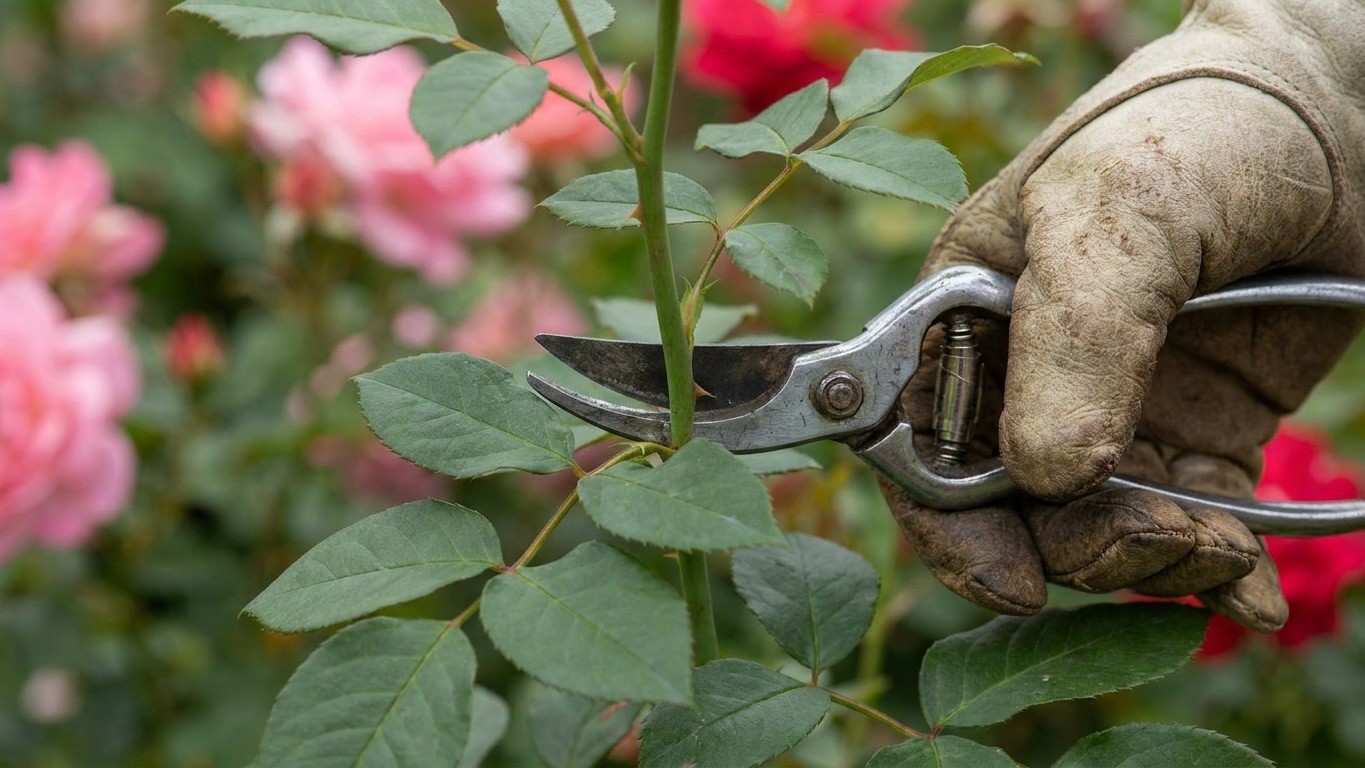
Snipping a rose “right at the stalk” sounds tidy, even satisfying. But it’s the single fastest way to shut down a rebloom cycle for weeks, sometimes for the rest of the season. If a neighbor’s bush pushed out a fresh wave of buds within three weeks while yours sat bare and silent, the difference almost certainly comes down to exactly where the pruners landed, not luck, not soil, not some secret fertilizer.
Roses that repeat-bloom, hybrid teas, floribundas, grandifloras, don’t regenerate from just anywhere on the stem. Making deadheading cuts right above the first five-leaflet set is best because that’s where the cane is strong enough to support the new growth that will bear the next flower. Cut too low, past that point, into bare woody cane with no leaf node nearby, and there’s nothing left for the plant to sprout from. Severing the stem too far down, below a healthy leaf node, can shock the plant and potentially damage the cane, hindering growth, while the ideal deadheading cut is made just above a leaf node that has five leaflets, looking for an outward-facing bud or leaf.
Key takeaways
- Why cutting roses ‘at the stalk’ creates what gardeners call a ‘blind stem’ with nowhere for new growth to emerge
- The three-week flowering gap explained: proper cuts trigger buds in 18 days, while wrong cuts leave the plant stalled and silent
- The hidden five-leaflet rule that separates abundant reblooming from a bare bush by late August
The “blind stem” problem nobody warns you about
Here’s the mechanism that explains the bare bush. A cut made in the wrong spot leaves what’s called a blind stem, a stub with no active bud eye beneath it, so the plant has no instruction point to shoot up new growth from. It just sits there. That’s essentially what happens when you cut straight down to the main stalk. There’s no dormant node waiting to activate, so the cane just… stalls. Meanwhile the plant isn’t dead, it’s not damaged beyond repair, but it’s wasting a chunk of the growing season doing nothing productive.
Compare that to a proper cut, and the timeline gap makes sense. Rebloom hinges entirely on where the cut is made: snip in the wrong place and the plant stalls for weeks, sometimes indefinitely, but get it right and new buds can form in as little as 18 days. That’s essentially the three-week window described by countless gardeners watching a neighbor’s bush outpace theirs. The neighbor almost certainly wasn’t doing anything exotic, just cutting a few inches lower, to a leaf junction with five leaflets instead of hacking down to the base.
There’s also a hidden cost to skipping proper technique beyond the missing blooms. By late summer, a rose that should have given four full flushes may have scraped by with two, barely adequate flushes at that. Each miscut doesn’t just cost you the current round, it chips away at the whole late-summer performance of the bush. And flat, careless cuts carry a disease risk too: cuts made too high, especially flat cuts rather than angled ones, sit wet after rain, and not-quite-right deadheading technique is a common entry point for fungal issues including rose black spot and botrytis.
Finding the right spot, without guesswork
The trick is reading the stem, not just eyeballing where “enough” has been removed. If you look at the leaves surrounding a rose bloom, you’ll see one or two sets of leaves with three leaflets immediately below the flower, but as you go lower down the stem, most of the leaves will have five leaflets. That five-leaflet cluster is the target. Nodes with five leaves sit on stronger parts of the cane, so when you cut there, the rose sends up a thicker new stem.
Angle matters almost as much as placement. Cutting rose stems at a 45-degree angle rather than straight across offers benefits, since the angled cut allows water from precipitation or overhead watering to run off quickly, helping prevent bacteria or fungi growth on exposed plant tissue. Slope the cut away from the bud, roughly a quarter inch above the leaf junction, and choose a bud that faces outward. Making cuts at an angle just above an outward-facing bud eye encourages new stems to grow in the same direction, rather than inward, which also keeps airflow open through the middle of the bush, one more small guard against fungal trouble.
Tool hygiene is the detail most people skip entirely, and it’s worth the ten seconds. Sterilizing pruning shears between cuts helps prevent spreading fungal diseases like black spot or rust. A dull, dirty blade crushes stem tissue instead of slicing it clean, and a crushed cut heals slower and invites exactly the kind of disease pressure roses are already prone to in humid August weather.
August has its own rules
Timing compounds the problem for anyone deadheading in late summer. The rose types that respond favorably to this treatment are repeat blooming varieties, including grandifloras, floribundas, and modern hybrid tea roses. But the window for pushing new flushes doesn’t stay open forever. The deadheading process for roses has an end date: wilted flowers should be left on the plant toward the end of August so the plant can go dormant for the winter. A rose cut hard and improperly in early August still has a chance to recover with a correct follow-up cut; one tidied the same way in the final week of the month may simply run out of daylight and warmth to produce anything before frost.
Not every rose plays by the deadheading rulebook either, which is worth checking before reaching for the shears again. The five-leaflet rule for deadheading only applies to modern repeat-blooming roses; old garden roses that bloom once a year should never be heavily deadheaded in summer, or you remove next year’s buds. If the bush in question is a once-blooming heirloom variety rather than a modern repeat bloomer, no amount of careful five-leaflet cutting will summon a second flush this year, because the plant simply isn’t built to give one.
The bush that got cut down to the stalk isn’t a lost cause. Find the nearest healthy five-leaflet leaf lower on the same cane, make a clean angled cut just above it with sharp, wiped-down blades, and water deeply afterward. Within two to three weeks, that’s usually enough to coax the plant back into producing, right around the same timeline the neighbor’s roses just proved was possible all along.
Sources : nature-and-garden.com | gardenandplants.com