
Here’s the mistake, in one sentence: cutting every raspberry cane to the ground works beautifully for one type of raspberry and wipes out an entire year’s harvest for the other. If your neighbor’s row exploded with berries in June while yours stood there green and empty, the odds are good that you were growing a summer-bearing variety and pruned it like it was an everbearing one.
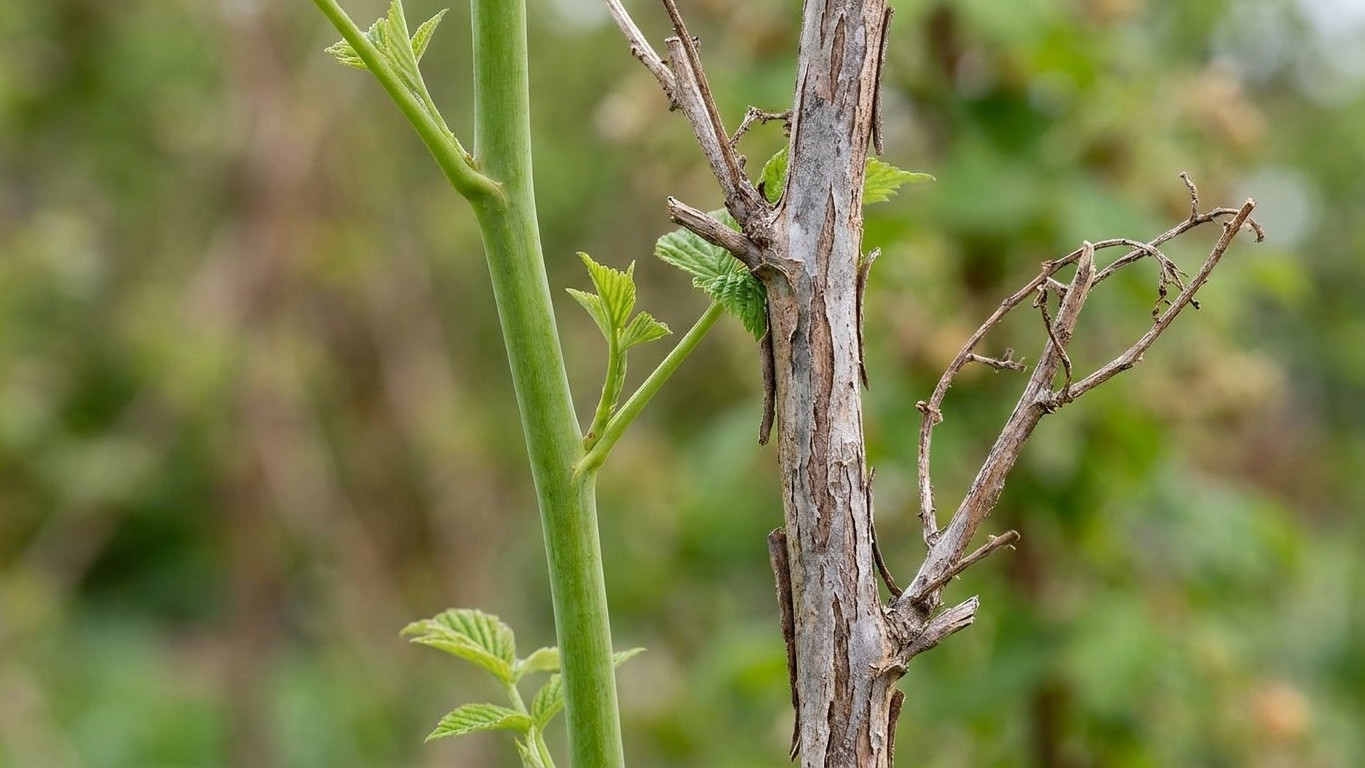
Raspberries don’t behave like most perennials in the garden. The roots live for years, but each individual cane only lives two seasons. The root system and crown live for years, but each individual cane lives only two seasons. A cane that emerges this year is called a primocane: in its first year it’s a green, leafy, non-fruiting (in summer types) shoot. The next year that same cane turns woody and brown and is called a floricane, and depending on the variety, that floricane is either where all the magic happens, or it’s already spent its usefulness.
Key takeaways
- Your neighbor might be growing a completely different type of raspberry than you—and they need opposite pruning strategies
- Those harmless green canes you removed? They were literally next June’s entire fruit crop, and cutting them down guaranteed an empty harvest
- There’s a five-minute inspection that reveals exactly which canes to keep and which to remove—and most gardeners skip it entirely
Two Raspberries, Two Completely Different Rulebooks
This is where most home gardeners get tripped up, because “raspberry” isn’t one plant with one set of instructions. Floricane raspberries (often called summer-bearing varieties) produce fruit on second-year canes, typically yielding one large harvest in early to mid-summer. Those canes grew all last summer looking green and harmless, contributed nothing to your bowl, then turned brown over winter and delivered the entire June crop this year. Cut them to the ground in fall, and you’ve just removed next June’s fruit before it even had a chance to flower.
Everbearing types work the opposite way. Everbearing raspberries develop fruit on first-year canes, ripening at the tips in fall. For these, an aggressive fall-to-ground cleanup is not just safe, it’s the recommended method. To prune plants for one large fall harvest, cut all stems down to 1-2 inch height in late winter before new growth has begun. This can be done by hand or with a rotary mower, just be sure to sharpen the mower blade to make clean cuts. Remove all above ground growth. A gardener who read that advice and applied it to a Tulameen or a Canby patch, both summer-bearing varieties, would get exactly the empty June you described.
The visual tell is easier than most people expect once you know what to look for. It’s easy to tell floricanes from primocanes. Floricanes that have woody, grayish, peeling bark. Primocanes are green and smooth. Walk your row in late summer before you touch a single cane, and separate what’s brown and papery from what’s still green and flexible. That five-minute inspection is the difference between a full row next June and a repeat of this year’s disappointment.
What Correct Pruning Actually Looks Like
For summer-bearing raspberries, the rule is almost the reverse of what feels intuitive. Remove all canes which fruited last year. These canes will not produce fruit again, instead this summer’s fruit will be produced on last year’s new canes. In practice, that means the green, unproductive-looking canes standing next to your dead, fruited ones are the ones to protect at all costs. After harvest, cut spent fruited canes to the ground; keep the strongest new green canes.
Thinning matters just as much as timing. A crowded row doesn’t just look messy, it actively hurts the plants you’re trying to protect. Thin canes to about 4–6 strong canes per foot of row and trellis them for airflow. Extension guidance from Missouri backs this up almost to the number: during the dormant period, remove dead floricanes at the soil surface. Thin remaining live canes to 3 to 4 canes per square foot to suppress disease infections, improve light penetration within plants and enhance subsequent fruit set. Fewer canes, better airflow, bigger berries. It sounds counterintuitive to a gardener staring at a thin row and wanting more, not less, but overcrowded canes compete for the same root system and produce smaller, softer fruit as a result.
For everbearing types, the plant essentially gives you a choice, and it’s worth understanding both options before you pick up the shears. To enjoy a robust focus on a single fall harvest, plan to prune in late winter (such as February) or early spring and cut everything down. For two separate crops from everbearing raspberries, only remove canes after the summer crop. Cutting everything down every year gets you one big fall crop and, according to Cornell’s extension guidance, a patch that’s significantly easier to maintain than summer-bearing varieties. Leaving canes standing gets you two smaller harvests instead of one large one. Neither choice is wrong. What’s wrong is applying the “cut it all down” method to a summer-bearing variety that needs those canes to survive winter.
The Recovery Plan
If you’ve already made this mistake, the good news is that raspberry crowns are forgiving. The roots didn’t die when you cut the canes. Summer-bearing raspberries produce fruit on second-year canes, so pruning them right after harvest is key. This gives new canes time to establish before winter. This season, let every green primocane grow undisturbed. Don’t top them, don’t thin them aggressively, don’t touch them at all beyond removing anything obviously diseased or damaged. Those canes are next June’s entire harvest, and treating them as expendable a second time will just repeat the cycle.
Mark your calendar for after this year’s harvest concludes, whenever that ends up being, and prune only the canes that actually fruited, identifiable by their brown, dry look and the dried fruit stalks still clinging to them. Leave every green cane standing through winter. One overlooked detail that trips people up even after they’ve learned the primocane-floricane distinction: variety matters here too, since some raspberry breeders sell varieties specifically bred to fruit on primocanes in fall and again on the same canes as floricanes the following summer, meaning a single row can, in rare cases, follow both rulebooks at once depending on how it’s managed.
Sources : bloomingexpert.com | cropcirclefarms.com