
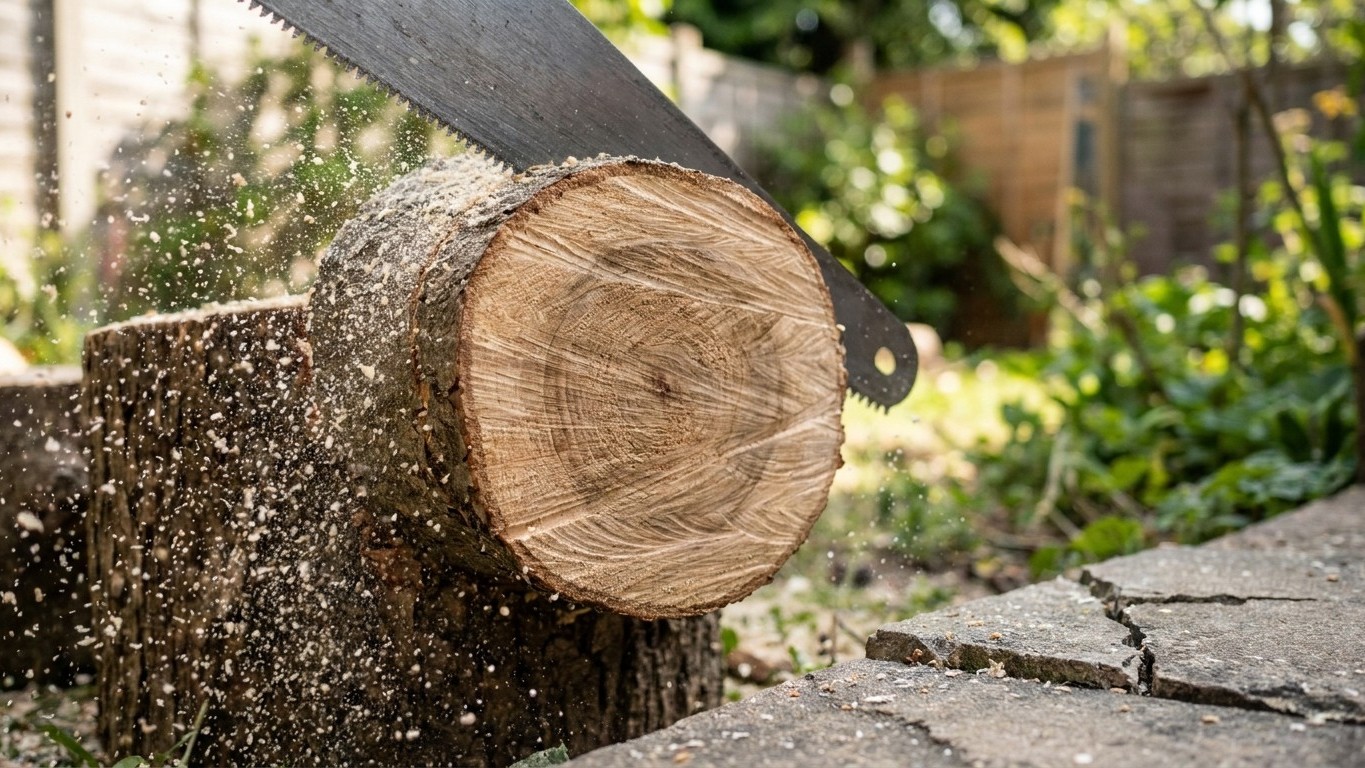
Forty euros. That’s what it cost for a tree that promised shade within two summers, a nursery tag that mentioned nothing about roots cracking sidewalks or a smell strong enough to make you gag near the flowers. The tree in question was Ailanthus altissima, better known as tree of heaven, and the morning I finally took a saw to it, I understood exactly what kind of trouble I’d planted a decade earlier.
It grew fast, faster than anything else in the yard. That speed is precisely why nurseries sold it for generations as an instant-shade solution for new developments and struggling urban lots. The tree of heaven was brought from China to the United States in the late 1700s as a horticultural specimen and shade tree, and its ease of establishment, rapid growth and absence of insect or disease problems made it popular when planning urban landscaping. Those same qualities turned it into one of the most aggressive plant invaders on the continent.
Key takeaways
- A simple nursery purchase turned into a five-year battle with an invasive species spreading beneath the soil
- One tree can produce 325,000 seeds per year and send roots 50 feet away—cracking foundations and poisoning soil as it goes
- The tree you cut down this week will regrow from its roots unless you’re willing to commit to years of herbicide treatment
A Tree Built to Take Over
The numbers alone explain why extension offices from Pennsylvania to California treat this species as an emergency rather than a landscaping choice. Established trees are incredibly difficult to eradicate because they can reproduce by sending out shoots, re-sprout from root fragments left in the soil, and female trees can produce up to 325,000 seeds in one year. Picture that for a second: one tree, one season, enough seeds to seed a small forest if the wind cooperates.
The root system is where things get genuinely unsettling. Once established, trees spread by root sprouts that can extend up to 50 feet away from the parent tree, and root sprouts as young as two years of age can produce seeds. That means the sapling you cut down in the corner of your yard might already have sent shoots under the neighbor’s fence, into the flower bed, or straight toward a sewer line. Its aggressive root system can cause damage to pavement, sewers and building foundations. I found this out the hard way when a crack in my patio traced back, root by root, to a tree I’d assumed was minding its own business twenty feet away.
There’s also a chemical warfare angle nobody mentions at the garden center. In addition to forming large clonal colonies that crowd out native trees and understory plants, ToH produces allelopathic chemicals that inhibit the germination of most native plants. Every leaf that dropped in my yard was quietly poisoning the soil against anything I actually wanted to grow there, roses, tomatoes, the native shrubs I’d planted with real intention.
The Insect That Rides Along
Cutting into the trunk that morning, I kept thinking about a warning I’d read weeks earlier about an insect I’d never heard of before moving to a region where it now matters. While spotted lanternflies can feed on multiple kinds of trees, the tree of heaven is by far the most preferred host; nymphs and adults have higher survival rates and egg production when they feed on Ailanthus altissima compared to other tree species. The relationship goes deeper than simple preference, too. That allelopathic, potentially toxic chemical the tree of heaven releases gets accumulated by the spotted lanternfly as it feeds, making it unpalatable to predators and increasing its success as an invasive species.
The insect itself has been spreading with startling speed since its US debut. It was introduced to the US in 2014 in Eastern Pennsylvania and has since spread to 13 other states. Vineyards, orchards, and hop farms are watching it closely because, as agricultural agencies keep repeating, it is a sap-sucking invasive Asian planthopper that has been expanding its range into New England, threatening wine grapes, fruit orchards, timber trees and other economically important crops. Cutting down my tree wasn’t just about reclaiming a flower bed. It was, in a small way, pulling one brick out of a much bigger infestation network.
Why the Saw Alone Won’t Save You
Here’s the part that surprised me most standing there with sawdust on my boots: cutting the trunk does almost nothing on its own. Simply cutting down tree of heaven will not control it, since it will regrow from any roots that are left alive. Within weeks, I watched a dozen new shoots push up through the mulch in a perfect ring around the stump, each one a tiny, furious restart button.
Extension specialists across multiple states converge on the same recommendation, and it’s not the satisfying, one-afternoon fix anyone wants. Cut trees can easily regrow from any roots that are left alive, producing prolific suckers, so the most efficient and effective removal method is to use systemic herbicide to kill the roots. Timing matters more than most homeowners expect: when cutting tree-of-heaven is necessary to remove potentially hazardous trees, it is best to treat with an herbicide first, wait for symptoms to develop (approximately 30 days), and then cut.
Even with the right approach, patience becomes the real tool. Removal of Ailanthus altissima requires diligence and monitoring, and it can take as many as five years for a well-established tree to be completely eliminated because the remaining stump and root system will send up new shoots. Five years. For a tree I bought thinking I was saving myself a decade of waiting for shade.
If there’s a lesson buried in that stump, it’s this: the fastest-growing plant at the nursery is rarely the free lunch it looks like. The next time I want quick shade, I’ll ask about the root system before I ask about the price tag, because forty euros turned into five years of herbicide applications, cracked patio stone, and a very personal introduction to an insect I never wanted to meet.
Sources : ucanr.edu | cipwg.uconn.edu