
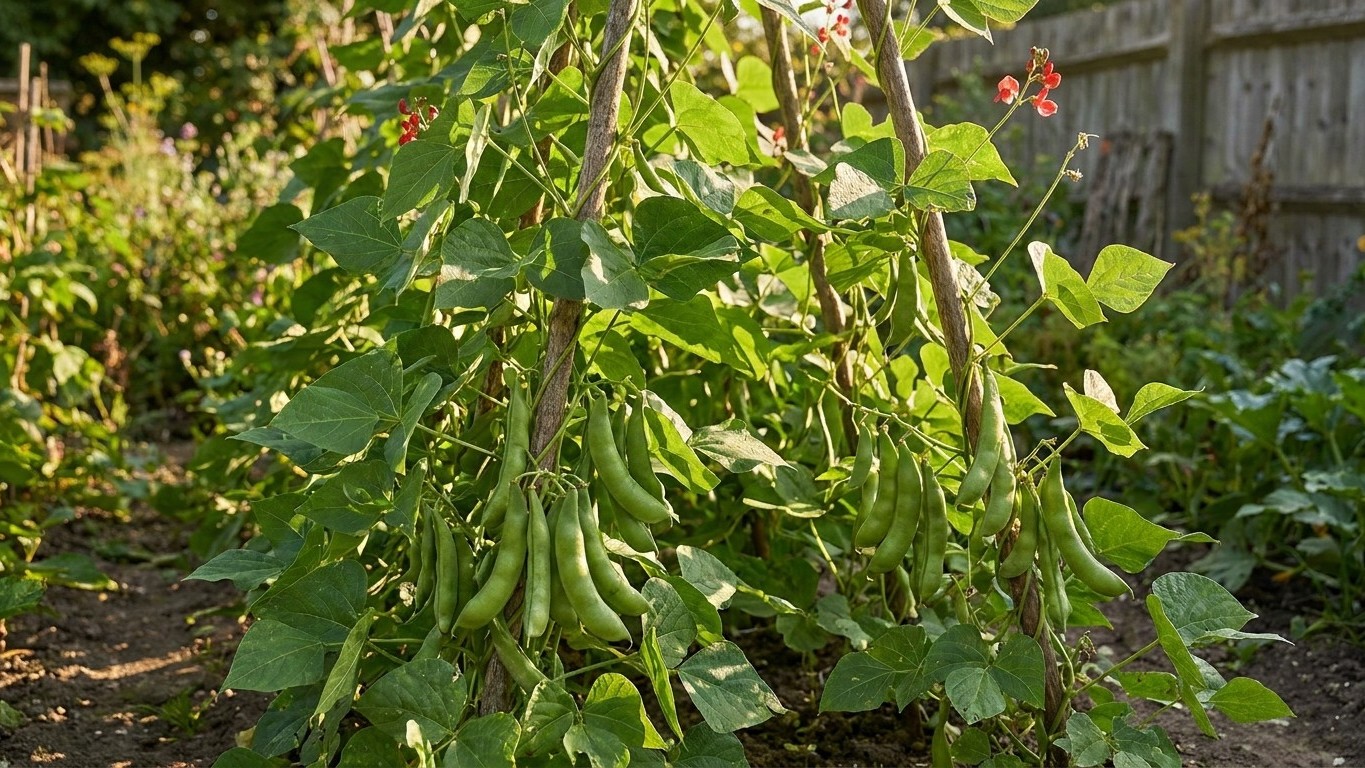
Ten days. That’s how long it took for a wigwam of runner beans to go from cropping machine to green wall of nothing. The pods I’d left alone to bulk up did exactly what I wanted, they got fatter, heavier, more impressive to look at. But the flowers stopped opening. New pods stopped forming. The plant hadn’t slowed down. It had switched itself off.
The instinct to let a vegetable “finish” makes sense with tomatoes or squash. With runner beans, it backfires almost immediately. Regular harvesting, ideally every two to three days, is essential to prevent any pods reaching maturity, because once this happens, plants will stop flowering and no more pods will form. I’d assumed a week or so of extra swelling time was harmless. It wasn’t a grace period. It was the exact window in which the plant made a permanent decision about its season.
Key takeaways
- A single week of skipped harvests triggered a permanent shutdown in flower production
- Once pods reach maturity, runner beans read it as mission accomplished and abandon flowering entirely
- The 15-20cm sweet spot isn’t just about texture—it’s the exact threshold before the plant’s priorities shift
The pod isn’t waiting for you, it’s finishing a job
A runner bean pod is a seed case first, food second. The moment gardeners typically eat it, the seeds inside are still soft and undeveloped, which is precisely why the pod stays tender. Leave it longer and those seeds start hardening toward maturity, and that changes everything about how the plant behaves. It is important to pick beans every two or three days, otherwise the pods will start to swell and set seed, which inhibits further pod production. The plant isn’t being lazy. It’s responding to a biological signal that says: reproduction achieved, mission over.
Runner beans (Phaseolus coccineus) evolved to make seeds, not to fill a gardener’s basket. Every pod is a resource investment, and once a handful of pods are allowed to mature fully, the plant reads that as proof it has successfully reproduced. From an evolutionary standpoint, why keep flowering and gambling more energy on pollination if the job is already done? That’s the mechanism behind what growers describe plainly: making sure you pick regularly to prevent any pods reaching maturity, because once this happens plants will stop flowering and no more pods will be set.
What stopped on my plants, then, wasn’t growth in the general sense. Leaves stayed green, stems kept climbing, the vine itself looked perfectly healthy. What halted was the reproductive cycle, the flower-to-pod pipeline that had been running non-stop since midsummer. Don’t leave old beans on the plants as this will stop the plants flowering, and that’s a strangely absolute rule for a plant that otherwise seems so eager to please.
Why “fatter” is a trap, not a bonus
There’s a real tradeoff hiding in that extra week. Bigger pods sound like a win, more bean for your effort, but the beans themselves change texture as they mature: the walls toughen, fibrous strings develop, and the tender snap you want in a stir-fry or a side dish disappears. Gardening advice consistently draws the line at the same size. Pick pods when young and tender, about 15 to 20cm (6 to 8in) long, and that measurement isn’t arbitrary aesthetics, it’s the last point before the pod starts prioritizing seed over flesh.
Left beyond that, the pod keeps growing in bulk, but it’s growing away from usefulness. You end up with something closer to a dried-bean pod than a fresh vegetable, and meanwhile the plant has quietly moved on. It’s a bit like harvesting a garden for a photo instead of a meal, satisfying to look at, disappointing to actually use.
There’s an upside worth mentioning, though, since not every mature pod is wasted. Fully swollen pods can be shelled for the beans inside and used like dried beans, or saved as seed for next year’s crop. RHS Recommended: Award of Garden Merit varieties are tried and trusted and include popular high-yielding ones like ‘Achievement’, ‘Benchmaster’, ‘Celebration’, ‘Red Rum’ and ‘Firestorm’, and any of these left to mature will hand you next spring’s seed stock for free. So the ten-day experiment wasn’t a total loss. It just delivered a different harvest than the one I’d planned.
Getting the plant back to work
The frustrating part is that stopped flowering isn’t always reversible on the same plants, at least not quickly. The signal has already gone out. But there are ways to limit the damage and coax renewed production once the mature pods are finally removed. Cutting away every swollen pod, even the ones you don’t intend to eat, resets the plant’s reproductive math and gives new flowers a chance to set.
Consistency afterward matters more than any single fix. Harvest runner beans regularly to keep plants flowering and producing more pods. That means checking the vines every two to three days rather than waiting for a weekend gardening session, since a single missed week is apparently all it takes to trip the switch. Watering habits play a supporting role too. Runner bean flowers sometimes fail to set because the soil isn’t kept constantly moist, so adding mulch after planting and watering regularly and generously, ideally in the evenings, helps. A stressed, dry plant is already inclined to abandon flowers early. Combine that stress with a backlog of maturing pods and the season can end weeks before the first frost would have shut things down anyway.
Pinching out the growing tips once vines reach the top of their supports also redirects energy that would otherwise go into height. Once beans reach the top of their canes, plucking the uppermost shoots off the plant halts vertical growth while also encouraging the plant to produce even more pods. It’s a small adjustment, but paired with disciplined picking, it keeps the plant’s energy where you actually want it: in flowers, not in a footrace toward the top of the cane.
My wigwam did eventually recover some cropping once every mature pod came off and the picking schedule tightened up, though the flush never matched what it had been producing in July. One skipped week cost roughly a month of momentum. Next season, the fat pods can wait for the seed jar. The picking basket gets first pass, every two or three days, no exceptions.
Sources : daltons.co.nz | permies.com