
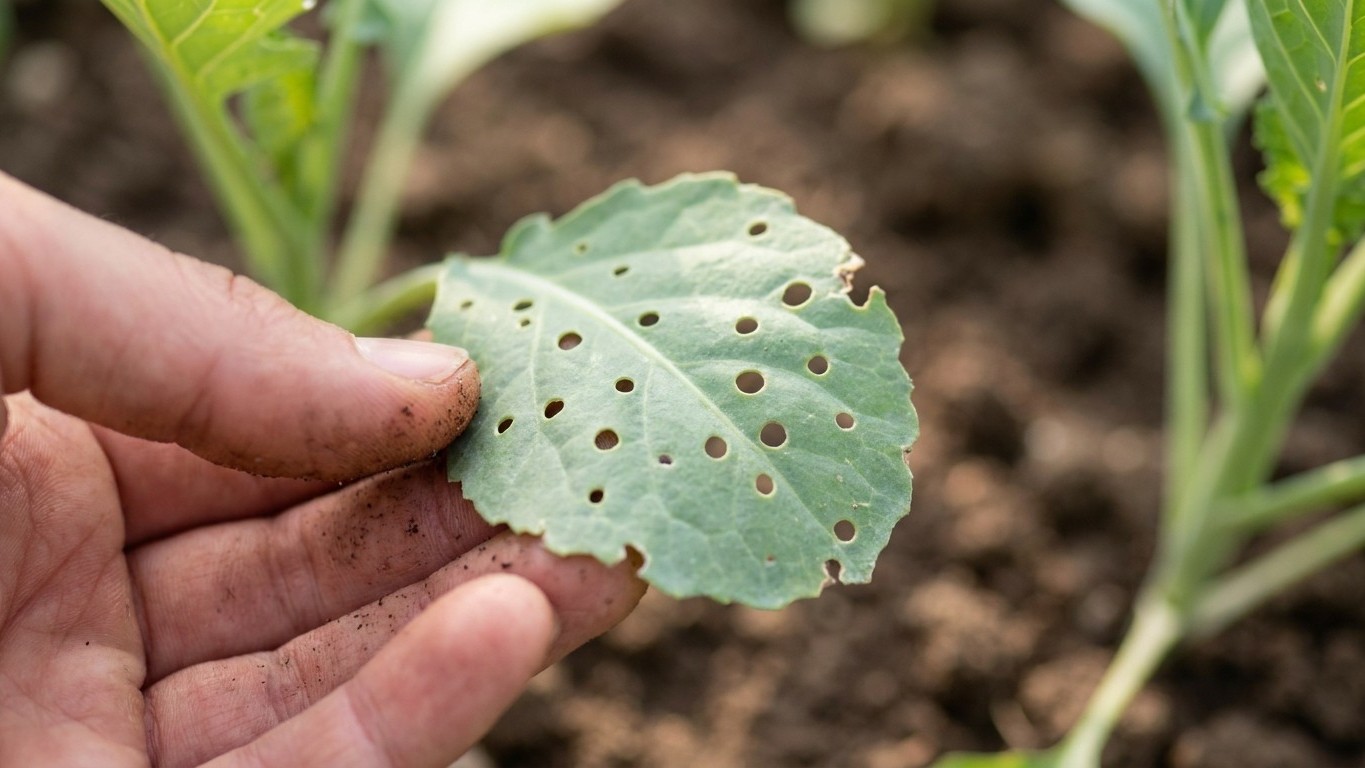
Small, round, evenly spaced holes punched through young cabbage leaves within four days of sowing aren’t a slug’s calling card. Slugs shred and tear, leaving ragged, irregular gouges and telltale slime trails. What you’re likely looking at is flea beetle damage, and the timing gives it away almost as much as the shape of the holes themselves.
Flea beetles are tiny, dark, jumping insects, rarely bigger than a sesame seed, and they thrive in exactly the conditions that make gardeners want to get a head start on autumn crops. Small rounded holes in the foliage, especially on seedlings, are the main symptom, and the small beetles jump off plants when disturbed. Tap a leaf gently and watch closely. If you see specks leaping off like they’ve been electrified, that’s your confirmation.
Key takeaways
- Small, evenly-spaced round holes in seedling leaves appear within days of sowing—but they’re not what most gardeners assume
- The warm, dry conditions perfect for early autumn planting are a dinner bell for flea beetles that thrive in slow-growing seedlings
- One simple physical barrier reduces damage from 80% leaf loss to nearly zero—without any spraying required
Why a warm, dry spell is exactly what they wait for
Sowing during a dry snap to beat the calendar sounds smart. It’s also, unfortunately, an open invitation. Damage peaks in warm dry weather when soil temperatures exceed 15C and seedlings grow slowly. Slow growth is the real problem here. A stressed, sluggish seedling can’t outpace the feeding, so the beetles get to keep chewing on the same small handful of leaves instead of moving on to new growth.
The insects themselves are built for exactly this weather. The most severe attacks occur during sunny, calm weather as the beetles feed most on sunny days and can easily fly on still days. Cloud cover, wind, rain, all the things that make a fall planting day feel less than ideal, actually work in your favor. A bright, breathless afternoon is basically a dinner bell.
Timing matters in another way too. This isn’t strictly a springtime pest. Autumn activity resumes in September on late-sown crops before beetles hibernate in leaf litter and soil over winter. So that early-fall cabbage bed, sown ahead of schedule to dodge cooler, wetter weather later on, lands right in a second wave of beetle appetite. The bugs that spent summer laying low are back out looking for tender new leaves just as your seedlings break ground.
The good news: cabbage usually shrugs it off
Not every brassica reacts the same way, and cabbage happens to be one of the more forgiving ones. Kale and cabbage seedlings are moderately affected but outgrow damage once established. Compare that to arugula or radish, which take a much harder hit because their leaves are thinner and offer less resistance to a beetle’s mouthparts.
Size and leaf count are what tip the odds back in your favor. A strong transplant with 5-6 true leaves can tolerate moderate flea beetle feeding without significant setback, because the leaf area is large enough to sustain some loss while the plant establishes new roots. The riskiest window is narrow but intense: those first one to two weeks after seeds crack open, when the entire plant is basically two cotyledons and not much else. The cotyledons of emerging seedlings are especially susceptible to damage, and high populations of flea beetles feeding on seedling plants can result in stand loss. Once your cabbages push past that baby stage, the math changes considerably in the plant’s favor.
What actually works, starting today
Spraying isn’t the answer most home gardeners are looking for, and honestly, it shouldn’t be the first move even if you’re not trying to garden organically. There is no effective organic spray for flea beetles. Physical barriers are the only reliable defence. Lightweight insect netting or garden fleece, draped over hoops so it doesn’t touch the leaves, blocks adults from ever landing on the plant. One field trial found the difference stark: covered beds had zero flea beetle damage versus 80%+ leaf loss on uncovered beds. That’s not a marginal improvement. That’s the difference between a full harvest and a bare patch of dirt.
Water is the other lever you can pull immediately, and it’s the one most people underestimate. The first thing to do is to keep the soil wet in dry, warm weather and the ground around plants well weeded. Consistent moisture pushes seedlings through their vulnerable stage faster, which means fewer days spent as an easy target. Skip watering during a dry spell and you’re essentially extending the buffet hours.
If you want an extra layer of protection without reaching for a spray bottle, a kaolin clay treatment can help too. Products like “Surround,” repellents made from kaolin clay mixed with water, create a particle barrier after drying that inhibits flea beetles and greatly reduces feeding. Just remember it washes off, so a heavy rain means reapplying.
Netting edges buried or weighted down matter more than the mesh itself, in my experience. If you have flea beetles you will need covers with no sizeable holes, and you will need to close any gaps, either by burying the edges of the fabric, or weighting them down with sticks, jugs of water, or rocks. A perfect piece of fleece with one flapping corner is basically an open door. Once your cabbages have six or more true leaves and look sturdy, most growers pull the covers, since removing netting about three weeks after transplanting brassicas, once the plants are big and sturdy is standard practice among market gardeners who deal with this every season.
Here’s a detail worth filing away for next year: those same beetles overwinter in garden debris, dried leaves, and compost piles sitting near your beds. Clearing that clutter this fall, rather than waiting until spring cleanup, cuts down the number of adults ready to emerge and feed on next season’s earliest sowings.
Sources : gardenuk.co.uk | sustainablemarketfarming.com