
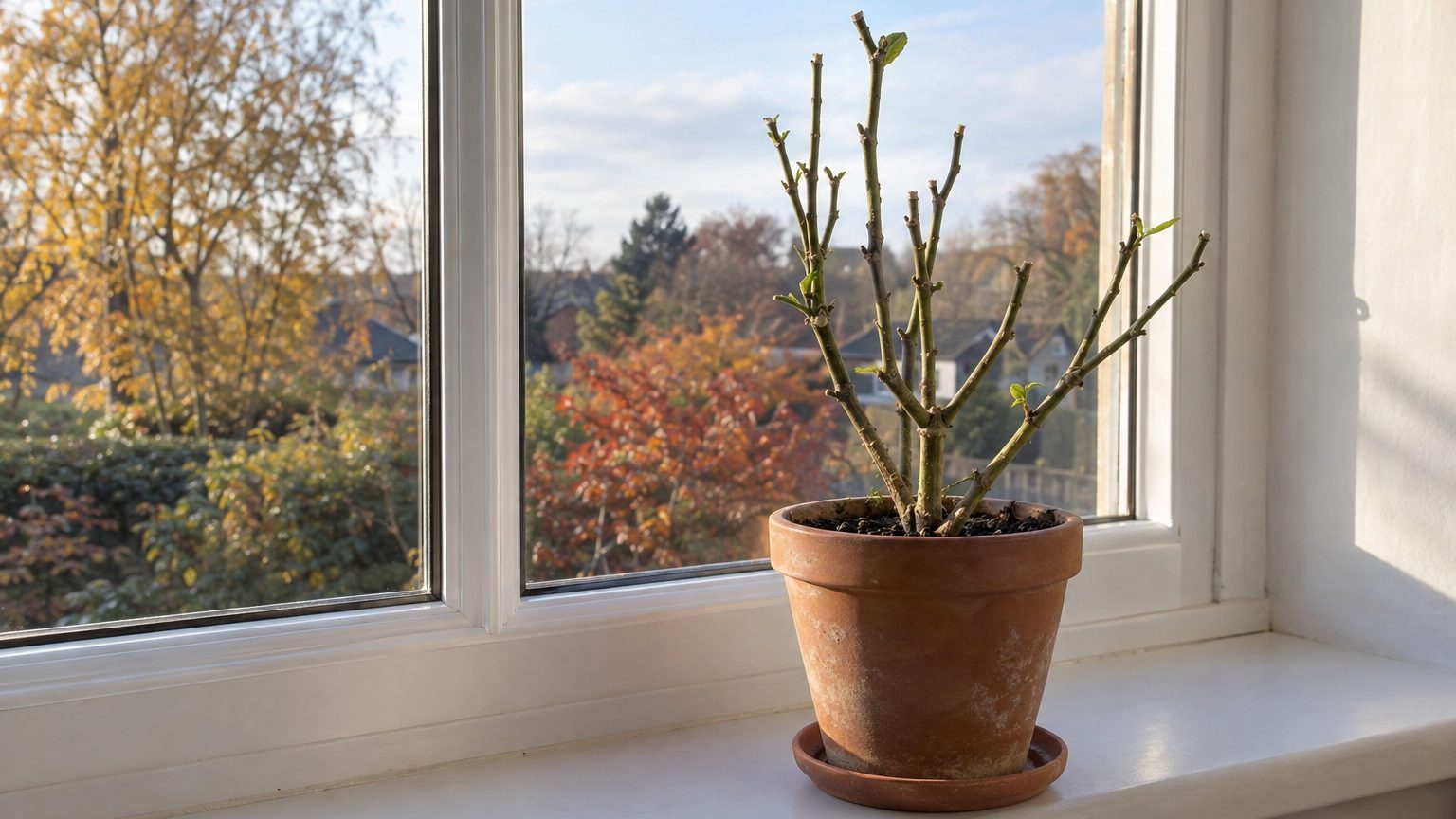
A chilli plant is not an annual. Left to its own devices in the tropics it lives for years, and a plant that gave you a heavy harvest this summer can do it again next year with a head start of several weeks. The trick is getting it through a British winter, and the window to act is now, before the first frost arrives.
Frost kills chillies outright.
Even without frost, growth stalls once temperatures drop below roughly 50°F (10°C). Most UK gardens cross that line by late October, and greenhouses without heating cross it only a little later. Bring plants inside before nights fall to around 46°F (8°C), and check the stems, leaf undersides and soil surface for aphids, whitefly and spider mites while you do. Pests that were manageable outdoors turn into a full infestation in the warm, still air of a living room.
- Frost kills chillies, so move plants indoors when nighttime temperatures drop below 8°C.
- Hard pruning to 15-20cm and leaf stripping reduces moisture loss and prevents pest infestations in warm indoor air.
- Overwatered dormant plants develop root rot because leafless plants use minimal water; check soil dryness every 2-3 weeks instead.
Cutting back: less plant, fewer problems
Pick every fruit, ripe or not. Green chillies will ripen on a sunny sill or can be frozen whole, and leaving them on the plant just drains energy it needs for survival.
Then prune hard. Cut the main stems back to about 6 to 8 inches (15 to 20 cm), leaving a framework of two or three branches that each carry a few leaf nodes (the small bumps where leaves once grew). New shoots will sprout from those nodes in spring. Use clean, sharp secateurs and cut just above a node, at a slight angle so water runs off the wound.
Strip most of the remaining leaves, too. It looks brutal, and a bare stick of a plant in a pot is not going to win any interior design awards. But a plant with no foliage loses almost no moisture, which matters enormously for what comes next.
Species matter here. Capsicum chinense types such as habaneros and Scotch bonnets are the sulkiest about cold and often struggle in an unheated space. Common annuum varieties (jalapeños, cayennes, most ornamental types) are tougher, and rocotos (Capsicum pubescens) positively tolerate cool conditions.
Light and temperature: bright, cool, steady
Aim for 54 to 59°F (12 to 15°C). That is cool enough to keep the plant semi-dormant and warm enough to avoid chilling damage. A bright porch, a spare bedroom with the radiator off, or a frost-free conservatory all work.
Light is the harder part. In December, London gets under eight hours of daylight, and on a typical overcast day the intensity is a fraction of what the plant had in July. A south-facing windowsill is the best natural option, though glass and gloom limit what it delivers.
If you have a spare LED grow light, run it for about 10 to 12 hours a day, positioned a foot or so above the plant. It does not need to be fancy or expensive. Even a basic full-spectrum bulb in a desk lamp will keep a pruned plant ticking over, and some gardeners report that supplementary light is the difference between plants that survive and plants that thrive.
Keep it away from radiators and cold drafts.
Dry heat from a radiator desiccates the plant and encourages spider mites, while a draft from a leaky window triggers leaf drop. Steady beats ideal: a plant at a constant 59°F will outperform one swinging between 50°F at night and 72°F by day.
The watering mistake that kills them
Overwatering is the killer. Not cold, not neglect, not pests.
A pruned, leafless chilli uses a tiny amount of water, because water leaves a plant mainly through its leaves. Keep watering it on the summer schedule and the compost stays soggy, the roots run out of oxygen, and rot sets in. By the time you spot yellowing or collapsing stems, the root system is usually already mush.
The fix is to water only when the top inch or two of compost feels dry, and then only a modest amount. In a cool room that might mean once every two to three weeks. If you are unsure, wait another few days. A slightly dry plant recovers easily; a waterlogged one often does not.
Make sure the pot has drainage holes and never leave it standing in a saucer of water. Do not feed anything over winter either, as fertilizer on a resting plant just burns the roots and builds up salts in the compost.
Waking it up in spring
Around February or early March, once days lengthen, you will see tiny green shoots at the nodes. That is the signal to start moving.
Repot into fresh compost in a pot one size up, trimming any dead or mushy roots as you go. Increase watering gradually as leaves appear, and start feeding with a diluted high-potassium tomato fertilizer once new growth is established. Pinch back leggy shoots to encourage a bushy shape.
Harden the plant off gently before moving it outdoors, ideally after the last frost, which in most of the UK means mid-May. Give it a few hours outside in shade, then build up over a week or so. Skipping this step is how a healthy overwintered plant ends up scorched in a single afternoon.
Overwintered plants have one real edge over seedlings: established roots. They typically flower weeks earlier, which matters in a short British summer, particularly for slow-ripening varieties like the superhots that can barely finish before autumn when started from seed in March.