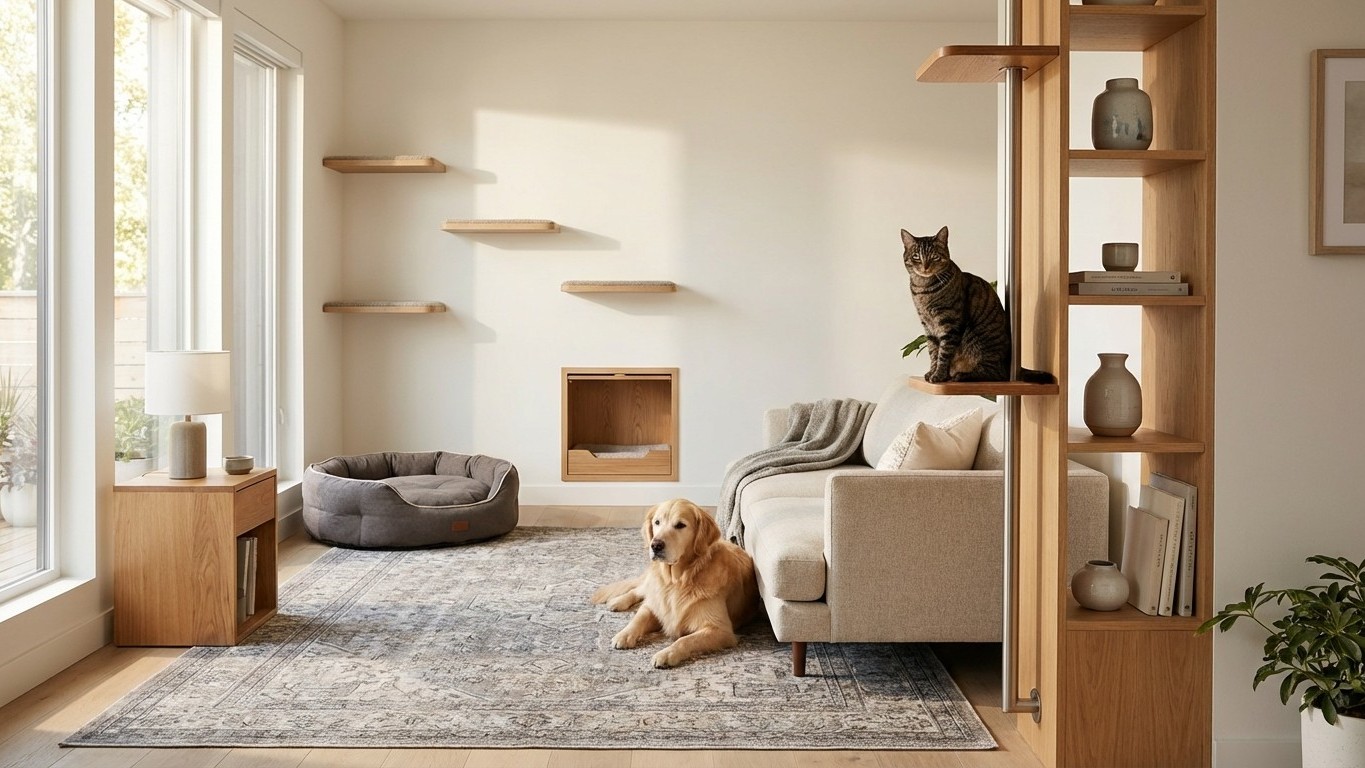
Two cats, one dog, and a freshly upholstered sofa. Anyone who’s lived that scenario knows exactly what happens next.
Pets interact with their surroundings in unique and unpredictable ways: cats appreciate strategically placed perches and climbing shelves, while dogs are typically ground-bound but need ample space for movement. Both gravitate toward warm, soft areas like rugs and sofas — and both can deliver mud, fur, and the occasional accident.
The real question isn’t whether your home will show signs of life with animals in it. It’s whether your design choices will make that life easier, cleaner, and genuinely beautiful. Creating a successful pet friendly living room design with cats and dogs requires understanding these fundamental interactions from the start.
With the steady increase of dogs and cats in the home, pet design has definitively entered interior projects. We’re no longer talking about simple accessories, but about integrated solutions: kennels coordinated with sofas, vertical paths for cats, retractable niches, resistant materials chosen by interior designers. 2026 marks the definitive entry of pet-friendly design into contemporary spaces.
This room-by-room guide brings you the most actionable ideas to make your whole home work for both you and your animals, without compromise.
For the full picture on choosing the right furniture pieces and materials from the start, explore our guide on pet friendly home design cat dog furniture.
Why Thinking Pet-Friendly in Every Room Actually Matters
The Real Benefits for Animals and Their Humans
Designating specific areas for enrichment, a cat tree near a window, a cozy reading nook with a pet bed, an indoor play area with toy storage — provides pets with entertainment and security, helping reduce anxiety and destructive behaviors.
That’s not trivial. A dog who shreds the couch cushions isn’t misbehaving out of spite; he’s bored and under-stimulated. Good design is, in a very real sense, behavioral therapy.
Pet owners should consider daily routines, feeding, grooming, and walking, to create convenient and stress-free environments. Understanding what lifestyle needs best suit your pet is the first step in designing a home where you and your pets can thrive. This includes creating a functional pet friendly entryway design dog leash station to streamline your daily walks and keep everything organized. For those working with limited square footage, check out these small apartment pet friendly design ideas to maximize your space effectively. If you work from home, creating a home office pet friendly setup becomes equally important for maintaining productivity while accommodating your pets. When it comes to sleeping areas, implementing cat friendly bedroom design ideas ensures peaceful nights for both you and your feline companions.
That mindset transforms how you approach every room: not as a space to protect from your animals, but as an environment you build with them in mind.
Common Mistakes to Avoid
The most frequent error? Treating pet needs as an afterthought.
The goal is to incorporate pet needs into the overall modern home design rather than treating them as an afterthought.
Practically, this looks like placing the litter box in the most inconvenient bathroom, buying a gorgeous linen sofa before even thinking about claws, or cramming a plastic crate into a corner of the living room.
If you have cats, avoid any open weave fabrics on your sofa because they will easily pull. Going for a fabric with a tight weave will keep your sofa looking its best.
Small decisions, made early, save enormous frustration later.
Pet-Friendly Living Room Design with Cats and Dogs
The living room is ground zero. It’s where your dog sprawls across the rug during movie night, where your cat decides the back of the sofa is a perfectly acceptable scratching post, and where you’d really like things to still look considered. The good news: these goals aren’t mutually exclusive. For an in-depth treatment of this central space, see our dedicated article on pet friendly living room design with cats and dogs.
Dedicated Zones for Each Animal
Every pet has its habits. If your cat loves looking out the window, place a comfortable seat nearby. If your dog loves lounging by your side, a soft rug or small bed next to your couch might be perfect.
The key is observation, watch where your animals naturally gravitate, then design with that behavior rather than against it. A dog who always curls up near the fireplace wall deserves a proper bed in that corner, not a perpetual eviction notice.
Your pet needs a space to call their own, and you don’t have to hide it in a corner. With a bit of planning, their little zone can actually add to your design aesthetic.
Consider converting an awkward nook under the stairs into a built-in dog bed, or placing a sleek pet bed under a bench in your entryway.
For cats, the vertical dimension is everything.
Furniture Layout and Traffic Flow
Pet-friendly furniture placement, room layouts, and material selection can all influence the harmony between a pet’s behavior and the functionality of the home.
Dogs need circulation space, a sectional that blocks the natural path between the kitchen and back door will cause daily collisions. A clear corridor of at least 36 inches keeps both humans and dogs moving freely without a five-step detour around the coffee table.
Consider anchoring furniture to floors or walls when possible, especially in homes with larger dogs or active cats.
A toppled side table is a hazard for animals and humans alike. Closed-base cabinets over open shelving, where curious noses and paws roam freely, also cut down on the number of items that mysteriously disappear.
Choosing and Positioning the Right Rug
Antique-inspired rugs are perfect for pet-loving family homes, as new scratches from animal claws will blend with the worn appearance. Rugs with small patterns and dark tones hide stains better than solid colors or wide-print patterns.
A solid cream rug in a home with a black Labrador is, to put it politely, aspirational thinking.
A soft, fluffy rug invites your cat to curl up and nap, but also invites her to dig in her claws, which can get caught in the loops. Opt instead for a low-pile rug that looks equally stylish yet is more durable with pets around.
A rug can complete a room and bring it together — just because you have pets doesn’t mean you should go rugless. Washable rugs are the answer: when muddy paw prints appear or accidents happen, you can simply pop the rug in the washing machine.
Washable rug brands have expanded dramatically in recent years, with designs that look anything but utilitarian.
Integrating Scratching Posts, Beds, and Toys Without Losing Style
Cat climbing furniture has taken a sophisticated turn, blending style with instinctive movement. Instead of bulky carpet towers, modern designs use natural wood, felt, and metal to create sleek, sculptural platforms.
These pieces integrate seamlessly with shelving or wall décor, turning feline exploration into part of the home’s aesthetic rhythm.
Positioned along a gallery wall, they read as design objects, not pet accessories.
Gone are the days when pet furniture was something to disguise. Today, it’s something to display. Designers are crafting beds, lounges, and perches that double as modern art — soft geometries in felt, sculpted wood forms, or boucle-lined pods that mirror human furniture trends.
Cats love to scratch and can accidentally damage furniture. Giving your cat scratching mats placed near the furniture legs they’re targeting is one of the simplest preventive moves you can make.
Materials That Hold Up: Sofas, Curtains, Rugs, Walls
Microfiber is beloved for its plush feel and ease of maintenance. This tightly woven fabric resists pet hair and stains, making maintenance as simple as a quick vacuum or spot cleaning. The softness of microfiber is a haven for snuggles, while its durability against scratches ensures it stays looking fresh.
Manmade non-cellulosic and performance fabrics make the best sofa fabric for dogs, polyester, nylon, acrylic, and olefin are known for their resilience.
Neutrally-toned fabrics are a great choice for pet owners since they do a good job of disguising pet hair between vacuuming sessions — not to mention their versatility when it’s time to switch up your style.
On walls,
scrubbable and washable paint is the best option when you have pets, as it’s easy to maintain and keeps your walls looking smart.
A semi-gloss or satin finish wipes clean; matte paint just traps the dirt.
Kitchen and Dining Room: Safety and Daily Practicality
Feeding Stations and Hygienic Food Zones
The kitchen is the heart of the home, and where many of us spend a large amount of time. It’s also where the best smells come from, which naturally makes it a popular spot for your dog or cat.
Rather than fighting this, design for it.
Incorporate pull-out drawers with built-in feeding bowls to keep the kitchen organized, tidy, and to prevent tripping hazards from having bowls underfoot.
Dogs, in particular, eat with surprising enthusiasm, a built-in station prevents the daily water-bowl shuffle across the floor.
Pet food is cleanest when kept up off the floor. Give dogs and cats a safe off-the-floor place to eat — dogs at shoulder height and cats on a half-raised platform around knee level.
This isn’t just tidier; elevated feeding can also reduce bloat in large-breed dogs. A genuine win-win.
Anti-Spill Solutions and Washable Zones
Avoid more porous countertop materials like marble that require vigilance against pet mishaps. Look for cabinet finishes touted as scratch-resistant — thermofoil and polyurethane paints are good options.
To deter cabinet raiding, install child safety locks and latches to prevent doors and drawers from being opened by paws. Adhesive locks provide an easy solution.
For the splash zone around water bowls, a small section of sealed tile or stone on the floor behind the feeding station is easier to mop than hardwood and far more hygienic than bare carpet.
Hard surfaces like tile would need rugs on them for your pet’s comfort, but warmer, sound-absorbent options like cork (which is antimicrobial) and vinyl (which can mimic many materials) are excellent choices for kitchen floors.
Bedroom: Peaceful Cohabitation, Day and Night
Protecting Bedding and Managing Access
If you have a pet that loves snuggling up on your bed, your blankets, sheets, and pillows can collect a lot of unwanted cat and dog hair. Washing your bedding every week can help keep it fur-free and smelling great.
That weekly wash isn’t just about aesthetics; pet dander is a real allergen trigger, and clean bedding makes a measurable difference in air quality.
A washable duvet cover is a quick solution, if your dog or cat snoozes on your bed when you’re not in it, you can toss the cover in the machine whenever the fur gets noticeable.
Restricting access to the bed entirely is a valid choice, but it requires a consistent boundary.
A cozy dog den or cat hideaway can be tucked into spaces under a stairwell, a mudroom bench, or even within custom cabinetry, the same principle applies beautifully to the bedroom. A low platform bed with a cushioned inset at floor level gives your dog proximity without the fur-in-the-sheets situation. For a complete approach to bedroom design with cats, visit our article on cat friendly bedroom design ideas.
A Stylish Sleep Corner for Pets in the Bedroom
Use a low bench, cushioned window seat, or a cozy pet bed placed near a bright window. For cats, wall-mounted perches or window hammocks are space-saving and provide great views. Make the area soft and inviting with washable cushions, and be sure the window has secure screens.
This is the kind of detail that transforms a bedroom from merely livable to genuinely thoughtful, your cat has a kingdom; your bedding stays clean.
Bathroom and Laundry Room: Streamlined Cleaning Routines
Design Tips for Bathing and Grooming Rituals
Anyone who has wrestled a muddy golden retriever into a standard bathtub knows the appeal of purpose-built solutions.
Dog showers are having a moment — fully tiled wash stations, handheld sprayers, non-slip floors, and raised platforms so you don’t have to bend over to scrub, with hooks for leashes and towels nearby, make bath time dramatically less messy.
Indoor dog wash stations complete with handheld showerheads, non-slip flooring, and built-in storage for shampoos and towels make post-walk cleanups easier and reduce mess throughout your home.
Converting a spare bathroom or an area of your mudroom or back entry into a washing station keeps the rest of the house clean when your pet returns from the outdoors with muddy paws.
Even a simple handheld showerhead attachment in an existing bathroom tub makes the experience faster and far less chaotic.
Optimized Storage for Litter, Food, and Supplies
If you have cats, having a space away from your kitchen and living areas, yet still accessible, for the cat litter box is important. An enclosed laundry or utility room is the ideal spot, provided you keep the space available to your cat at all times. Include a custom cabinet for the litter box with a cutout for easy cat access, and a door that opens to make cleaning simple.
Cat parents can have base cabinets designed with hidden litter box access, complete with cute cutouts like paw prints or arches so your cat can come and go while the box stays out of sight.
Including space in cabinets, shelves, or drawers for storing pet food, grooming supplies, and your pet’s outdoor gear is essential. Laundry or utility rooms require durable and water-resistant materials anyway, since they are moisture and dirt-prone spaces, this makes them natural candidates for pet zones that prioritize function without the decorative pressure of more visible rooms.
Entryway and Circulation: Managing Pet Comings and Goings
Leash Stations and Smart Accessory Storage
The modern pet entryway is more than a doorway, it’s a transition ritual designed with empathy. These spaces combine washable tiles, built-in paw rinsing stations, and hooks for leashes, all framed in materials that mirror the home’s sophistication. They welcome both energy and mess while preserving order.
Built-in cabinets, cubbies, and baskets can help keep pet toys, grooming tools, and leashes neatly stowed. Consider entryway storage that includes hooks for leashes and bags, or a mudroom bench with a compartment for shoes and pet gear.
Wall-mounted hooks or peg rails near entryways work well for hanging collars and leashes. For a more built-in look, dedicate a drawer or cabinet in your mudroom or hallway specifically for pet items, and keep the design cohesive with your home’s aesthetic.
For a deep dive into this specific area, our guide on pet friendly entryway design dog leash station walks through every detail.
Preventing Dirt and Managing Moisture
While furry friends are beloved, the mud and debris they track through the house are not. One creative solution is to incorporate a pet station near a home’s primary entryway. Typically designed within transition spaces such as the mudroom or a garage connector, pet stations allow a muddy animal to be cleaned up before entering the main part of the house. The layout can be as simple as a small sink, bench, and storage hooks, or as comprehensive as a tiled dog shower with radiant heat and drawers for supplies.
A high-absorbency mat just inside the door, positioned where paws naturally land first, catches a surprising amount of dirt before it migrates to the rest of the house. Pair it with a washable runner down the hallway, and the whole entry sequence becomes containable.
Zoom In: Pet-Friendly Living Room Design with Cats and Dogs
The living room deserves its own focused treatment, because this is where the species divide becomes most visible. Cats and dogs have fundamentally different spatial needs, and designing for both simultaneously is a genuine design challenge, one that the best solutions solve with elegance.
Creating Calm and Stimulating Zones
Solutions like “Cat Highways”, interconnected shelves, bridges, and climbing structures installed throughout the home — are becoming increasingly popular for cat-friendly homes. Some owners have integrated wall-mounted furniture into their living spaces, taking full advantage of vertical wall space, allowing for exploration without sacrificing floor square footage.
The result looks architectural rather than utilitarian. Natural wood tones, consistent with the room’s existing palette, help these structures read as intentional design choices.
Designate specific areas for enrichment, such as a cat tree near a window, a cozy reading nook with a pet bed, or a built-in tunnel system. For dogs, consider an indoor play area with storage for toys or a puzzle feeder bowl to slow down their eating and provide enrichment.
Most pets, especially cats and curious dogs, love observing the world outside. Creating a window watching spot gives them entertainment, comfort, and a sense of connection with their environment.
Separating Spaces According to Species
Cats and dogs often maintain an uneasy coexistence, and good design can reduce friction by giving each clear territory. The vertical dimension belongs to cats, wall-mounted shelves, window perches, elevated feeding platforms. The ground plane belongs to dogs — wide-open floor zones, low-slung beds, and unobstructed paths to the door. A room that honors both hierarchies is a room where neither feels displaced.
Designing a tasteful divider such as a pocket gate that retracts into the wall is a wonderful solution to enclose such a space. Often made with mesh or vertical baluster, these dividers are similar to baby gates but far more attractive and decidedly more convenient.
Used between the living room and the kitchen, for instance, a retractable gate keeps a dog out of the cat’s feeding area while remaining invisible when not in use.
Examples of Successful Real-World Realizations
In a London kitchen extension, designers seamlessly and discreetly integrated a “cat house” in underutilized base kitchen cabinets. “This design solved several challenges: it provided the cat with a private, functional hideaway, preserved the sleek aesthetic of the kitchen, and offered a practical solution for the homeowners.”
The lesson: the most successful pet-friendly rooms don’t look pet-friendly at first glance. They look like beautifully designed rooms that happen to work for everyone in them.
In a Dallas home, a well-crafted crate was installed right off the kitchen, beautifully built into stylish millwork; painted metal doors match other elements throughout the space, like black diamond floor tiles, tying it all together. “We wanted the crate to be chic and discreet, by designing it to be a part of the millwork storage cabinet.”
That’s the benchmark: pet needs dissolved into the architecture itself.
Cross-Cutting Advice: Cleanliness, Maintenance, and Visual Harmony
Anti-Shedding, Anti-Odor, and Ultra-Efficient Cleaning
Regular vacuuming is one of the best ways to deal with cat or dog hair. Pet hair tends to accumulate on surfaces like carpets, rugs, furniture, and even hard floors, and loose hairs can be stirred into the air with movement or airflow. A thorough cleaning routine that includes vacuuming high-traffic areas several times a week can significantly cut down on airborne pet hair and dander.
Color-matching is a practical trick that interior designers rarely talk about openly.
Using a pet’s coat as a decor palette can simplify the cleaning routine. Choosing rugs, throw pillows, and a sofa in a shade similar to the animal’s fur can camouflage shedding, providing a cleaner look and helping prevent the need for frequent vacuuming.
A golden retriever owner who chooses warm wheat tones throughout the living room is a genius, not a coincidence.
On odor:
an air purifier cleans the air in a home with pets effectively, with models that report cleaner indoor air quality than the outdoor environment.
Using an air purifier with HEPA filtration can help trap airborne pet hair and particles such as pet dander, bacteria, dust, and lint.
Pair this with
protective sprays on furniture to make cleaning up after pets easier and keep stains and odors at bay, extending the life of your furniture.
Multifunctional Accessories and Furniture to Elevate Style
Many modern furniture companies offer pet-friendly couches with features that make maintenance easier. Removable, washable covers simplify cleanup and help preserve your sofa’s appearance over time. Modular sofas allow you to rearrange or replace individual cushions, which helps even out wear and offers more cost-effective replacements than traditional designs.
Built-in dog crates are rewriting the rules of containment with craftsmanship and care. Integrated seamlessly into cabinetry, sideboards, or kitchen islands, these enclosures feature ventilated panels, soft bedding, and matching finishes. The effect is minimalist yet deeply considerate, transforming necessity into design harmony. Dogs gain comfort and security, while owners enjoy uncluttered interiors.
Storage ottomans double as pet toy boxes. Built-in bench seating in the entryway holds leashes, poop bags, and grooming supplies behind a clean door front.
The solution is to incorporate stylish, intentional storage that blends seamlessly into your home — woven baskets, lidded bins, or storage ottomans that complement your furniture.
None of this requires a renovation budget. It requires thinking like a designer: form following function, function following the actual life being lived.
If you work from home, the office is another room where pet-proofing matters more than most people anticipate. Cables, ergonomic chairs, and concentration-breaking interruptions all have design solutions, explore them in our guide on home office pet friendly setup.
FAQ: Your Biggest Questions About Pet-Friendly Design
How do you design a living room that works for both cats and dogs?
Cats will appreciate strategically placed perches or wall-mounted climbing shelves, while dogs are typically ground-bound but need ample space for movement. Both may be drawn to warm, soft areas like rugs or sofas. Pet-friendly furniture placement, room layouts, and material selection all influence the harmony between a pet’s behavior and the functionality of the home.
Give cats the vertical dimension and dogs the floor plane, and the room will serve both without compromise.
What furniture materials are best for homes with pets?
Easy-to-clean, pet-friendly performance fabrics, such as microfiber and microsuede, are the top recommendation, especially for the high-traffic areas of your home.
Pet owners are also embracing materials that are scratch-resistant yet sensually appealing: matte porcelain tiles, grainy oak finishes, boucle and performance linens that resist wear.
Avoid linen, open-weave textiles, and high-pile fabrics entirely.
How can I make pet zones stylish and discreet?
The key is to use materials and colors that align with the rest of your space. Stick to natural wood, neutral fabrics, and clean lines to ensure the pieces enhance rather than interrupt your space. By choosing thoughtfully designed pet furniture, you give your pet comfort without compromising your home’s style.
What are the essential features of a pet-friendly living room?
Well-placed cabinets, mats, and storage boxes give your pets plenty of space to roam while maintaining a tidy home.
Add to that a washable rug, performance-fabric sofa, designated pet sleeping area, vertical climbing solution for cats, and at least one strategic washable throw, and you have the functional core of a genuinely pet-friendly room.
How do I reduce pet hair and odors in shared spaces?
Maintaining a clean home with pets requires consistent effort. Vacuum pet areas regularly to keep fur and dander at bay, contributing to a healthier living environment.
Match your decor palette to your pet’s coat color, use washable covers on all key furniture pieces, run an air purifier with HEPA filtration, and commit to weekly bedding washes. The discipline isn’t about obsessive cleanliness, it’s about making maintenance so easy that it never becomes overwhelming.
The homes that do this best aren’t the ones that hide their pets’ existence. They’re the ones where a climbing shelf looks like modern sculpture, where a dog bed reads as a designed object, and where the sofa survives a decade with a 70-pound Labrador without looking like a crime scene. That balance is entirely achievable, one room, one material choice, one well-placed hook at a time. The question worth sitting with: which room in your home is still working against your animals instead of with them?