
While most gardeners resign themselves to throwing away banana peels, coffee grounds, and vegetable scraps during winter months, believing their compost pile has entered hibernation mode, there’s a remarkably Simple-tray-sits-on-your-coffee-table-in-january”>simple technique that can keep your decomposition process humming along even when temperatures plummet. This winter composting method not only reduces household waste but ensures you’ll have rich, dark humus ready for spring planting season.
The secret lies in understanding that composting is fundamentally a biological process driven by microorganisms that don’t simply disappear when snow falls. These microscopic workers need three essential elements to continue their decomposition magic: the right carbon-to-nitrogen ratio, adequate moisture, and sufficient warmth. Winter composting success hinges on manipulating these factors to create a microenvironment where beneficial bacteria and fungi can thrive despite freezing outdoor conditions.
The Hot Core Method: Creating Your Winter Composting Engine
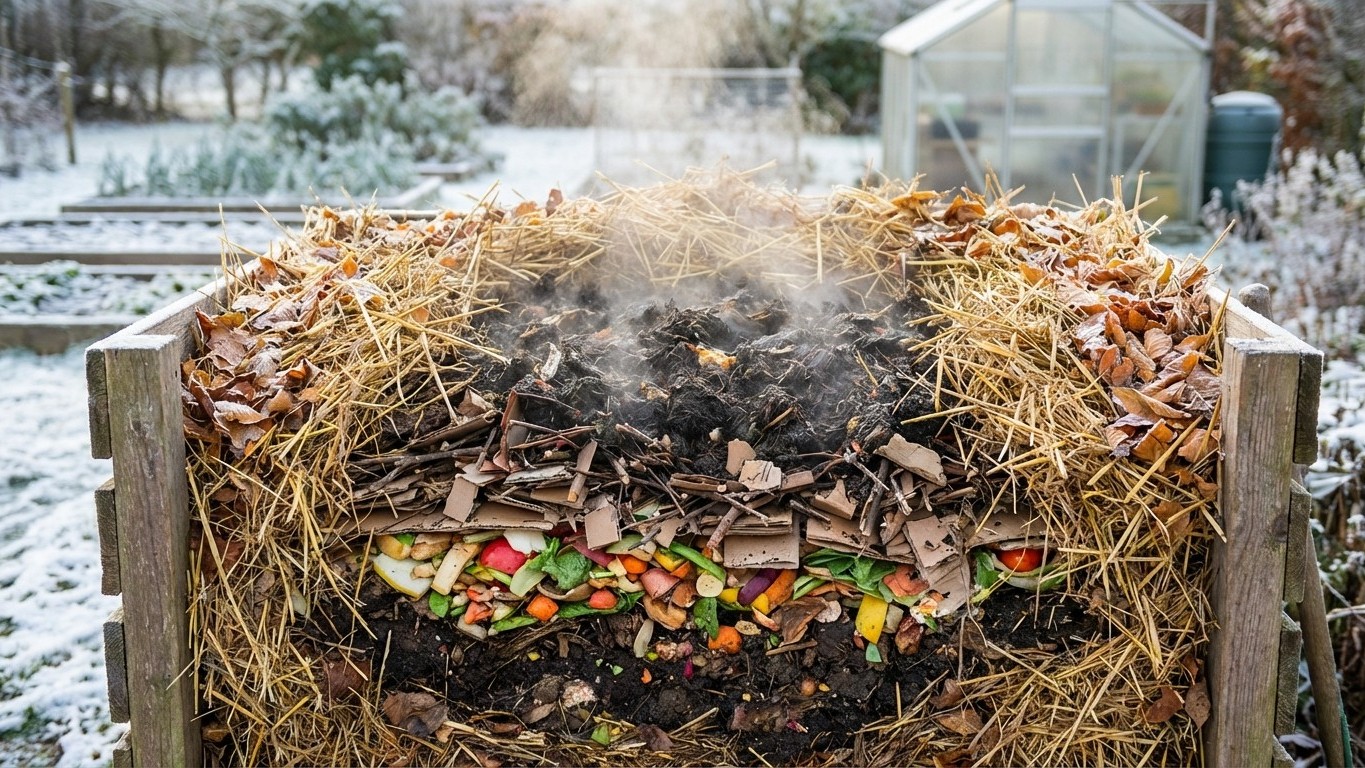
The most effective winter composting technique involves creating what experienced gardeners call a “hot core” system. This approach concentrates heat-generating materials in the center of your pile while insulating the entire structure to retain that precious thermal energy. Start by gathering dry, carbon-rich materials like shredded newspaper, dried leaves, sawdust, or cardboard that you’ve been collecting throughout the fall season.
Create a foundation layer using coarse materials like small branches or corn stalks to ensure proper air circulation at the base. This drainage layer prevents the pile from becoming waterlogged and anaerobic, which would halt the composting process entirely. Next, build your hot core by alternating layers of nitrogen-rich kitchen scraps with carbon materials in a roughly 3:1 carbon-to-nitrogen ratio. The key innovation is adding a catalyst layer every 12 inches using finished compost or rich garden soil, which introduces the active microorganisms necessary to jumpstart decomposition.
What transforms this from ordinary composting into a winter-proof system is the insulation envelope. Surround your entire pile with a thick layer of straw, leaves, or even old blankets and tarps. This insulation doesn’t just retain heat; it creates a buffer zone that prevents the core temperature from fluctuating with outdoor weather conditions. Many successful winter composters report core temperatures remaining between 110-140°F even when ambient temperatures drop below freezing.
Managing Moisture and Aeration in Cold Conditions
Winter composting requires a delicate moisture balance that differs significantly from warm-season practices. Cold air holds less moisture, and frozen precipitation can either oversaturate your pile or fail to provide adequate hydration altogether. The ideal winter compost pile should feel like a wrung-out sponge when you squeeze a handful of material from the core area.
Turning the pile becomes more challenging in winter, but it remains crucial for maintaining oxygen flow. Rather than complete overhauls every few weeks, adopt a “zone turning” approach where you systematically aerate different sections on a rotating schedule. Use a long metal rod or specialized compost aerator to create air channels throughout the pile without completely disrupting the insulated structure. This technique maintains the beneficial microbial activity while preventing the anaerobic conditions that create unpleasant odors and slow decomposition.
Snow can actually benefit your winter composting efforts when managed properly. Fresh snow provides insulation and gradual moisture release as it melts. However, prevent ice formation by covering your pile during freezing rain events and ensuring adequate drainage around the base perimeter.
Maximizing Kitchen Scrap Integration
Winter composting transforms how you handle daily kitchen waste, requiring more strategic thinking than simply tossing scraps onto the pile. Collect kitchen materials in a covered container, allowing them to reach room temperature before adding them to your compost system. Cold scraps can shock the pile’s core temperature and temporarily slow microbial activity.
Chop or shred larger kitchen scraps into smaller pieces to accelerate decomposition in the slower winter environment. Citrus peels, apple cores, and vegetable trimmings break down more efficiently when their surface area is maximized. Coffee grounds deserve special attention during winter composting because they generate heat as they decompose and provide essential nitrogen for microbial activity.
Avoid adding meat, dairy, or oily foods during winter months, as these materials decompose slowly in cold conditions and may attract unwanted animal visitors to your pile. Focus on vegetable scraps, fruit waste, tea bags, and coffee grounds as your primary nitrogen sources, supplemented with paper towels, cardboard, and other carbon-rich household materials.
Harvesting Winter Gold for Spring Success
By late winter, your active compost pile will begin producing finished compost in the lower sections while continuing to process fresh materials in the upper layers. This creates a continuous production system where you can harvest rich, dark compost for seed starting and early garden preparation while maintaining an active decomposition process for ongoing kitchen waste.
The compost produced through winter methods often exhibits superior nutrient density compared to warm-season composting because the slower, more controlled decomposition process allows for more complete breakdown of organic materials. This winter-made compost proves invaluable for early spring Garden activities, providing immediate nutrition for transplants and soil amendment for preparing garden beds.
Successfully implementing winter composting transforms your relationship with kitchen waste while ensuring a constant supply of garden-enriching compost year-round. This sustainable practice reduces household waste, saves money on commercial soil amendments, and provides the satisfaction of creating something valuable from materials that would otherwise burden municipal waste systems.