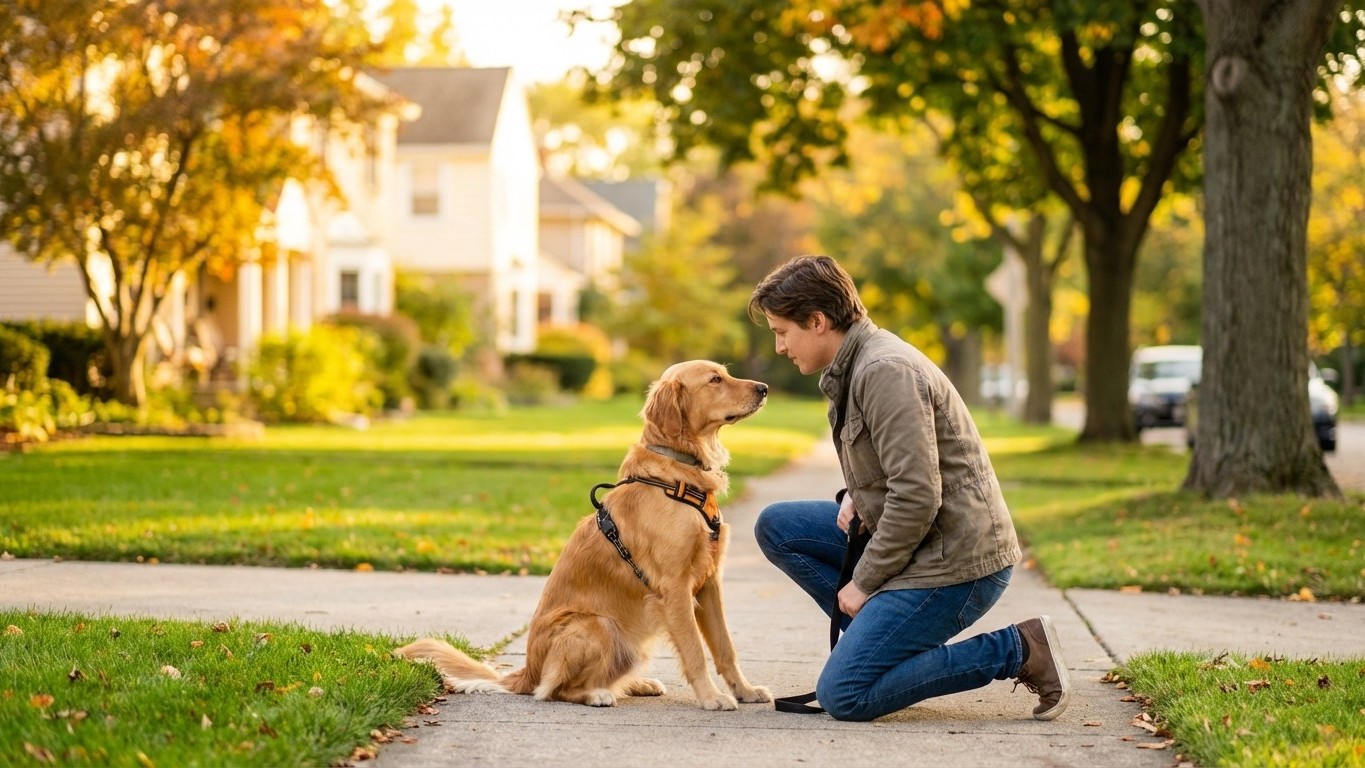
You’re enjoying a peaceful walk when suddenly Your Dog plants all four paws firmly on the ground and becomes an immovable furry statue. No amount of coaxing, pulling, or treat-waving seems to work. This frustrating scenario plays out daily for countless dog owners, leaving them puzzled and sometimes embarrassed as they stand helplessly while their pet refuses to budge.
This stubborn behavior isn’t just your dog being difficult or trying to assert dominance. In fact, there are several legitimate reasons why dogs suddenly Transform into four-legged anchors during walks, and understanding these motivations is the first step toward solving this common problem.
The Science Behind the Standstill
Dogs experience the world very differently than humans do, processing information through their incredibly sensitive noses, ears, and instincts that have been honed over thousands of years of evolution. When your dog stops dead in their tracks, they’re often responding to stimuli that you might not even notice.
Fear and anxiety top the list of reasons for this behavior. A dog might freeze when encountering unfamiliar sounds, smells, or sights that trigger their fight-or-flight response. Construction noise, other dogs barking Changes-everything-to-stop-back-pain-in-the-kitchen”>in the distance, or even the smell of a predator can cause this reaction. Unlike humans who might push through discomfort, dogs trust their instincts completely and will refuse to move toward what they perceive as a threat.
Physical discomfort also plays a significant role. Hot pavement can burn sensitive paw pads, making dogs reluctant to continue walking on scorching surfaces. Joint pain, particularly in older dogs, can cause sudden stops when movement becomes uncomfortable. Even something as simple-rule-changes-everything-when-hanging-a-pendant-light-above-your-dining-table”>simple as a small stone lodged between their toes can bring a walk to an abrupt halt.
Overstimulation presents another common cause. Dogs process sensory information much more intensely than humans, and sometimes they simply need a moment to decompress and process everything they’re experiencing. A busy street with multiple sounds, smells, and visual stimuli can overwhelm even the most confident dog.
Reading Your Dog’s Body Language
Learning to interpret your dog’s signals can help you understand whether their refusal to move stems from fear, physical discomfort, or something else entirely. A fearful dog might display tucked tail, lowered body posture, panting, or trying to hide behind you. Their ears might be pinned back, and they may look around nervously for escape routes.
Dogs experiencing physical discomfort often show more subtle signs. They might lift one paw repeatedly, look back at you with a confused expression, or try to turn around and head home. Some dogs will sit or lie down when their paws hurt from hot pavement or rough surfaces.
Overstimulated dogs typically appear alert but frozen, with their ears forward and nose working overtime to process all the scents around them. They’re not showing fear signs but seem to be in a state of sensory overload, needing time to process their environment before continuing.
Effective Strategies to Get Moving Again
The key to addressing this behavior lies in patience and understanding rather than force. Pulling on the leash or becoming frustrated will only increase your dog’s stress levels and potentially make the problem worse. Instead, try to identify the root cause and respond appropriately.
For fear-based stops, create positive distance between your dog and whatever is causing their anxiety. Cross the street, take a different route, or simply wait calmly until the trigger passes. Forcing a fearful dog toward their fear source will only reinforce their anxiety and make future walks more challenging.
When physical discomfort is suspected, check your dog’s paws for injuries or foreign objects. On hot days, test pavement temperature with your own hand – if it’s too hot for you to comfortably hold your palm against it for five seconds, it’s too hot for your dog’s paws. Consider walking during cooler parts of the day or investing in protective booties.
For overstimulation, give your dog time to process their environment. Stand calmly and let them sniff, look around, and gather information. This isn’t defiance – it’s necessary mental processing. Once they’ve had a few minutes to acclimate, they’ll often resume walking on their own.
Prevention and Long-term Solutions
Building your dog’s confidence through positive experiences can significantly reduce the frequency of these episodes. Start with shorter walks in familiar areas and gradually introduce new environments and stimuli. Reward brave behavior with treats and praise, creating positive associations with new experiences.
Consider your timing and route choices carefully. Avoid peak traffic hours or construction zones if your dog is sensitive to noise. Choose walking surfaces that are comfortable for their paws, and always carry water for both of you, especially during warmer weather.
Training exercises that build focus and engagement can also help. Teaching your dog to check in with you regularly during walks, respond to their name, and follow basic commands creates a stronger communication channel between you two. This foundation makes it easier to redirect their attention and encourage movement when they do stop.