
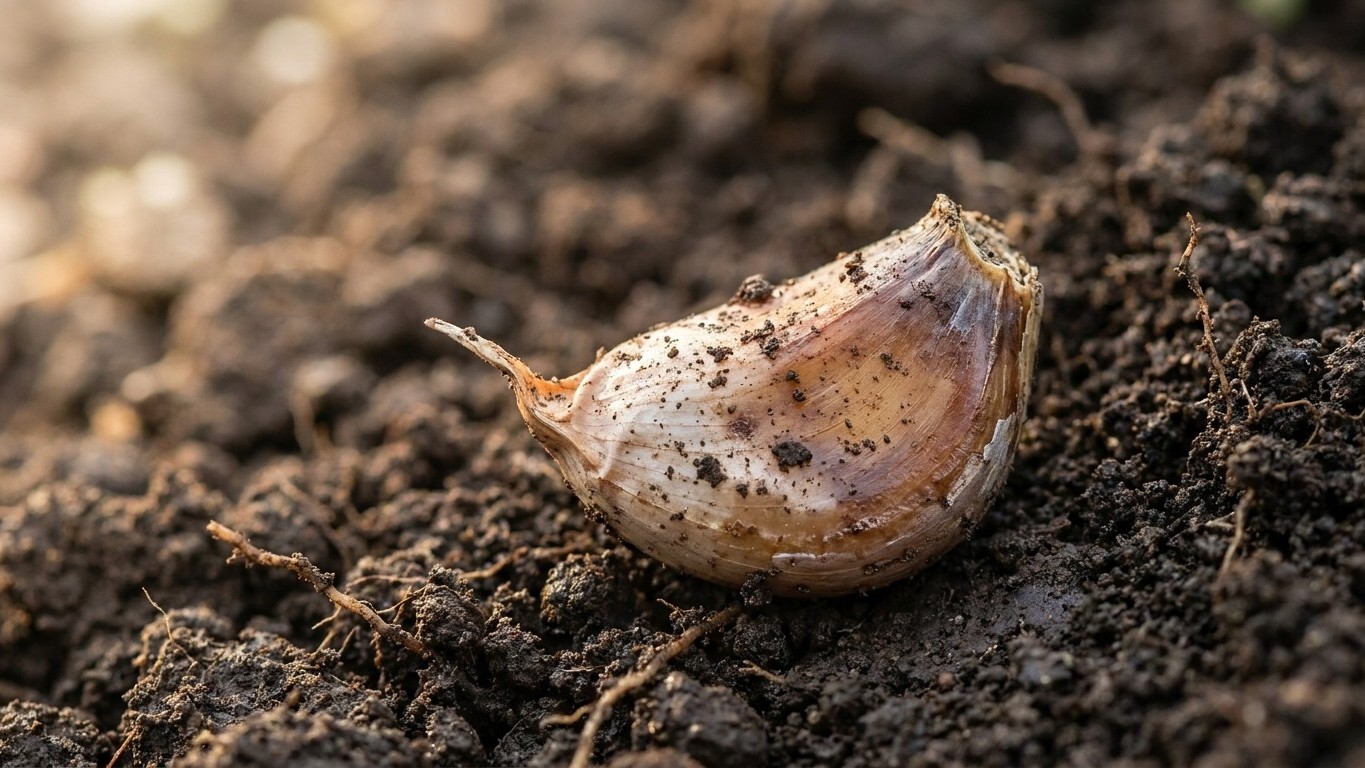
Six weeks. That’s how long it took for my “clever” head start to turn into a lesson in patience. I’d planted a clove of pink garlic in late August, convinced that giving it extra time in the ground would translate into a bigger, healthier bulb by summer. When I finally dug one up in early October just to check on progress, what I found wasn’t the sturdy, root-anchored clove I expected. It was soft, slightly discolored, and already showing signs of rot. The head start had become a head-down disaster.
Garlic doesn’t work like tomatoes or zucchini, where more growing time almost always means more harvest. It’s a crop that needs cold before it can grow well, and planting it too soon short-circuits that entire process.
Key takeaways
- Planting garlic too early exposes cloves to rot and disease while soil is still warm
- Pink garlic varieties need an extended cold period, sometimes planted as late as November-January
- The real planting window is 4-6 weeks before your area’s first frost, not the calendar date
Why an August planting backfires underground
Garlic cloves are triggered into root and shoot growth by dropping soil temperatures, not by how long they’ve been sitting in dirt. Cold temperatures prompt the garlic clove to start growing roots, and if you plant too early the garlic will not develop roots until it gets cold, meaning the clove sits in the ground not growing and susceptible to disease, fungus or hungry voles. That’s exactly what happened in my raised bed. The soil in late August was still summer-warm, so my clove just sat there, an easy target for soil pathogens, while doing absolutely nothing productive.
There’s a second problem, one that’s easy to miss. Planting too early results in poor growth and bulbing, and cloves may rot. Even in the rare case where a clove does start growing during a warm early-fall spell, that’s not a win. Exposure to really hot weather in fall can reverse the vernalization process and result in smaller bulbs. In plain terms: the cold period garlic needs to eventually form a proper bulb can get erased by a late heat wave, leaving you with a scrawny, single-clove bulb next summer instead of the plump multi-clove head you were hoping for.
Garlic experts describe the same trade-off from the other direction. You don’t want to plant garlic too early, because early planting results in poor growth and less likelihood of bulbing, and the cloves may rot. My six-week experiment wasn’t a head start. It was six weeks of exposure with nothing to show for it.
Pink garlic plays an even longer waiting game
What makes my mistake sting a bit more is that pink garlic varieties are notoriously late planters, not early ones. Take the famous Lautrec pink garlic from southwestern France, the gold standard for the category. Lautrec pink garlic is planted exclusively in autumn, in November and December, in the clay-limestone soils of the Tarn region. Some producers push it even later. The garlic is planted during the months of December and January and harvested at the end of June. That’s not a typo or a regional quirk. It reflects how this particular type of garlic is bred to handle a long, cold vernalization period before it ever thinks about sending up leaves.
Compare that to my late-August timeline and the mismatch becomes obvious. I was planting roughly three to four months ahead of when growers in garlic country even start. Pink varieties, whether the French appellation types or the pink-striped American heirlooms sold at farmers markets, tend to be hardneck types that lean on that extended chill to divide properly into cloves. Rush the calendar, and you’re not saving time. You’re wasting it.
The window that actually works
So when should garlic, pink or otherwise, actually go into the ground? The consensus among extension services and seasoned growers points to a fairly narrow window tied to your local frost dates, not the calendar page. The rule of thumb is to plant 4-6 weeks before the ground starts to freeze, or right around the first light frost, roughly 2-3 weeks before or after your estimated first fall frost. That timing gives roots just enough time to establish without pushing tender green shoots above ground before winter arrives.
Where you live changes the exact dates quite a bit. Growers in zones 0-3 should plant in early to late September, zones 3-5 in late September to early October, zones 5-7 in mid to late October, zones 7-9 in late October into November, and zones 9-10 anywhere from late October into December. If you’re in a warm-winter region without reliable frost, there’s still a path forward: if there’s no frost at all, choose softneck varieties and refrigerate them for 5-10 weeks before planting to fake the chilling period the cloves need.
For most home gardeners in the continental US, that means garlic season doesn’t even start until autumn is well underway. Most areas begin planting garlic outside around the same time gardeners plant spring-flowering bulbs, sometime between October and November. My late-August clove was jumping the gun by two full months, at minimum.
What to actually do if you jumped the gun
If you’ve made the same mistake I did, don’t panic and don’t assume the whole crop is doomed. Dig up any cloves that show soft spots, discoloration, or a sour smell. Those won’t recover and can spread rot to healthy neighbors if left in place. Cloves that still look firm and white can often be replanted, ideally once soil temperatures have actually dropped, since planting too early gives too much time for the clove to sprout and break through the soil, while planting too late means it won’t establish roots before the ground freezes and goes dormant for winter.
A layer of straw mulch, about an inch thick, helps moderate soil temperature swings and gives cloves a fighting chance if you’re stuck replanting slightly outside the ideal window. Mark your calendar for next year, count backward from your area’s average first frost date, and resist the urge to get a jump on the season. With garlic, patience isn’t just a virtue. It’s the entire growing strategy.
Sources : greyduckgarlic.com | almanac.com