
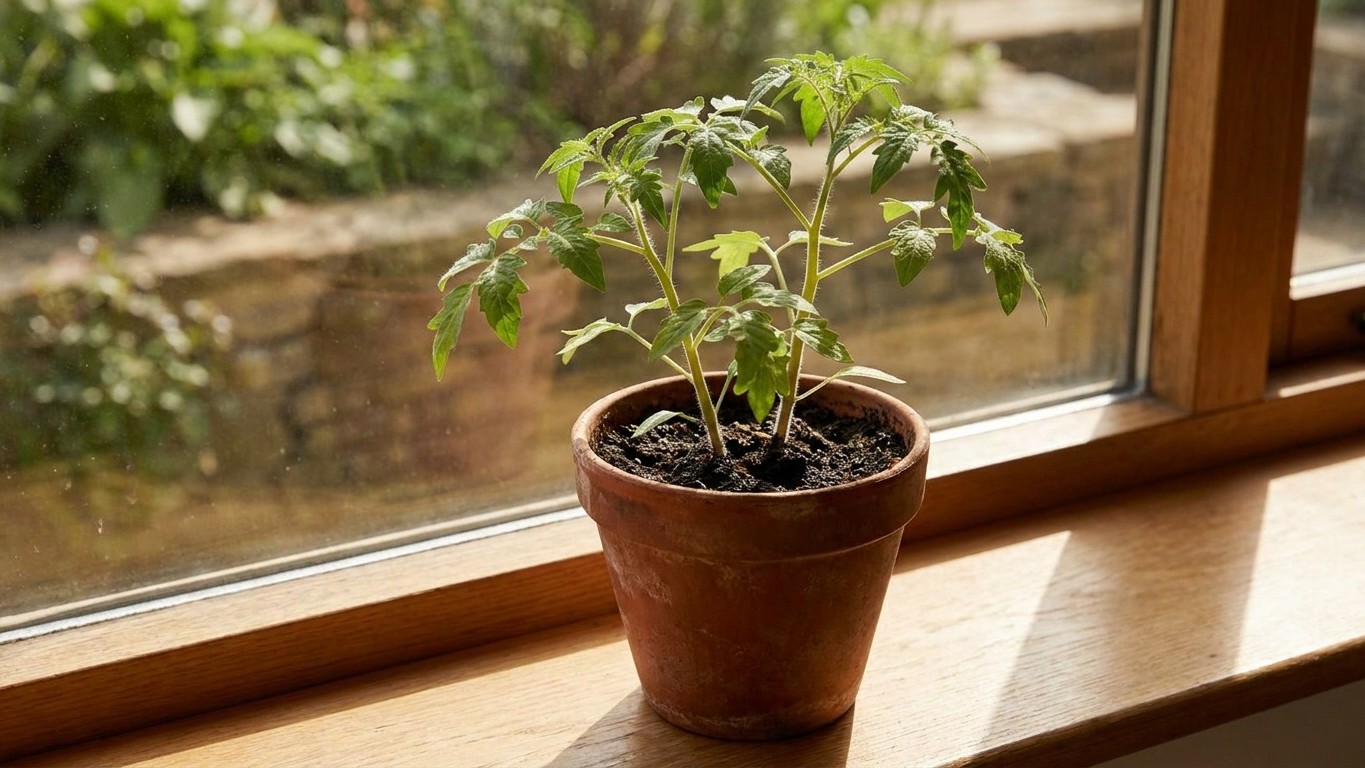
A leftover sucker, an empty terra-cotta pot, and zero expectations. That’s how this experiment started in mid-August, and it turned into the kind of accidental lesson that makes gardening worth the dirt under your nails. The sucker rooted fast, grew fast, and then one cold night in fall exposed exactly what that rushed little cutting was actually worth.
Tomato suckers, those small shoots that sprout in the crotch between the main stem and a branch, get pinched off and tossed in the compost pile more often than not. Most gardeners treat them as a nuisance, a drain on the plant’s energy that needs removing so the main stems can focus on fruit. But snip one, stick it in soil or water, and something else happens entirely: rooting tomato suckers in water is one of the easiest ways to propagate new tomato plants, since tomato stems form roots naturally when placed in water, making the process simple and requiring very little equipment.
Key takeaways
- A tomato sucker rooted in record time with zero effort or special equipment required
- One chilly autumn night exposed why this tiny plant was worth far more than it seemed
- The hidden strategy that lets gardeners steal weeks of fresh tomatoes after the outdoor season dies
Roots in Record Time
Ten days. That’s all it took for this particular cutting to go from a limp, wilting sucker to a plant with a visible root system pushing against the pot’s drainage holes. That timeline lines up almost exactly with what growers report across the board. In warm conditions, small white roots typically form along the stem within 5 to 10 days after placing the cutting in water, though the exact timing depends on temperature, light, and the health of the cutting. Late summer heat clearly helped speed things along here, since tomato suckers often root faster during the warm summer months because the plants are actively growing.
Soil rooting, which is what happened in this case, generally tracks a similar window. Some sources put the timeline slightly longer for direct-to-soil cuttings, but the signal is the same: in water, roots typically form within 7-14 days, while in soil it might take a bit longer, usually 2-3 weeks, though you’ll know they’ve rooted when you see new top growth. Ten days on the fast end of that range isn’t unusual. It’s just satisfying to watch happen, especially when the whole point of the exercise was killing time and filling an empty container.
By early September, the sucker had transformed into a compact, leafy little tomato plant with its own identity. No stakes, no cage, nothing dramatic, just steady green growth that made the porch look less abandoned. It felt like a bonus round, a plant that cost nothing and demanded nothing.
The Cold Night That Changed the Math
Then the temperature dropped. Not a hard frost, nothing dramatic on the weather app, just one of those first genuinely cool nights that signals autumn is done pretending. And that’s when the real value of this offhand experiment showed up.
Mature tomato plants, especially ones that spent all summer toughening up outdoors, can shrug off a chilly night far better than a young cutting can. This sucker, barely a few weeks old with a root system still finding its footing, had none of that resilience banked up. Freezing temperatures kill tomato plants and cooler temperatures below 50 degrees Fahrenheit can slow growth, cause fruit yield to decline, and generally stunt growth and ruin your tomato crop. A young, recently rooted plant sits on the fragile end of that spectrum.
What that cold night actually revealed wasn’t a dead plant. It was a decision point. Bring this pot inside now, onto a sunny windowsill, and there’s a real shot at fresh tomatoes weeks after the outdoor garden has gone dormant. Leave it exposed, and the clock runs out fast. Thirty-three degrees Fahrenheit is the coldest temperature tomato plants can tolerate, since colder temperatures mean frost and plant death, while temperatures below 40 degrees cause stunted growth, wilted leaves, and pitted fruit. That’s not a wide margin to work with, and a container plant that can simply be carried indoors suddenly looks a lot smarter than a garden bed you can’t move.
This is really the hidden upside of rooting suckers late in the season: you end up with a portable, disposable-feeling plant that’s actually an insurance policy. If an early cold snap threatens the main crop, the potted clone can retreat indoors. If squash bugs or blight take out the original plant, there’s a genetic backup ready to go. None of that was the intention back in mid-August. The intention was filling an empty pot. But the cold night made the actual function obvious: a spare tomato plant, small enough to relocate in seconds, buys extra weeks that an in-ground plant simply can’t.
Turning an Accident Into a Strategy
Anyone tempted to try this on purpose next year doesn’t need much. Snip a healthy shoot, looking for suckers that are about 3 to 5 inches long with no signs of disease or damage, and either drop it in a jar of water on a bright windowsill or push it straight into moist potting mix. A seed-starting mix or a blend of peat moss and perlite works well, and heavy garden soil should be avoided since it can lead to rot. Keep it warm, keep the soil or water fresh, and within a couple of weeks there should be enough root mass to treat it like any other transplant.
The real trick, learned the hard way here, is deciding early what the plant is for. A late-summer clone left outside through a cold snap is basically a countdown timer. The same clone moved to a south-facing window before that first chilly night can keep producing small batches of tomatoes well into the shoulder season, something in-ground plants in most climates simply can’t do once nights consistently dip below that 50-degree comfort zone. If temperatures drop below 50°F, especially at night, it’s too cold for tomato plants, which prefer daytime warmth between 65°F and 85°F.
What started as a way to avoid an empty pot ended up being a small lesson in timing. Ten days of rooting looked like the whole story. The first cold night proved the real payoff was never the plant itself, but the ten extra weeks of tomatoes it made possible once it came inside.
Sources : greenupside.com | growagoodlife.com