
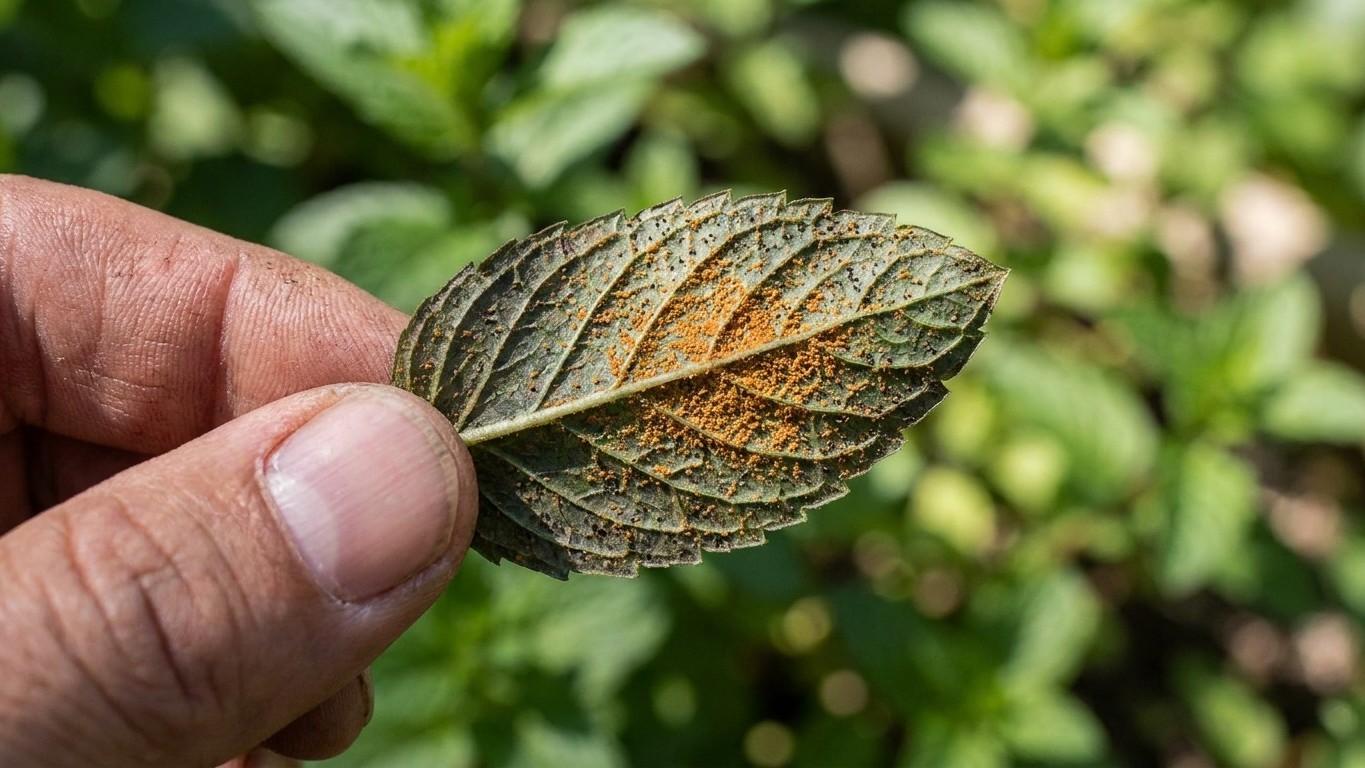
Mint rust doesn’t announce itself. It builds quietly under the canopy, on the one part of the plant most gardeners never bother to check: the underside of the leaves. By the time the orange dust shows up on top, the infection has usually been thriving for weeks.
The habit felt harmless enough at the time. A quick overhead spray on hot afternoons, supposedly to cool the plant down and knock the dust off the leaves. What actually happened was different. Mint rust is encouraged by overhead irrigation, which frequently allows water to stand on plant leaves long enough for the fungal spores to germinate. Every splash of water sitting on a leaf for hours was basically an invitation.
Key takeaways
- The fungus builds silently on leaf undersides for weeks before showing visible symptoms
- Your ‘refreshing’ overhead watering habit is actually creating the perfect environment for rust to spread
- One overlooked detail could mean the difference between a thriving mint patch and total defoliation
What Mint Rust Actually Looks Like (And Why It Hides)
Mint rust is caused by a fungus, Puccinia menthae, which only infects plants in the mint family, especially spearmint and peppermint. The disease has a talent for staying invisible right up until it doesn’t. The very early stages of mint rust may appear as white bumps on mint leaves. Nothing alarming, nothing that screams “problem.” Most people, myself included, walk right past that stage without a second glance.
The real damage sits where nobody looks. Rust on mint plants looks similar to other rusts in later stages, with orange to rust-colored spots covering the undersides of lower leaves in early spring. That’s the twist: rust starts on the lower, older growth, exactly the leaves shaded by everything above them and exactly the ones nobody flips over during a casual watering session. Turn one leaf over in July, expecting to see clean green tissue, and instead there’s a dusting of rust-orange pustules that look like they’ve been there for a while. Because they have.
Left alone, the fungus doesn’t stay polite. Mint rust symptoms may progress, manifesting as leaves that turn completely brown and drop from affected plants. A patch that looked lush from above can be quietly defoliating itself from the bottom up, and the only warning is a scatter of dead leaves accumulating at the base of the pot.
Why the Watering Method Matters More Than the Amount
Mint is famously forgiving. It roots in a glass of water, spreads through cracks in patios, survives neglect that would kill a basil plant in a week. That resilience creates a false sense of security. Gardeners assume anything short of drowning the plant is fine. But rust doesn’t care how much water lands on the mint. It cares about how long the leaves stay wet.
Density makes it worse. Closely planted mints, or those that need to be thinned, are at a heightened risk due to increased humidity around the plants. Mint’s habit of spreading aggressively through rhizomes means a container or bed that started with three or four sprigs can turn into a dense thicket within a single season, exactly the kind of crowded, low-airflow environment where moisture lingers on foliage long after the hose has been put away.
Powdery mildew, mint’s other frequent fungal visitor, plays by slightly different rules but arrives at the same conclusion. Unlike most fungal diseases, powdery mildew doesn’t require wet leaves to establish or spread, which is why it commonly appears during dry summers and surprises gardeners who associate fungal disease with rain. Even so, overhead watering doesn’t help matters. While powdery mildew doesn’t need wet leaves to grow, overhead watering can exacerbate the problem, since water droplets on leaves can temporarily increase local humidity, and evening watering gives spores more time to infect. Two different fungi, two overlapping pieces of bad advice avoided by the same simple fix.
The Fix Is Almost Embarrassingly Simple
There’s no elaborate treatment protocol needed for prevention, just a change in aim. Changing the way you water will slow or even stop rust fungus; always water mint at the base, never on the leaves, and do it early in the day so water will evaporate quickly. A watering can with a long spout, or a soaker hose tucked under the foliage, does the job without ever touching a leaf. Use a soaker hose or water the plants at the base to prevent the leaves from getting wet, and when you irrigate, do so in the morning to give the plants all day to dry if water splashes on the leaves.
Spacing matters just as much as timing. Thinning your mint stand will allow better air circulation that can dry out rust fungus without the use of fungicide. A pot that’s become a solid green mound is overdue for a haircut, not for more water. Cutting stems back hard doesn’t just control the sprawl mint is known for, it opens up the kind of airflow that makes life miserable for fungal spores.
Once rust has actually taken hold, watering habits alone won’t undo it. Organic gardeners and those looking to preserve beneficial insects may want to destroy infected mint plants or remove infected leaves if the disease is mild, and any rust-infected tissues should be immediately burned or double bagged, and all plant debris kept away from your mint to discourage re-infestation. Composting those leaves, however tempting, just recycles the problem back into the garden next season.
Rust that came back in a milder form the following year isn’t unusual, either. In late summer and early fall, when these dropped leaves regrow, darker spots often appear instead. The fungus doesn’t necessarily vanish after one bad season; it can linger in plant debris and resurface in a different guise, which is exactly why cleanup matters as much as the watering fix. The one habit worth building going forward: before reaching for the hose, flip a leaf. Not because it’ll always reveal something, but because on the day it does, you’ll want to have caught it early, not three weeks and half a dead patch too late.
Sources : theplantaide.com | evergreenseeds.com